
Field observations recorded July 22, 2026.
Habitats Explored: Restored Prairie · Wet Woodland · Sandy Pine Forest · Deciduous Woodland · Ponds and Reservoir
In Search of Blazing Stars
I headed to the Beach Ridge Area of Oak Openings Preserve with one particular goal in mind.
I had seen the Blazing Star Loop on the trail map and imagined walking through a prairie filled with those tall purple flower spikes rising above the native grasses. I wasn’t entirely sure what to expect, but that sounded like a good enough reason to explore another part of the Oak Openings.
What I didn’t expect was the adventure that followed.
Arriving at Beach Ridge, I quickly realized this wasn’t going to be a typical nature walk. Near the parking area was the Wheelhouse, a gathering place for cyclists, complete with bike repair facilities, riding obstacles, and trails designed for people looking for a little excitement.
I wasn’t there to ride a bike. I had my camera, binoculars, and backpack, and I was looking to nerd out on plants and functioning habitats.
But as it turned out, adventure was exactly what I was going to find.
A Prairie Full of Life
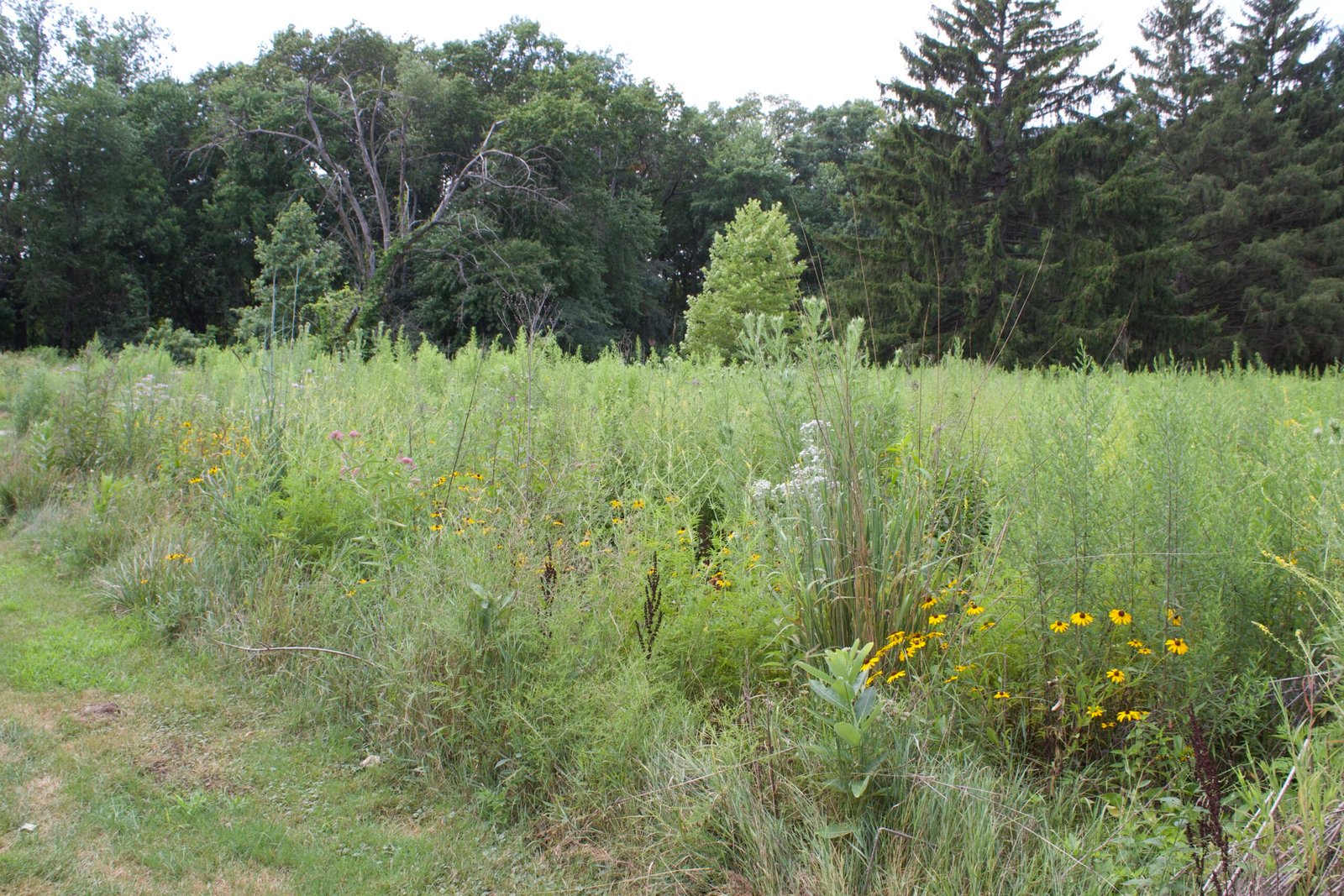
Before I even reached the woodland, I came across one of the most diverse prairie plantings I had encountered during my Field Notes adventures.
Big bluestem, common and swamp milkweed, Virginia mountain mint, compass plant, field thistle, boneset, blue vervain, ironweed, goldenrods, and black-eyed Susans were growing among a variety of grasses and other wildflowers.
There was so much happening in one relatively small area that I found myself stopping almost immediately.
The prairie was bordered by mature woodland, creating a beautiful contrast between the open vegetation and the trees rising behind it.
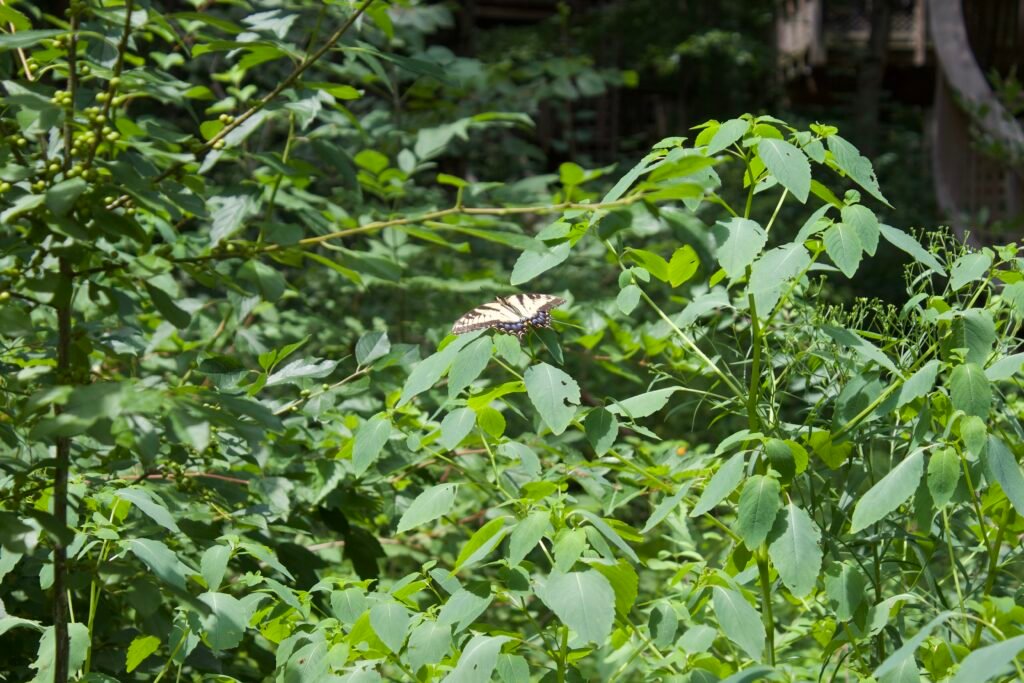
An eastern tiger swallowtail appeared among the vegetation, adding another bit of life to an already busy landscape.
It was a promising start.
But the landscape was about to change considerably.
Following the Water Through the Woods
As I entered the woodland near Cannaley Treehouse Village, I began noticing something familiar.
The plants were changing.
At first, spicebush appeared throughout the understory. As I continued, winterberry became more noticeable, followed by buttonbush and jewelweed.
I recognized all four plants, but what interested me wasn’t simply finding them.
It was the sequence in which I encountered them.
Spicebush often grows in moist woodland soils, while winterberry and buttonbush are well adapted to wetter environments. Buttonbush can even grow with its roots submerged in shallow water. Jewelweed is another familiar plant of damp, shaded ground.
Together, they suggested that I was moving through an increasingly wet part of the forest.
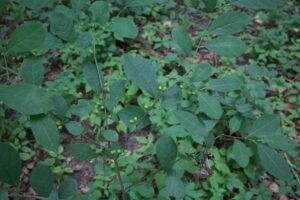
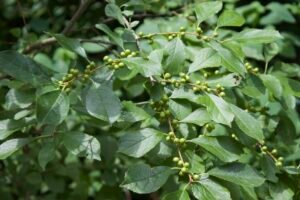
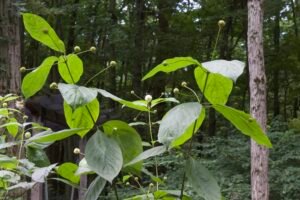
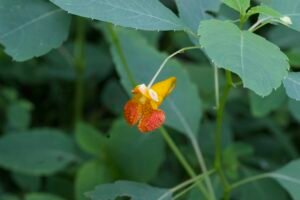
Four native plants encountered along the woodland trail. Their changing abundance offered clues about moisture conditions beneath the forest canopy.
One of the most interesting features of this section was the treehouse village itself.
Elevated structures and walkways carried visitors through the woodland, allowing people to experience the forest from above the ground.
Considering the moisture-loving vegetation surrounding the treehouses, I couldn’t help wondering what this area looked like during the wettest parts of the year.
Perhaps water regularly collected beneath those walkways.
It was another reminder that even when standing water isn’t visible, the plants can provide clues about where it belongs.
Walking Across an Ancient Shoreline
Leaving the wetter woodland, the terrain began to change.
The ground became sandier, the elevation rose and fell, and the forest gradually took on a different character.
I began walking among tall pines mixed with maples and oaks. Ferns and sedges appeared along the forest floor, while fallen pine needles covered portions of the trail.
The colors were what I remember most.
Dark green foliage overhead, brown tree trunks rising through the woodland, and an almost orange carpet of needles covering the sandy ground.
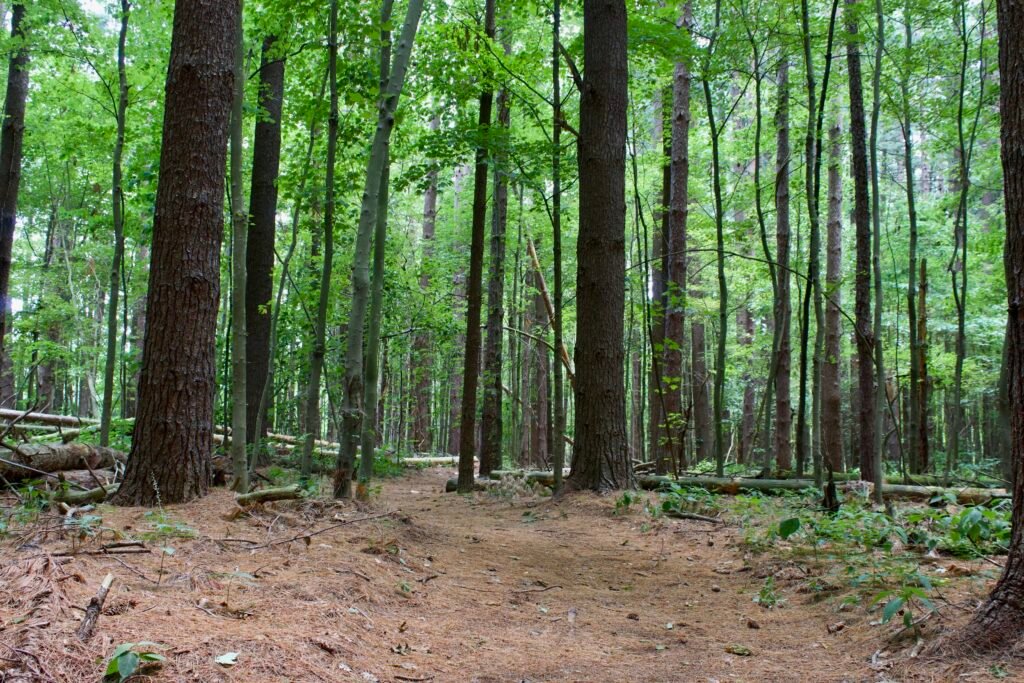
The forest had a completely different atmosphere from the prairie and wet woodland I had walked through earlier.
And the elevation changes were surprisingly noticeable.
Looking back at screenshots from my walk, I recorded an elevation of approximately 671 feet near the treehouses and 650 feet approaching the reservoir.
That’s a difference of about 21 feet over a relatively short stretch of landscape.
It might not sound like much, but in northwest Ohio, where so much of the surrounding terrain is relatively flat, those changes can feel significant.
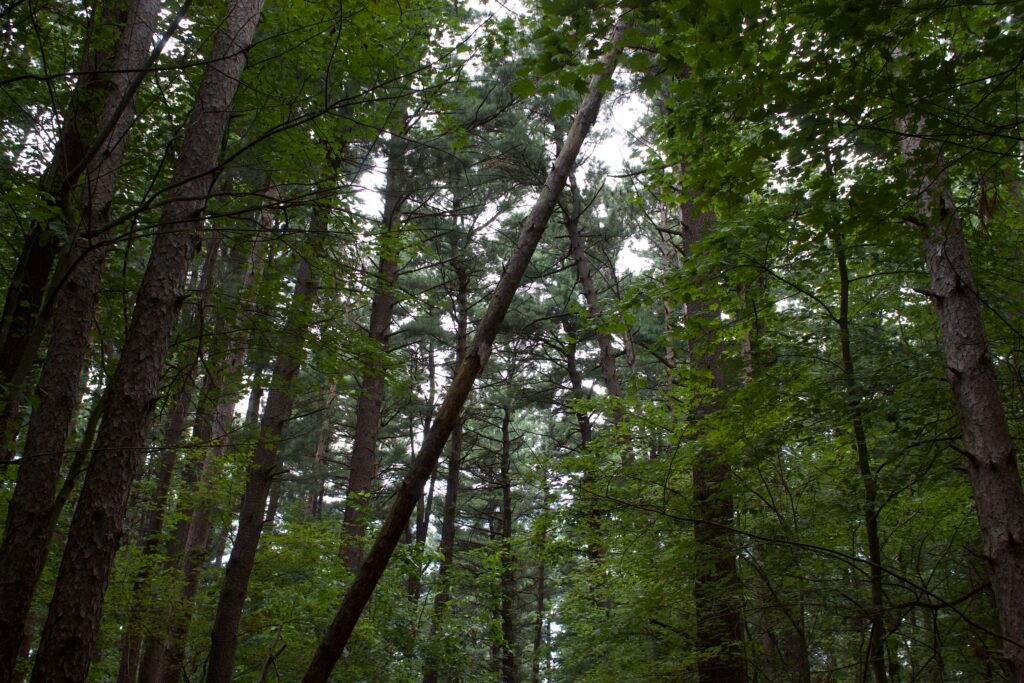
Later, learning more about Beach Ridge helped explain what I had been walking through.
Much of the Oak Openings Region was shaped by ancient glacial lakes that once covered large portions of northwest Ohio.
Around 15,000 years ago, shorelines associated with those lakes helped create sandy beach ridges. Wind later reshaped portions of the sand into dunes, leaving behind a landscape of raised sandy areas and lower depressions.
Over thousands of years, vegetation established itself across those different environments.
The result is a remarkable variety of habitats, sometimes separated by surprisingly small changes in elevation.
Standing among those pines, I hadn’t been thinking about ancient beaches.
But looking back, the rolling sandy terrain made much more sense.
I was exploring a landscape shaped by water long before the forests growing there today existed.
From the Forest to Swanton Reservoir
Eventually, the woodland opened and I found myself approaching Swanton Reservoir.
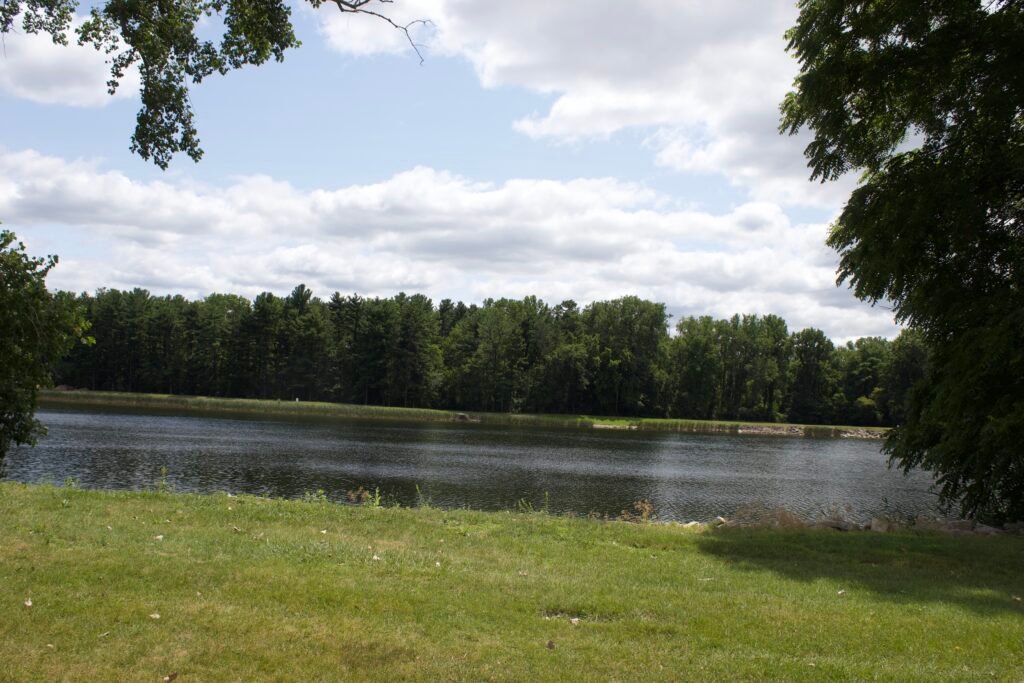
After spending so much time beneath the forest canopy, the open water and surrounding grass felt like another completely different environment.
Across the reservoir, mature trees formed a dense green backdrop. Along the shoreline, the landscape had a more managed appearance, with mowed areas and open views across the water.
By this point, I was beginning to lose track of exactly where I was.
The trails had carried me farther than I expected, and I eventually found myself walking alongside a road with vehicles passing at highway speeds, trying to figure out where the trail continued.
I kept thinking about how different this adventure might have been if I’d brought an actual map. These days, it’s easy enough to pull out your phone and figure out exactly where you are. And that’s what I did. But part of me wondered how much more interesting it might have been to stop, unfold a map, look around at the landscape, and try to figure out my location using landmarks and maybe even a compass.
Especially in these woods, where the trails twist and turn through dense vegetation. Once you’re surrounded by trees, it’s surprisingly easy to lose your sense of direction. I think navigating the old-fashioned way might have been an adventure in itself.
But for now, my phone would have to do.
After checking the map, I worked my way toward Blazing Star Loop.
Finally.
The prairie I had been looking for must be just ahead.
At least, that’s what I thought.
A Roller Coaster Through the Forest
Instead of a prairie filled with blazing stars, I found myself entering another dense woodland.
And this time, the trail was unlike anything I had walked earlier in the day.
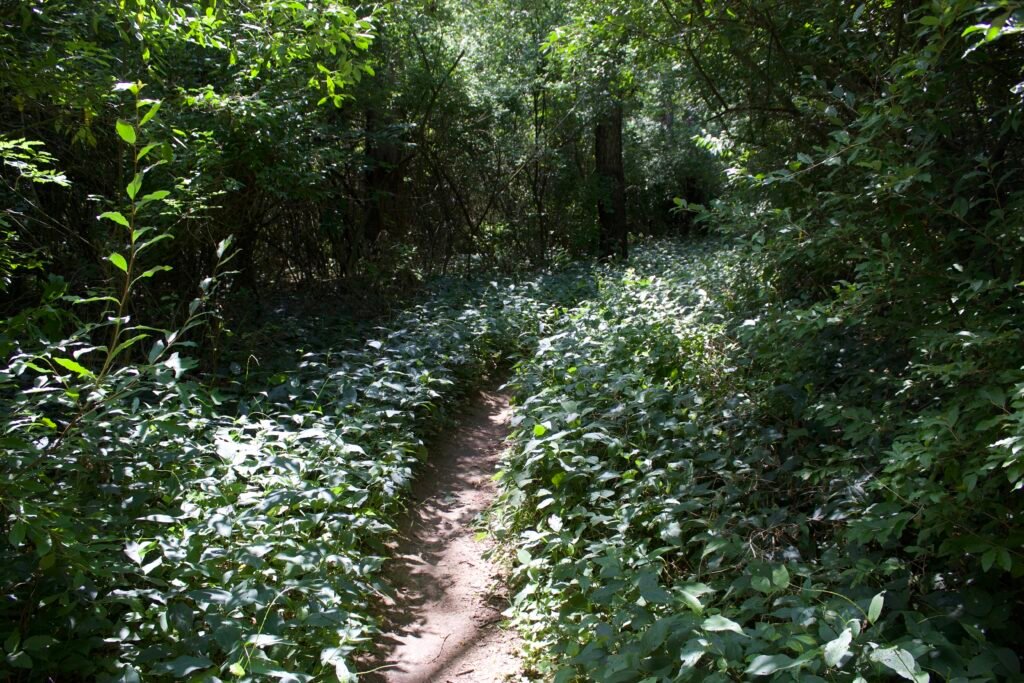
It was narrow.
Really narrow.
In some places, the dirt path wasn’t much wider than my foot, with vegetation growing right up against both sides.
The trail twisted between trees, dipped through low areas, climbed over sandy rises, and crossed wooden bridges that seemed designed to carry mountain bikers through the landscape without slowing down.
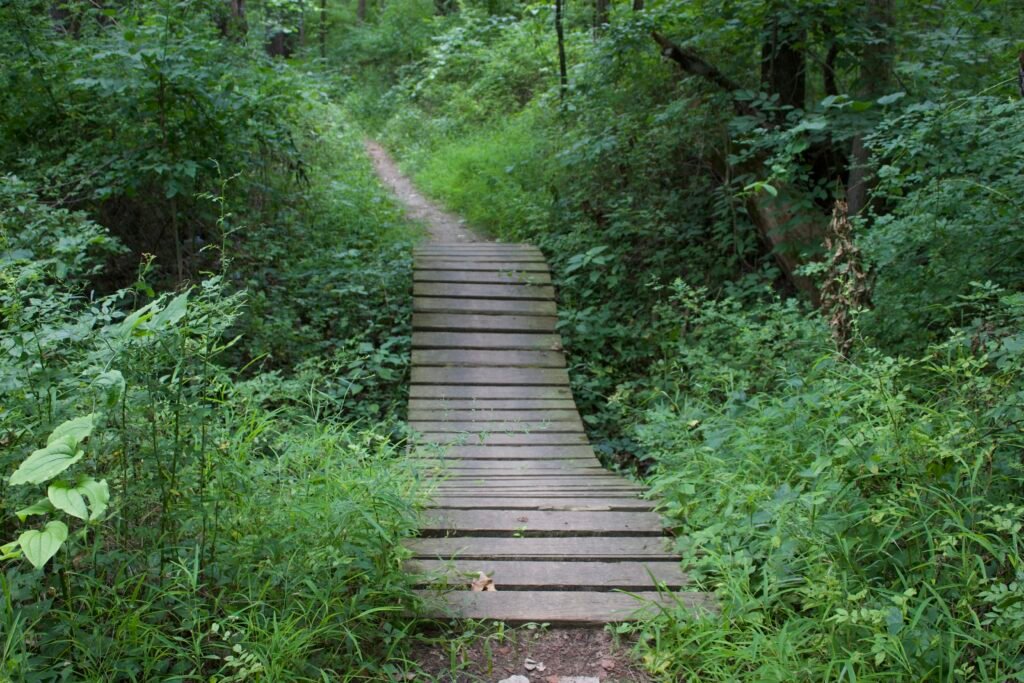
It reminded me of a roller coaster.
Except I was walking.
And everyone else seemed to be flying past me on bicycles.
I quickly realized this was going to be a different kind of adventure.
Normally, when I’m out doing Field Notes, I’m listening for birds, watching for movement in the vegetation, and paying attention to the little things happening around me. I’m constantly using my senses to discover what’s going on in the landscape.
But here, those same senses were working overtime.
I wasn’t just listening for wildlife anymore. I was listening for mountain bikers coming around the next bend or flying over the next hill.
And these riders weren’t exactly taking their time.
With all the twists and turns, I often couldn’t see them approaching. I had to listen carefully, and whenever I heard a bike coming, I needed to find somewhere to step aside and let the rider pass.
That wasn’t always easy when the trail was barely wide enough for one person and the vegetation was growing right up against it.
Instead of stopping to investigate every sound in the woods, I was trying to figure out whether I was hearing wildlife or another bicycle heading my way.
I had come here expecting a peaceful walk through a prairie filled with blazing stars.
Instead, I was navigating a winding woodland trail, trying to stay out of the way of mountain bikers.
At that point, I couldn’t help but laugh at the whole situation. Every time another mountain biker came flying around a corner, I’d find myself thinking, What a mess, and laughing to myself.
This was definitely not the adventure I had planned.
And after all that, I never did find any blazing stars. Not even the dried stalks I thought I might recognize from an earlier bloom.
Whatever the reason, Blazing Star Loop had delivered an entirely different kind of adventure.
Life and Death Along the Trail
Even with all the activity on the bike trail, there was plenty of wildlife to observe.
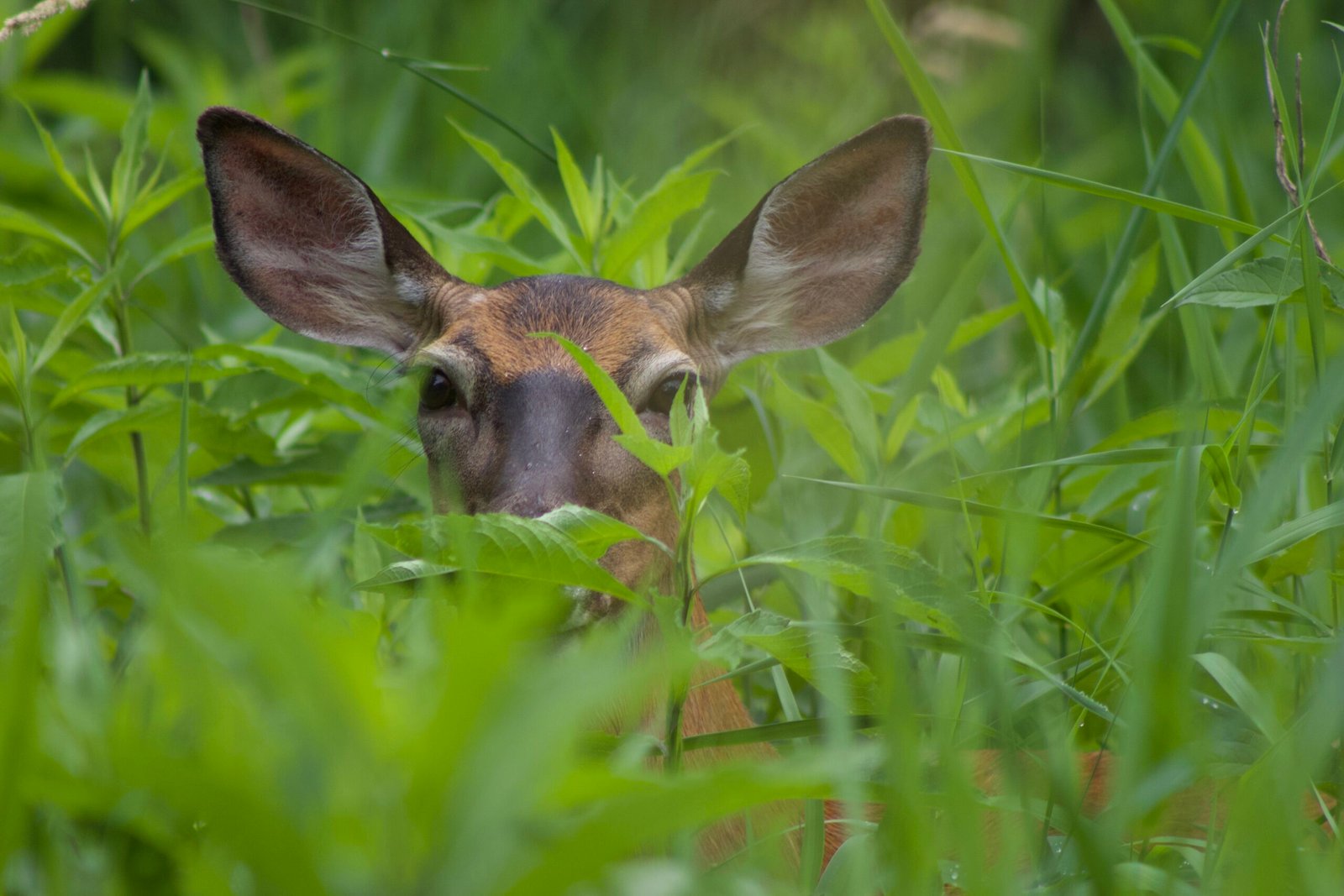
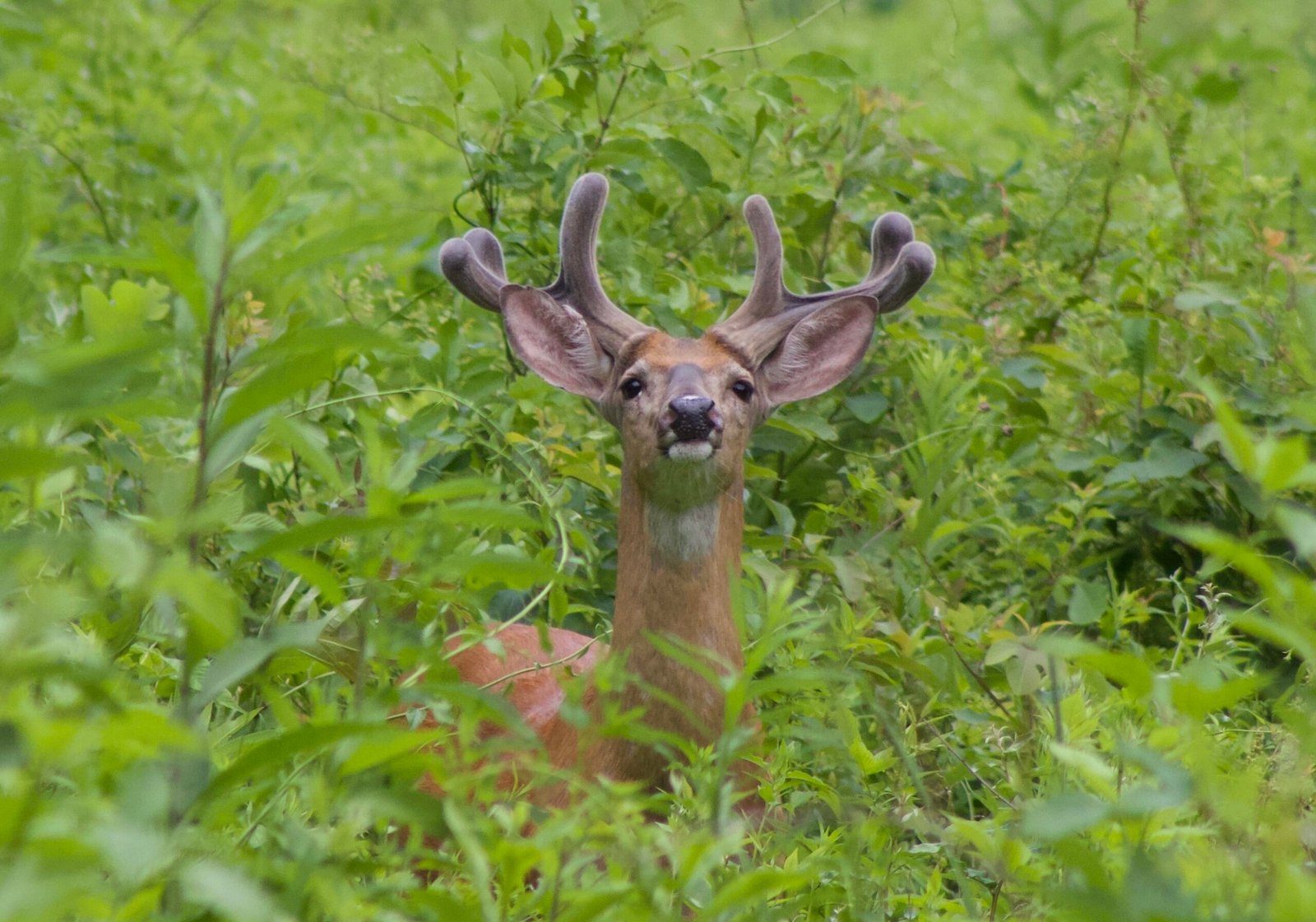
Blue Jays called through the woodland, butterflies appeared in occasional openings, and deer moved through the forest.
I also encountered two dead animals along the trail.
One appeared to be a rabbit that had been killed fairly recently. The remains were fresh enough that I couldn’t help wondering what predator had been responsible.
Farther along, I found another set of remains, older and more difficult to identify.
There was no way to know exactly what had happened in either case.
But encounters like these are reminders that the forest is more than a collection of trees and plants.
Predators hunt.
Scavengers feed.
And the nutrients from animals that die eventually return to the soil.
These relationships are happening constantly, whether we’re there to witness them or not.
I also noticed fallen trees, exposed roots, and places where the woodland floor seemed to shift with the surrounding terrain.
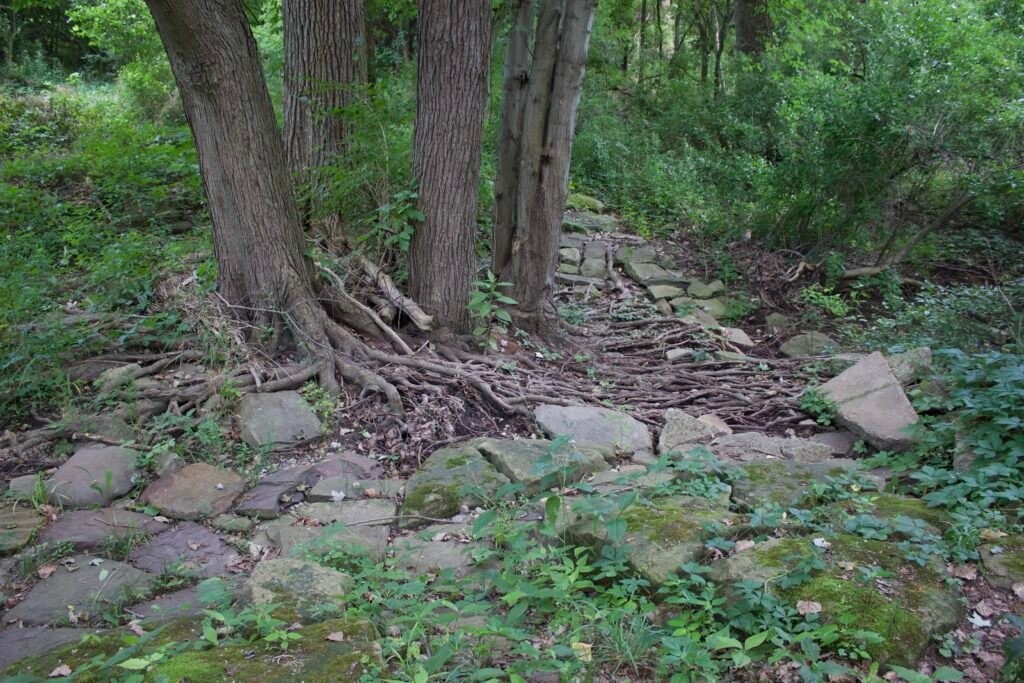
The more I walked, the more I appreciated how much was happening in a forest that initially seemed to offer very few wildflowers.
A Quiet Moment at the Pond
Eventually, I reached a pond covered in duckweed, with fallen branches and logs scattered across the water.
And there, standing on a branch, was a Green Heron.
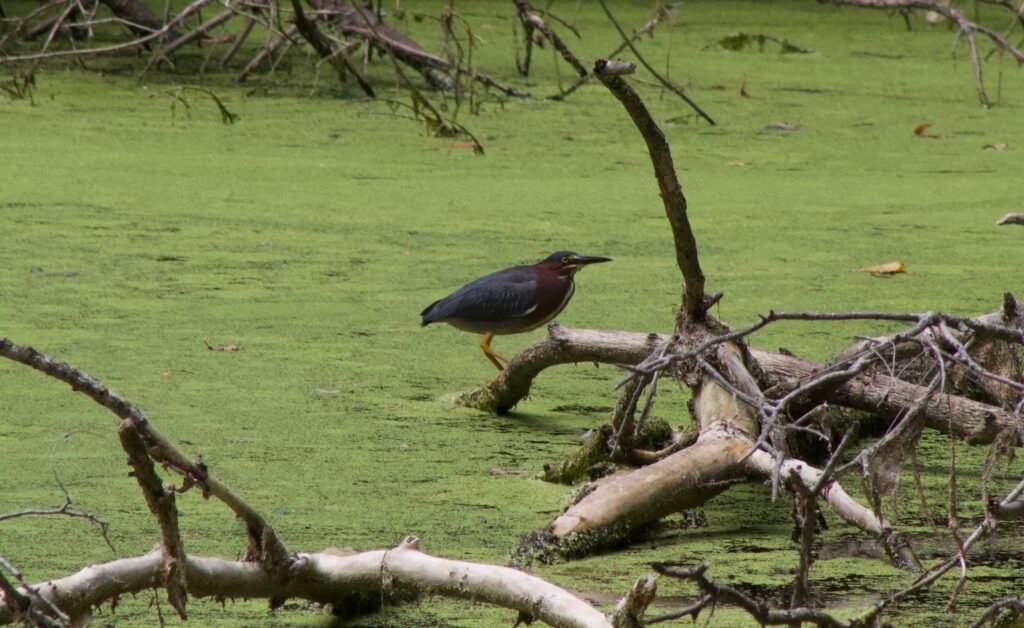
I spent quite a while watching it move along the logs, carefully studying the water below.
Green Herons are patient hunters, often standing almost motionless before striking at fish or other small aquatic animals.
Nearby, a mother duck was moving through the water with her ducklings.
After the confusion of the bike trails, it was a welcome opportunity to stop and enjoy the wildlife.
I tried getting a few photographs and spent some time simply watching the activity around the pond.
Eventually, I decided it was time to head back.
But The Adventure Wasn’t Over
Before leaving, I reached for my camera lens cap.
It wasn’t there.
I checked my pockets.
My backpack.
Nothing.
Somewhere along that narrow, winding mountain bike trail, I had lost it.
And I had absolutely no idea where.
What made it even more frustrating was that I hadn’t stayed on the trail the entire time. When I’m out exploring, I sometimes wander off the main path, following a deer trail or moving through an opening in the vegetation to see the landscape from a different perspective.
And I’d done that several times throughout this walk.
So even if I retraced the entire trail, there was no guarantee I’d walk through the exact spot where I’d lost it. That little black lens cap could have been sitting somewhere in the thick vegetation, and I might never see it.
I considered leaving it behind, but I figured it was worth looking.
So I turned around.
Back onto the bike trail.
Back through the narrow vegetation.
Across the bridges.
And back into the roller coaster.
Only this time, I wasn’t looking for blazing stars, birds, or interesting plants.
I was looking for one small, dark piece of plastic lying somewhere on the ground.
And I still had mountain bikers coming through.
I started retracing my steps, watching the ground as carefully as I could while keeping an ear out for approaching bikers.
Originally, I told myself I’d give it another ten minutes. If I didn’t find it, I’d turn around and head home.
Ten minutes went by.
Nothing.
Well, maybe another five minutes.
Still nothing.
It’s probably just around the next corner.
And that’s pretty much how the next part of my adventure went.
Every five or ten minutes, I’d convince myself to keep going just a little farther.
I began recognizing trees, changes in elevation, and places where I’d stopped earlier. It was almost like experiencing the same trail again, except now I was paying attention to completely different things.
Eventually, I’d made it nearly all the way back to the farthest part of the loop.
And there it was.
My lens cap.
Sitting right along the trail.
After all that searching, it hadn’t been hidden in the vegetation or lost somewhere off the path. It was right there where I could see it.
I picked it up, put it away, and couldn’t help but laugh.
Apparently, I needed the extra exercise that day..
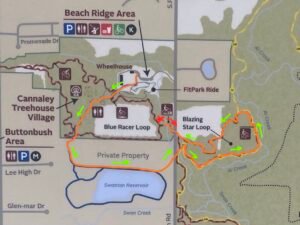
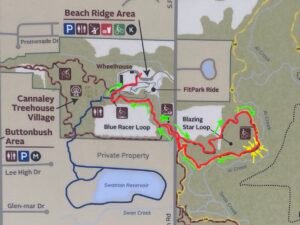
Left: My original route from the Beach Ridge Area through the woodland, reservoir, and Blazing Star Loop. Right: The return trip after discovering my missing lens cap. Yellow arrows mark where I finally found it.
Altogether, I probably walked about four miles, including the extra distance spent searching for that damn cap.
Not exactly what I had planned when I left home looking for one of my favorite native plants
Looking Back
When I think about Beach Ridge now, the blazing stars are almost an afterthought.
I remember the incredible diversity of the prairie near the entrance.
The gradual transition from spicebush to winterberry, buttonbush, and jewelweed as the woodland became wetter.
The orange pine needles covering the sandy forest floor.
The changes in elevation that revealed the shape of an ancient landscape.
The reservoir.
The Green Heron.
The mountain bikers flying along a trail that felt more like a roller coaster than a nature walk.
And, of course, the missing lens cap that sent me back through the adventure one more time.
What makes Beach Ridge so interesting is how many different environments exist within such a relatively small area.
The same ancient forces that shaped the sandy ridges also helped create the low, wet depressions where entirely different plant communities grow today.
And now people have found their own ways to experience that landscape, from elevated treehouses to winding mountain bike trails.
I never found the blazing stars I came looking for.
But I discovered a part of Oak Openings unlike anywhere else I had explored.
Sometimes an adventure doesn’t turn out the way you expected.
And sometimes that’s what makes it worth remembering.