

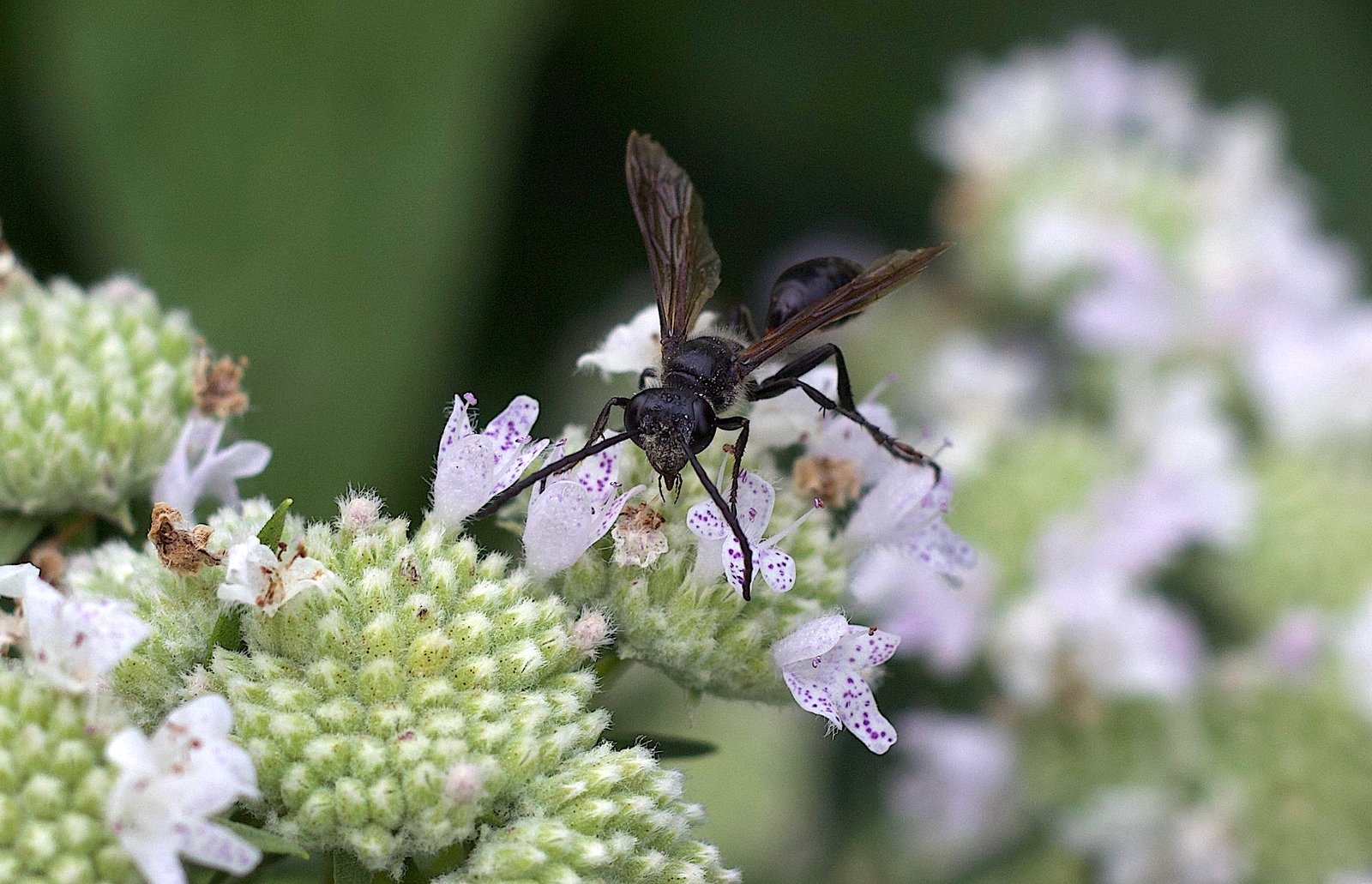
If I could recommend one perennial for attracting pollinators in a Northwest Ohio garden, Virginia mountain mint would be near the top of the list.
Despite its name, it isn’t a mountain plant in the way many people imagine. It naturally grows throughout much of eastern North America in prairies, open woodlands, meadows, woodland edges, and other sunny habitats.
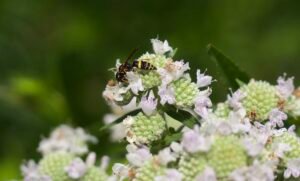
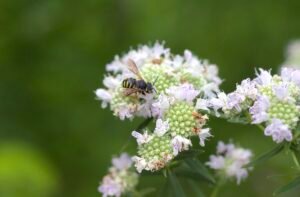
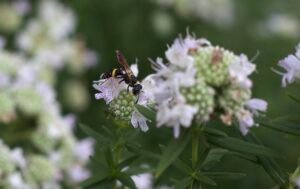
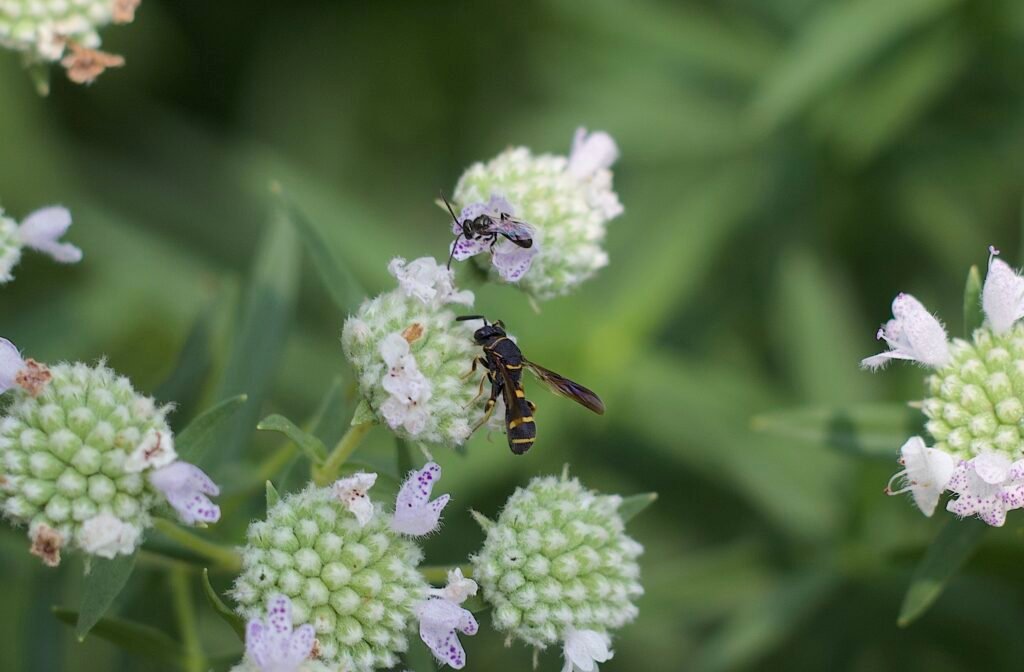
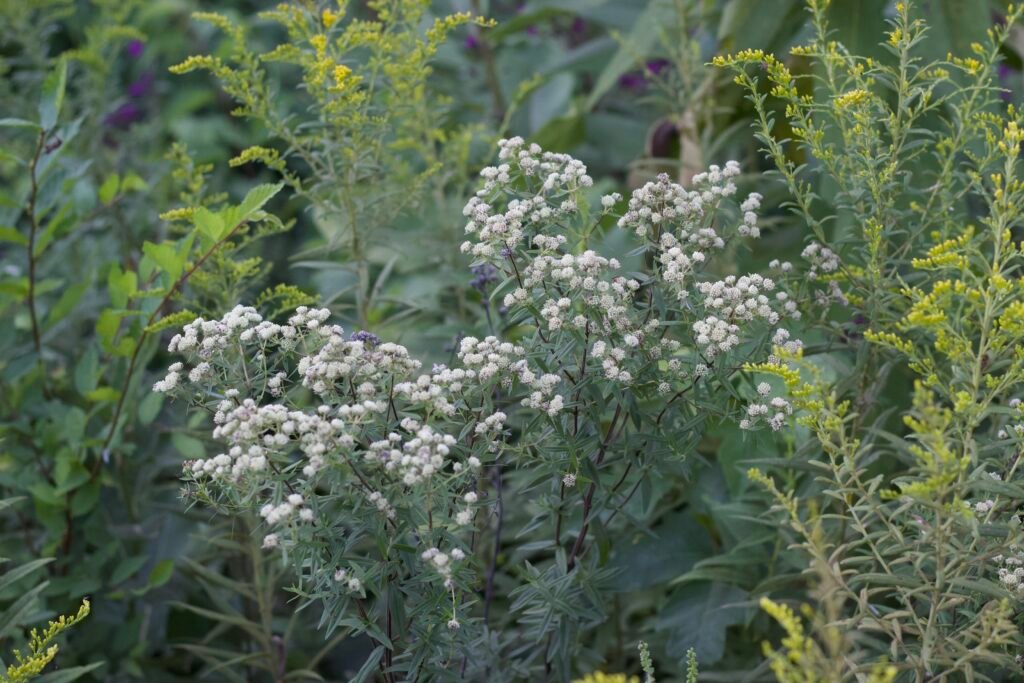
During peak bloom, its clusters of small white flowers become one of the busiest places in the garden. Bees, wasps, butterflies, flies, beetles, and countless other beneficial insects often cover the plant from morning until evening.
Rather than attracting one or two species exceptionally well, Virginia mountain mint attracts almost everything.
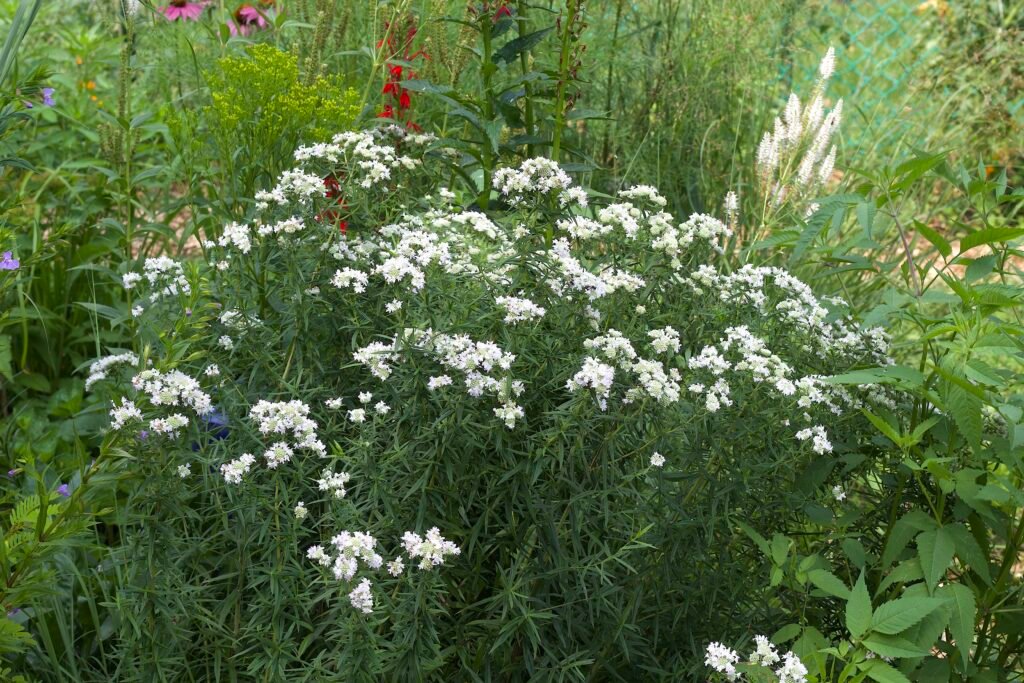
Quick Facts
Scientific Name: Pycnanthemum virginianum
Common Name: Virginia Mountain Mint
Plant Family: Mint (Lamiaceae)
Native Range: Much of eastern and central North America
Native Habitat
- Prairies
- Meadows
- Open woodlands
- Woodland edges
- Savannas
- Roadsides
Bloom Time
July through August
Height
2–4 feet
Spread
2–4 feet, slowly expanding by rhizomes
Sun
- Full sun
- Partial sun
Moisture
Dry to moderately moist soils
Soil
Adaptable to clay, loam, and sandy soils with good drainage.
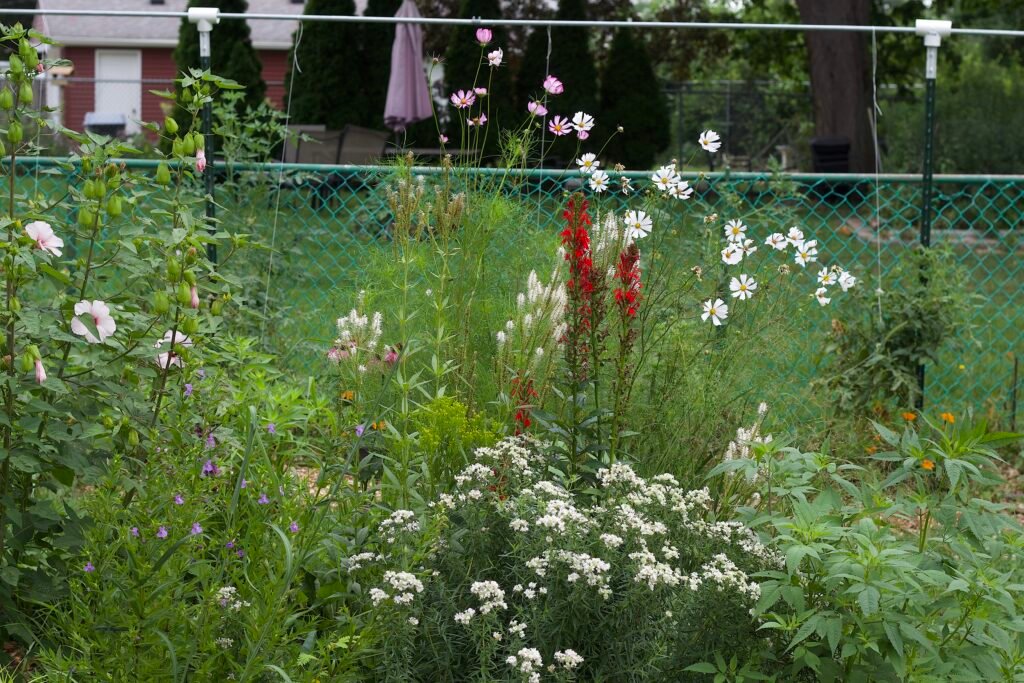
Why I Grow It
Virginia mountain mint has become one of the most dependable pollinator plants in my yard.
When it begins flowering, nearly every visit outside includes something new. Tiny native bees share flowers with bumble bees, honey bees, wasps, butterflies, hoverflies, soldier beetles, and dozens of insects I still can’t identify.
Today, my son and I stopped for just a few minutes to watch one patch in bloom. In that short time, we observed what appeared to be a specialist bee, two different species of wasps, a bumble bee, a lightning bug, and several other tiny insects we couldn’t identify. It was a reminder that sometimes the busiest wildlife habitat in a backyard is only a few square feet.
It’s one of the few plants that consistently feels alive every time I walk past it.
If someone asked me to choose a single plant to demonstrate just how much insect diversity exists in a healthy habitat, this would probably be my choice.
Wildlife Value
Virginia mountain mint is widely considered one of the highest-value nectar plants available for native gardens.
Its flowers attract an incredible diversity of pollinators and beneficial insects, including:
- Native bees
- Bumble bees
- Honey bees
- Small carpenter bees
- Sweat bees
- Leafcutter bees
- Butterflies
- Skippers
- Hoverflies
- Soldier beetles
- Predatory wasps
- Numerous beneficial insects
Many of the predatory insects visiting the flowers help control common garden pests, making this plant valuable beyond pollination alone.
Virginia mountain mint also serves as a larval host for several moth species, adding another important layer to its ecological value.
Growing Tips
Virginia mountain mint is surprisingly easy to grow.
It tolerates a wide range of soils and becomes fairly drought tolerant once established.
Like many members of the mint family, it slowly spreads through underground rhizomes. Unlike culinary mints such as peppermint or spearmint, however, most gardeners find Virginia mountain mint much easier to manage. Including me, I find it plays exceptionally well with others, not to overbearing but also doesn’t get pushed around.
Giving it a little room to naturalize allows it to develop into a beautiful colony while remaining well behaved in most native plantings.
Design Ideas
Virginia mountain mint pairs beautifully with many summer and late-season prairie species, including:
- Purple coneflower (Echinacea purpurea)
- Wild bergamot (Monarda fistulosa)
- Tall ironweed (Vernonia gigantea)
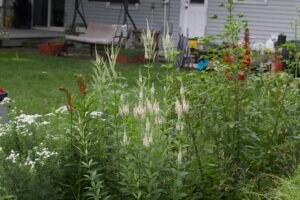
- Culver’s root (Veronicastrum virginicum)
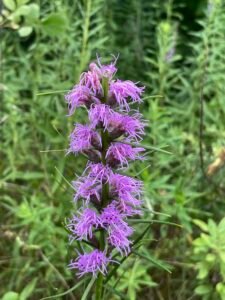
- Dense blazing star (Liatris spicata)
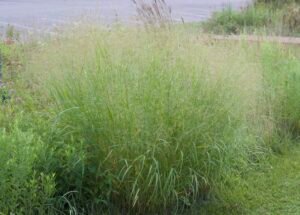
- Switchgrass (Panicum virgatum)
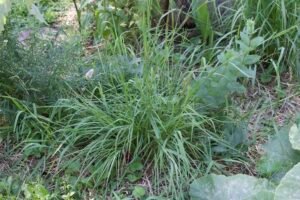
- Little Bluestem (Schizachyrium scoparium)
- Cardinal flower (Lobelia cardinalis)
Its bright white flowers also provide welcome contrast among the purples, pinks, and yellows that dominate many native gardens in midsummer. Throw in some Lobelia cardinalis and you’ll have hummers and insects galore.
A Note About Mountain Mints
The mountain mints belong to the genus Pycnanthemum, a group of North American native perennials known for their exceptional value to pollinators. While the species share many characteristics, each has its own preferred habitat and growth habit.
- Virginia mountain mint (Pycnanthemum virginianum) – One of the most adaptable species. It grows well in average to moderately moist soils and tolerates clay, loam, and sand. An excellent choice for most home gardens.
- Clustered mountain mint (Pycnanthemum muticum) – Prefers moist to wet soils and is often found in wet meadows, stream edges, and other low-lying areas. Its distinctive silvery flower bracts make it one of the most ornamental mountain mints.
- Narrowleaf mountain mint (Pycnanthemum tenuifolium) – The most drought-tolerant of the commonly available species. It naturally grows in dry prairies, sandy soils, and open fields. Its narrow, thread-like leaves give it a finer texture than the other mountain mints.
- Hairy mountain mint (Pycnanthemum pilosum) – Favors average to slightly dry soils in prairies, woodland edges, and open woodlands. Its softly hairy stems and leaves help distinguish it from the other species.
Although each species occupies a slightly different niche, they all share one remarkable characteristic: they are among the very best native plants you can grow for supporting pollinators.
My Experience
Virginia mountain mint will now be one of the plants I most look forward to in the summer.
While many flowers attract one or two pollinator species at a time, this plant often resembles a tiny ecosystem. Every flower cluster seems to host a different combination of insects, each playing its own role.
Some days I stop to photograph bumble bees. Other days it’s tiny native bees, hoverflies, soldier beetles, or predatory wasps. Nearly every visit reveals something I hadn’t noticed before.
That’s one of the reasons I enjoy this plant so much. It reminds me that restoring habitat isn’t simply about growing beautiful flowers. It’s about creating spaces where hundreds of small interactions happen every day—most of which we’d never notice if we didn’t slow down and observe.


