
Field observations recorded June 18, 2026.
Habitats Explored: Floodplain Forest • Oak Woodland • Oak Savanna • Riparian Creek Corridor • Seasonal Wetlands • Successional Thickets • Lowland Oxbow Depressions
First Impressions
There are places that feel preserved, as if time has slowed down long enough for nature to remain untouched.
Swan Creek Metropark feels different.
Walking its trails, I was reminded that this landscape is still actively being shaped. Water continues carving through the valley. Trees fall. New habitats emerge. Roots cling to eroding banks. Life and decay exist side by side.
On this early summer walk, I set out expecting a quiet morning in the woods.
What I found was a landscape still writing its own story.
A Woodland Shaped by Water
The first thing that stands out at Swan Creek is its topography.
Unlike the flat landscapes many people associate with Northwest Ohio and the Great Black Swamp, Swan Creek rises and falls. Trails descend into creek valleys, climb wooded slopes, and pass through low areas that flood during wet periods.
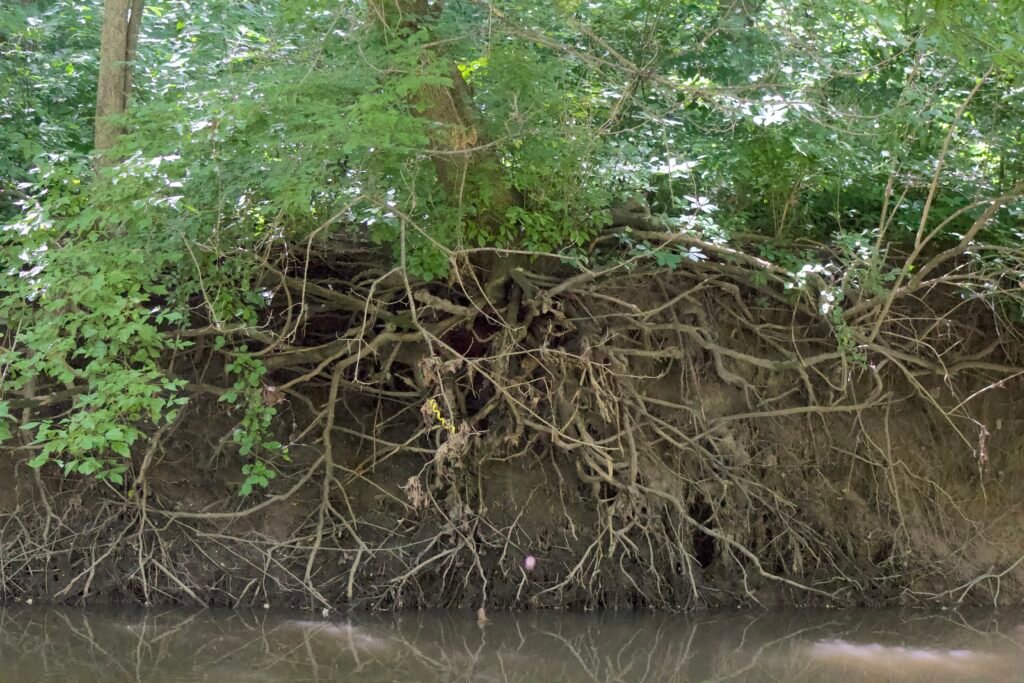
Near the creek, exposed roots reveal the ongoing work of erosion. Soil slowly disappears beneath trees while roots stretch outward, gripping the bank and holding on.
These roots are more than anchors.
They are habitats.
Insects hide between them. Small animals seek shelter beneath them. Mosses, fungi, and microorganisms find opportunities in every crack and crevice.
Even before seeing wildlife, the landscape itself tells a story of adaptation.
Hidden Life Along the Creek
The creek was running high enough to carry its familiar muddy scent through the woods.
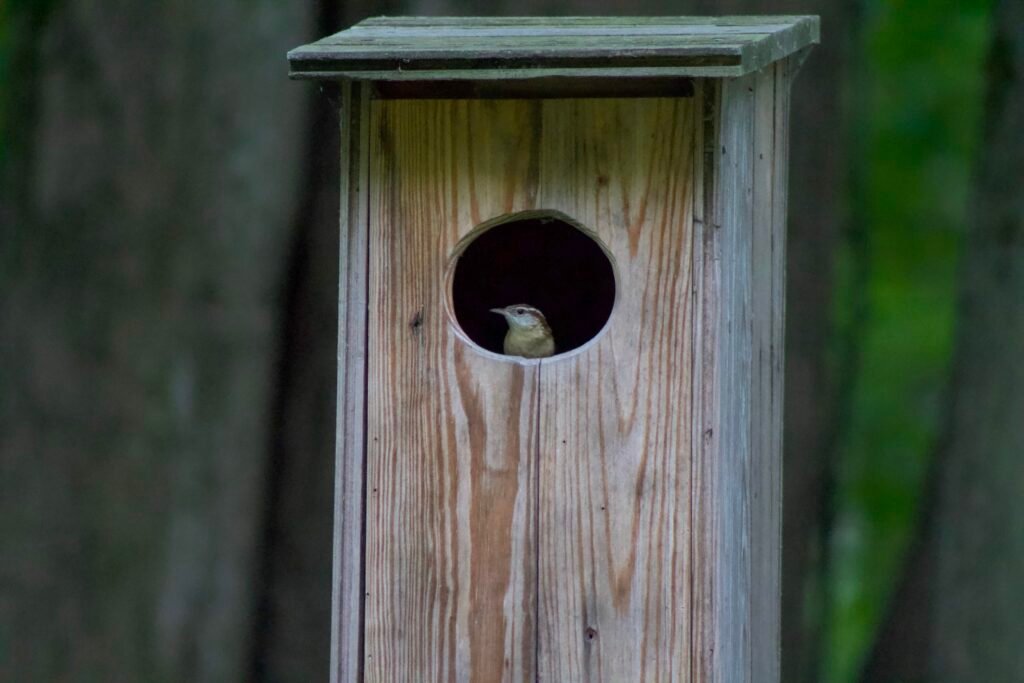
As I followed the shoreline, movement caught my attention near a duck nesting box.
A Carolina wren had claimed it as a home.
The tiny bird peeked cautiously from the entrance while its mate sounded alarm calls from nearby branches. After giving them space, I watched from a distance as they continued tending their young.
Moments like these are easy to miss.
Hundreds of people may walk past the same nest box every season without realizing it has become part of another species’ story.
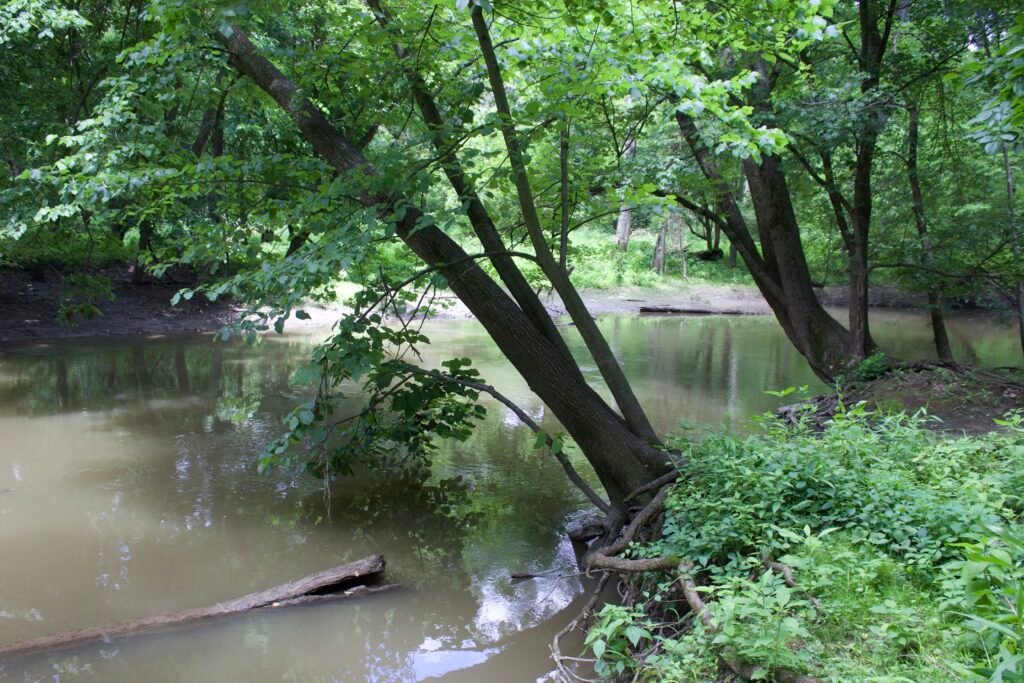
Further downstream, the creek curved beneath leaning trees whose roots have held firm despite years of flooding and erosion.
The water itself appeared calm that morning.
But every bend, exposed root, and muddy bank revealed the quiet force that continues shaping this place.
A Tree in Transition: When Failure Becomes Habitat
One of the most memorable discoveries of the day was a recently fallen maple tree.
One of the most memorable discoveries of the day was a recently fallen maple tree.
The damage suggested a sudden and powerful disturbance.
The tree had shattered violently, splitting near its base and breaking apart into multiple sections before crashing into the creek below. Fresh wood was still exposed. Leaves remained green. Very little debris had collected around it.
Whatever happened here had happened recently.
Standing beside it, it was impossible not to imagine the force involved.
The crash.
The splintering wood.
The sudden transformation from living tree to future habitat.
A fallen tree may look like destruction, but forests operate differently than we often think.
The moment a tree falls, another chapter begins.
Wood-boring insects arrive. Fungi move in. Cavities form. Mosses establish themselves. Small mammals find shelter. Birds use the structure for feeding and nesting. Over time, cavity-nesting native bees, including mason bees and leafcutter bees, may use cracks and abandoned insect tunnels within the decaying wood.
Life and death are not separate stories in a healthy ecosystem.
They are the same story.
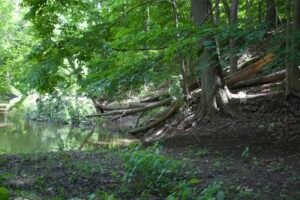
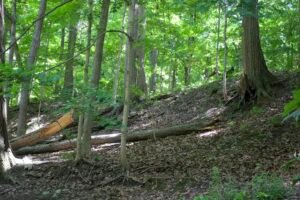
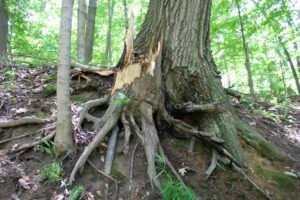
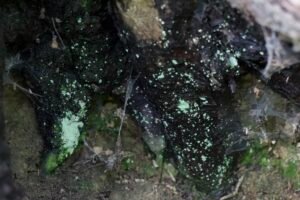
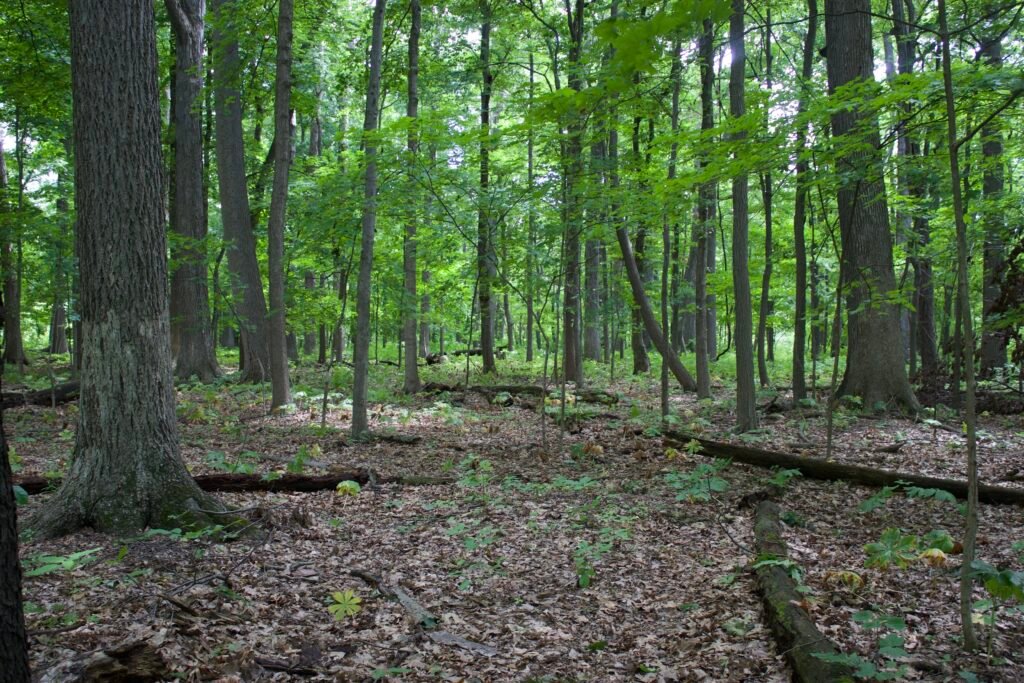
Just beyond the fallen maple, the woodland floor offered a glimpse of what comes next.
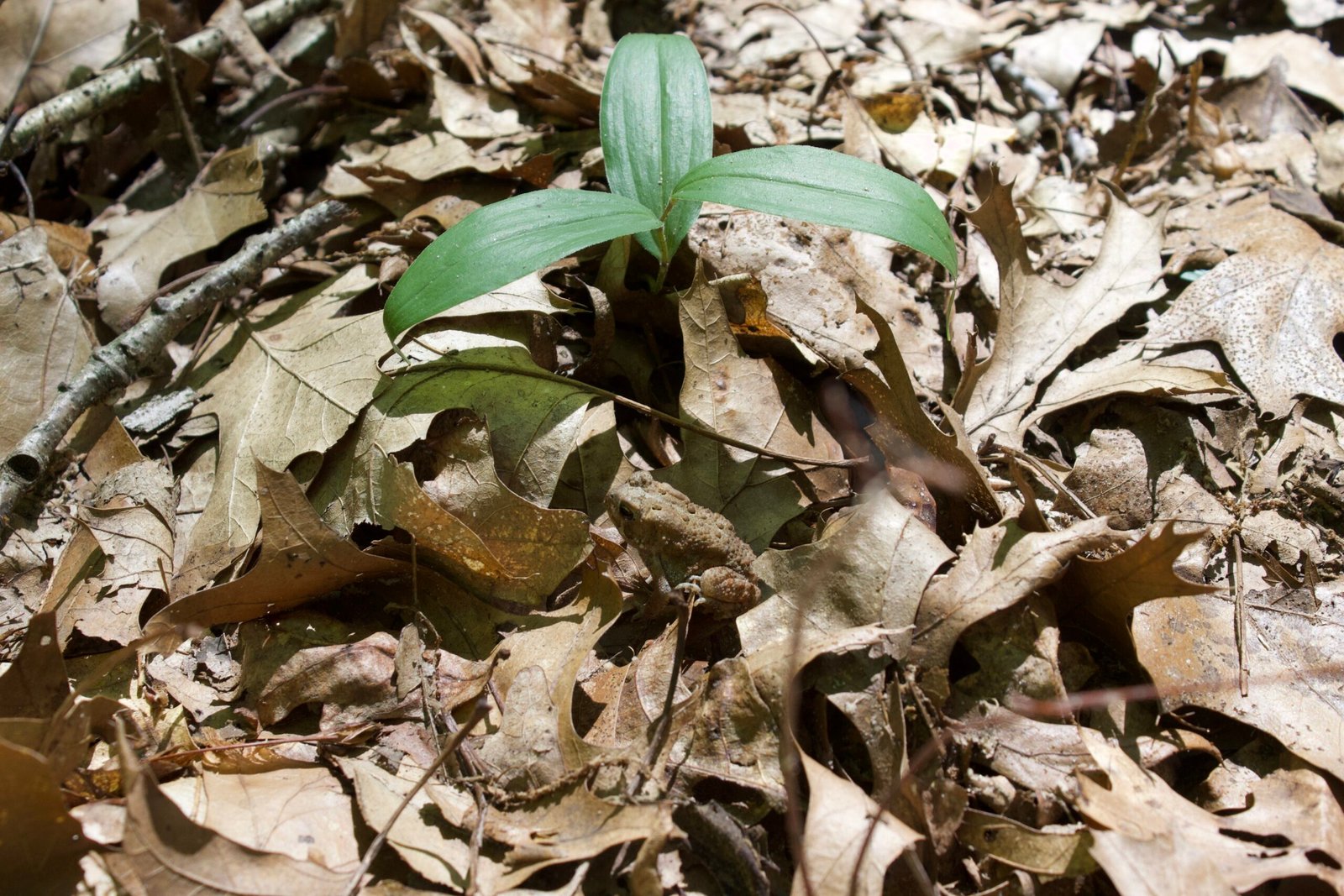
Decaying logs rested among oak leaves, scattered branches, and native woodland plants. Mayapple, blue cohosh, Christmas fern, white baneberry, and early meadow-rue emerged from rich soil built from generations of fallen leaves.
Nothing here was wasted.
Every fallen branch was becoming something new.
From Woodland to Savanna
As the trail climbed away from the creek valley, the atmosphere changed.
The air felt drier.
The woods opened.
Sunlight reached farther across the landscape.
This transition zone created a completely different feeling despite being only a short distance from the creek.
Maples, tulip trees, sycamores, and scattered hickories framed open spaces filled with grasses, forbs, and young trees.
It was here that I encountered one of the day’s most memorable visitors.
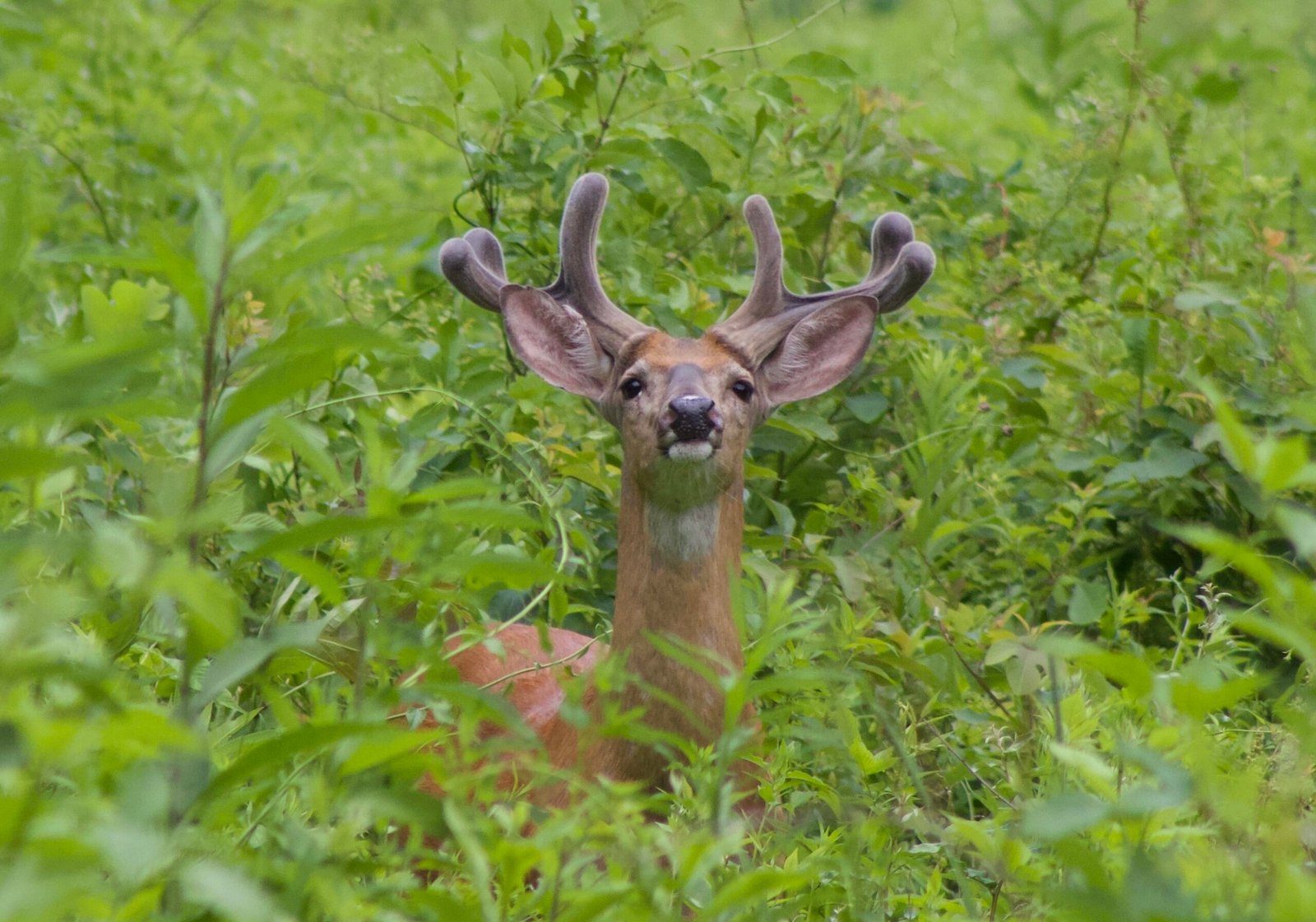
A young six-point buck stood quietly among the vegetation, watching me as carefully as I watched him.
For several moments neither of us moved.
His velvet-covered antlers caught the light while the wind moved through the surrounding plants.
Eventually, he decided I wasn’t a threat and returned to feeding.
The encounter lasted only a few minutes.
The memory will last much longer.
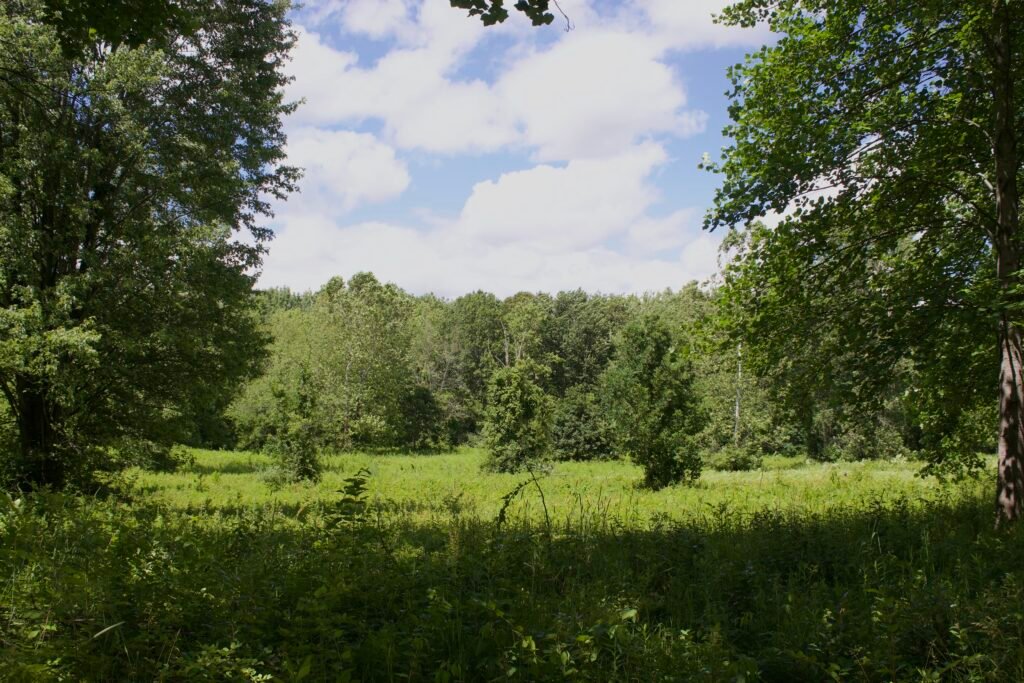
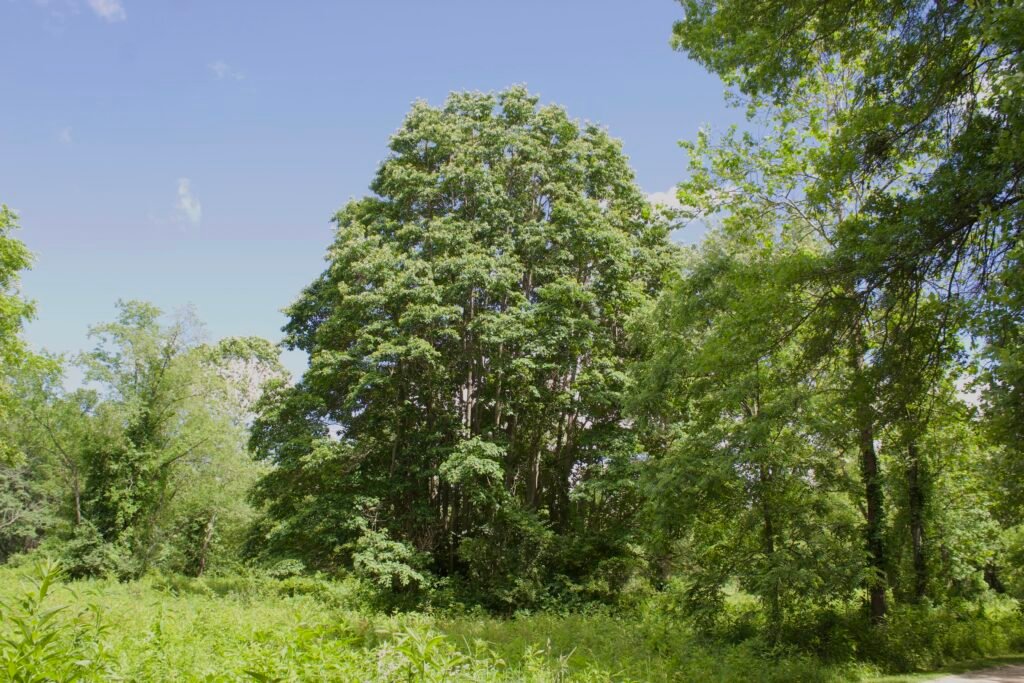
Not far away stood a grove of sassafras unlike anything else I encountered that day.
Sunlight illuminated the cluster against the surrounding savanna, creating a scene that felt almost separate from the rest of the landscape.
Another reminder that even within a single park, multiple habitats can exist side by side.
A Landscape Still Being Carved
Swan Creek Metropark feels peaceful.
But beneath that peacefulness is constant change.
Floodwaters reshape banks.
Roots become exposed.
Trees fall.
New habitats emerge.
Wildlife adapts.
Standing beside the creek, I found myself thinking about how temporary every moment in nature really is.
The fallen maple was once part of the canopy.
The exposed roots were once buried beneath soil.
The oxbows and creek bends were carved by water over time.
Nothing here is static.
And that may be the most remarkable thing about Swan Creek.
Not that it has been preserved.
But that it continues to evolve.
If you visit, take your time.
Look beyond the trail.
Notice the roots, the fallen trees, the shifting creek banks, and the spaces where new life is beginning.
You may discover that the landscape is still telling its story.