
Habitats Featured: Backyard Habitat • Brush Pile • Silver Maple • Woodland Edge • House Wrens
A Tiny Bird’s First Day
Sometimes the smallest moments reveal the biggest lessons.
I was watering one corner of my garden when I heard wrens calling nearby. It immediately caught my attention, so I looked up.
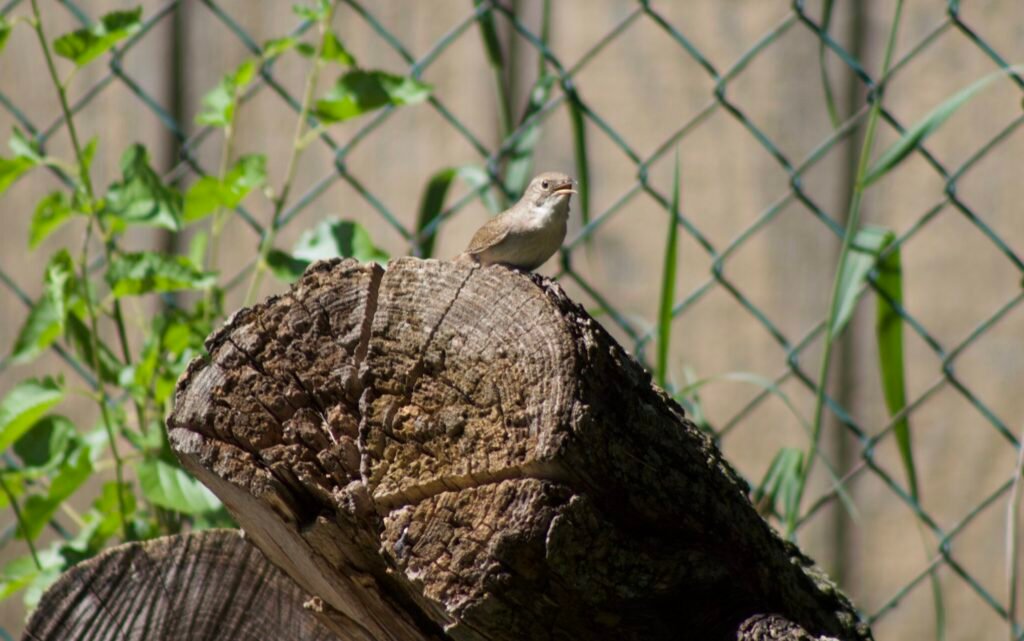
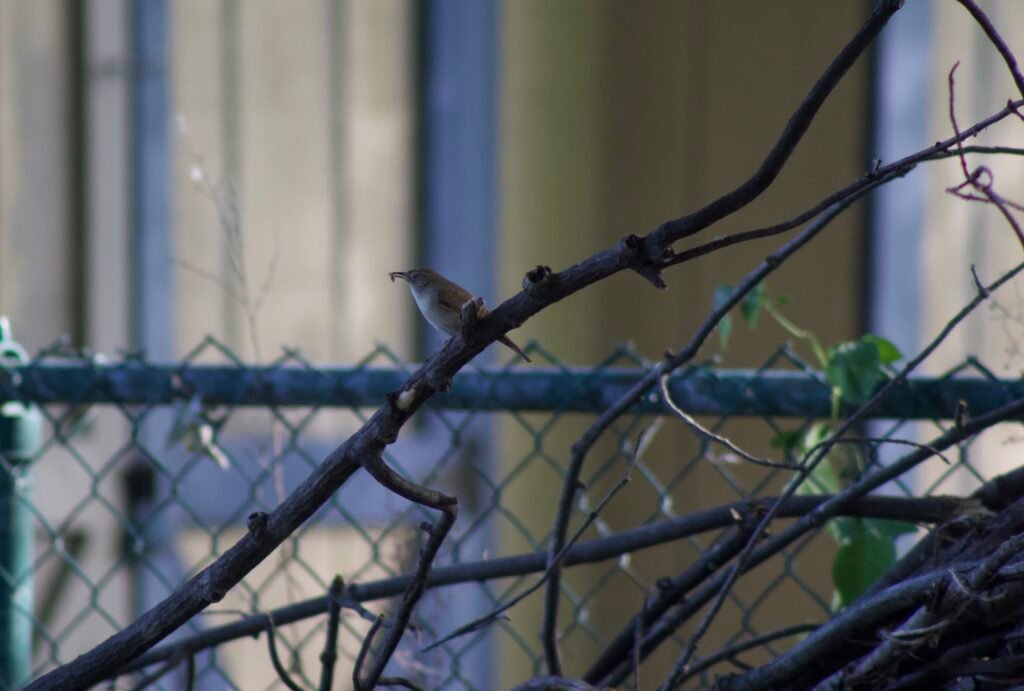
One of the adults was perched a short distance away.
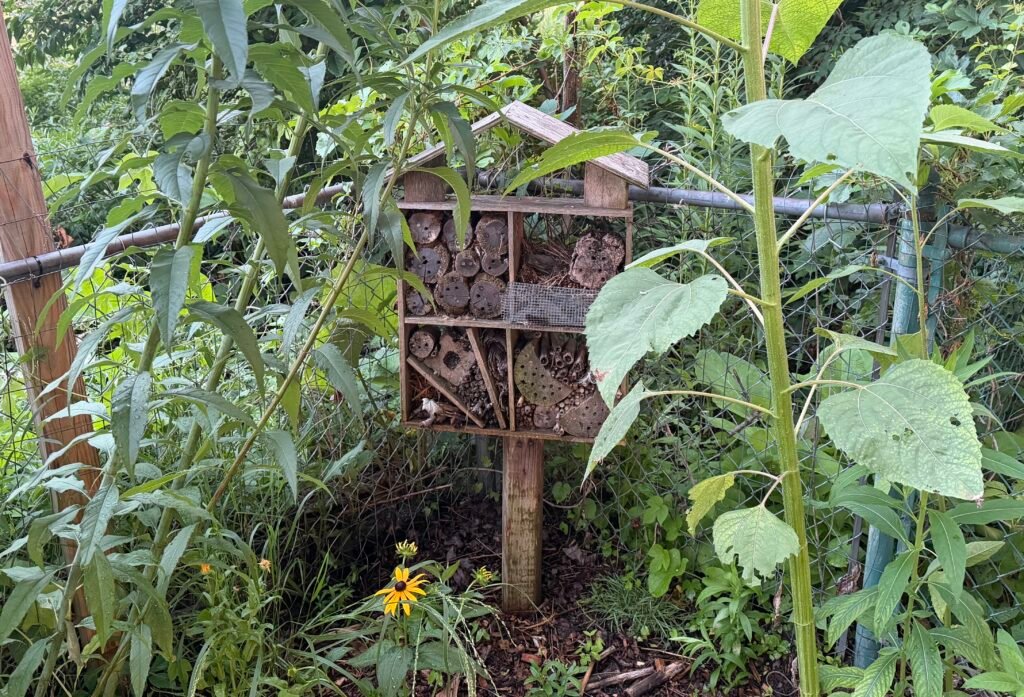
Then I noticed a young wren sitting on my bee hotel.
It tried to fly toward the adult but didn’t quite make the distance. Instead, it circled back to where it had started.
I can’t say with complete certainty that it was one of the fledglings from the nest I’d been watching for weeks.
But I never observed another family of wrens using my backyard that summer.
Standing there, watering hose in hand, I found myself smiling.
For several minutes, the watering could wait.
I simply watched.
Before the Red Feeder
The previous year, I had done what many people do when they want to attract Northern House Wrens.
I installed several traditional birdhouses and hoped one of them would choose to nest there.
The wrens certainly showed interest.
Unfortunately, so did the House Sparrows.
The wrens did choose one of the birdhouses that year, but the nesting attempt ended unsuccessfully. By the end of the season, it was clear the young had never left the nest.
I never learned why.
That experience slowly shifted my attention away from birdhouses and toward the habitat itself.
Building a Place Worth Exploring
By then, my backyard was already beginning to change.
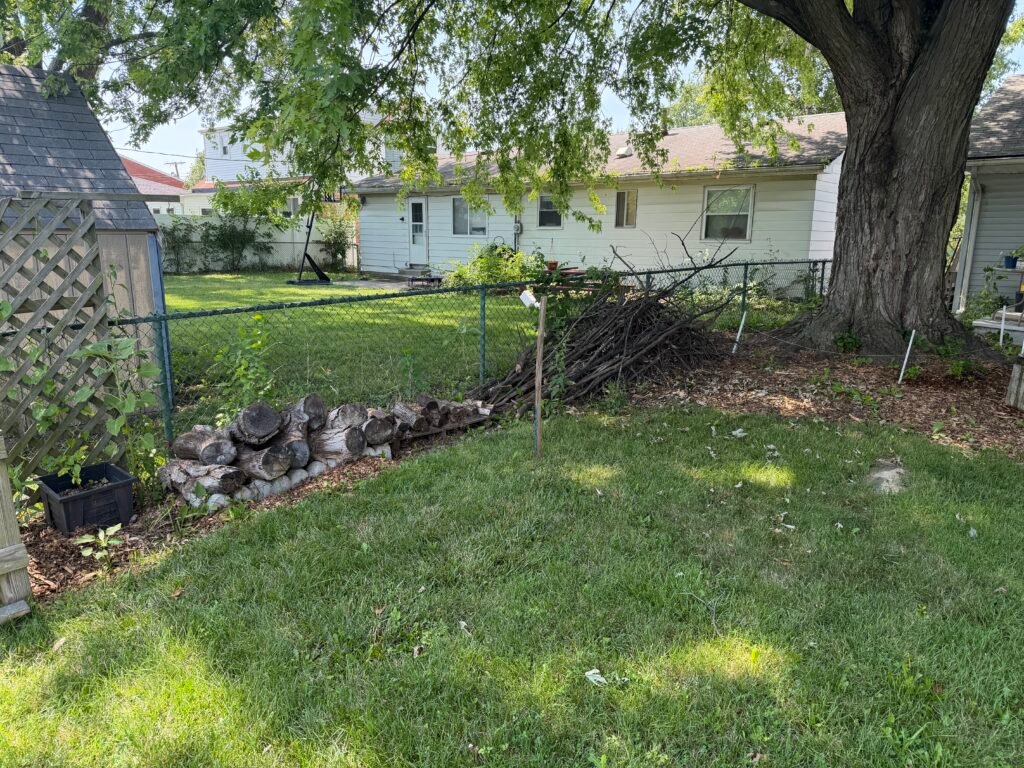
The brush pile wasn’t built specifically for wrens.
I knew they had nested in my yard the year before, and I knew they built their nests with sticks. But the brush pile had a much broader purpose.
I wanted fallen branches to become shelter.
I wanted insects.
I wanted fungi.
I wanted the countless small organisms that slowly turn dead wood back into soil.
Behind my fence sits a dense thicket filled with shrubs, vines, and trees. Beneath the silver maple, I began adding logs, branches, leaf litter, and native plants. None of it was designed for one particular species.
I wanted to build habitat first and let wildlife decide whether it wanted to use it.
Whether the wrens would use any of it, I had no idea.
The House I Never Intended
One spring morning, something caught my attention.
A House Wren wasn’t flying to one of the birdhouses.
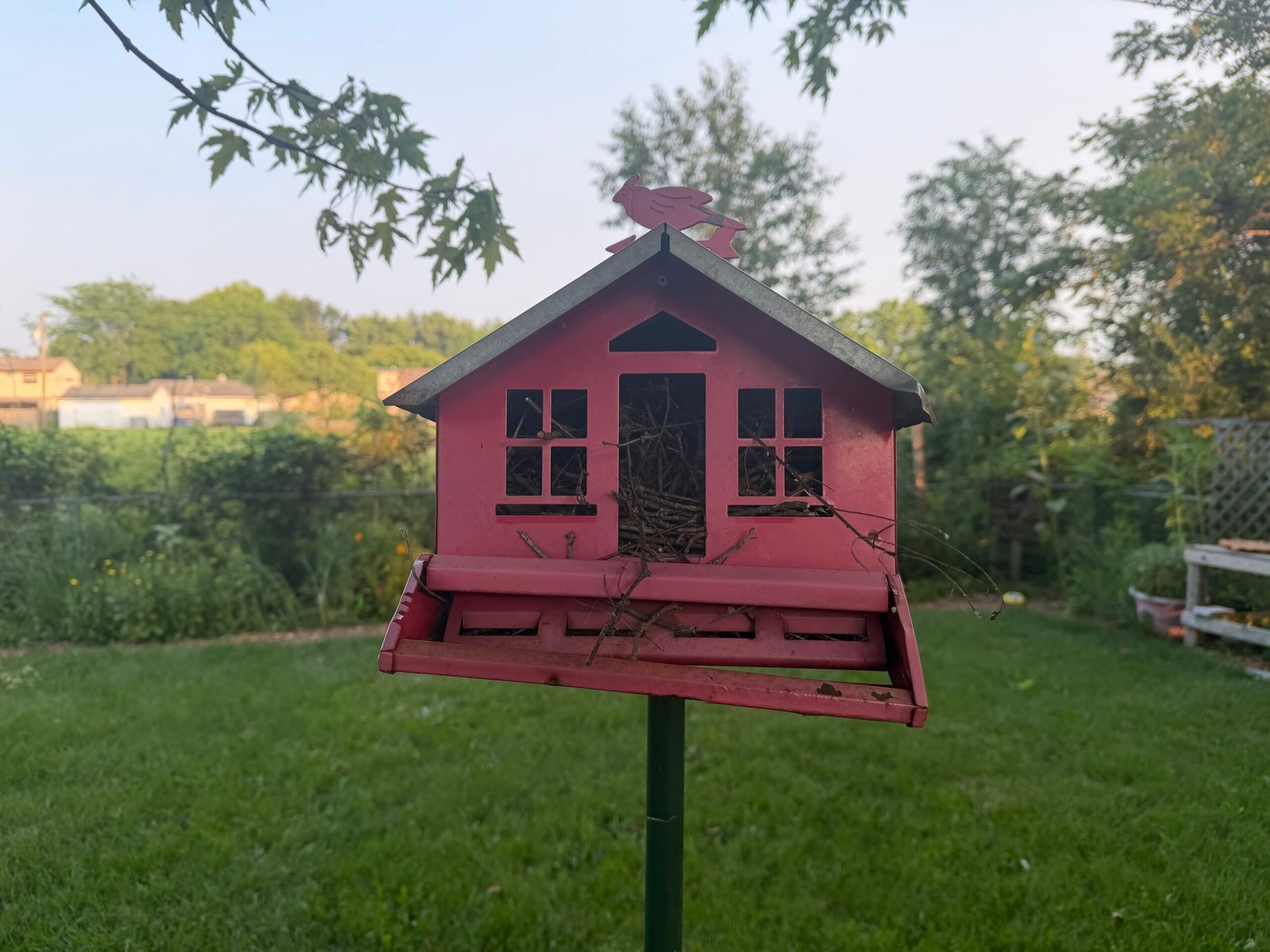
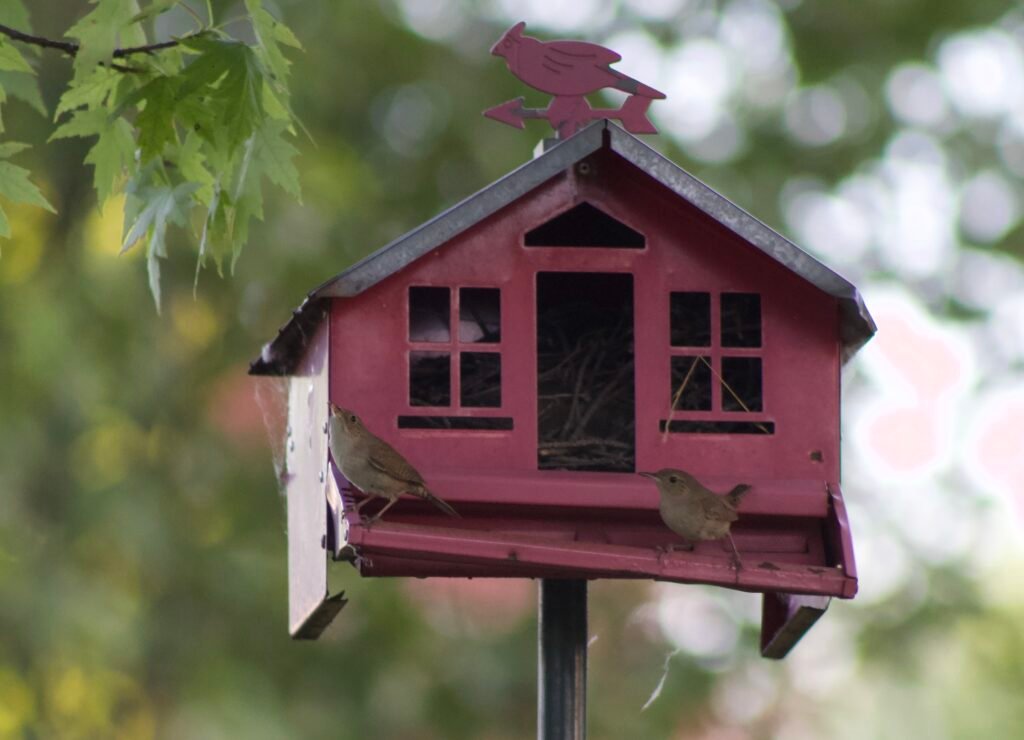
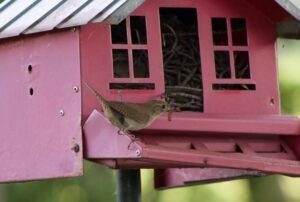
It was flying into an old decorative red bird feeder.
Not once.
Over and over again.
After everything I had done trying to provide the “right” nesting box, the wrens ignored every one of them and chose something I never intended to become a nest.
I couldn’t help but laugh.
Sometimes wildlife has better ideas than we do.
Over the next several days, I watched the wrens carry one stick after another into the feeder until it looked almost completely full.
Later, I learned that male House Wrens often build several nests before attempting to attract a mate. He’ll even take the female to each one before she chooses the nest she’ll use.
Whether that’s exactly what I was watching here, I honestly don’t know.
That’s one of the things I enjoy most about observing wildlife. One small question often leads to another.
Watching Instead of Wondering
Once the eggs hatched, my evenings changed.
I’d often find myself sitting on the swing simply watching the feeder.
Every few minutes one of the adults returned with another meal.
Sometimes it was a spider.
Other times it was a caterpillar.
Often it was an insect I couldn’t identify.
For nearly an hour one evening, I sat on the swing watching one of the wrens return to the nest again and again with insects. Looking back through my photos later, I realized I’d unintentionally documented just a small glimpse of how much work goes into raising a family. Nearly every trip brought something different.
This was one of the reasons I had planted native species in the first place—to support the insects that feed so much of the life around them. Some caterpillars would become butterflies or moths. Others would become food for birds raising their young.
The more time I spent watching them, the more familiar they became.
Eventually, I didn’t need to see them to know they were nearby.
I recognized their songs.
More importantly, I recognized their alarm calls.
One afternoon I heard that rapid chit-chit-chit-chit-chit-chit echo across the backyard. It reminded me of a tiny rattlesnake.
I looked up just in time to see one of the wrens relentlessly following a chipmunk through the habitat, calling the entire time until it finally disappeared into cover.
For such a tiny bird, it showed remarkable confidence.
Looking Beyond the Wrens
The wrens weren’t the only family raising young that spring.
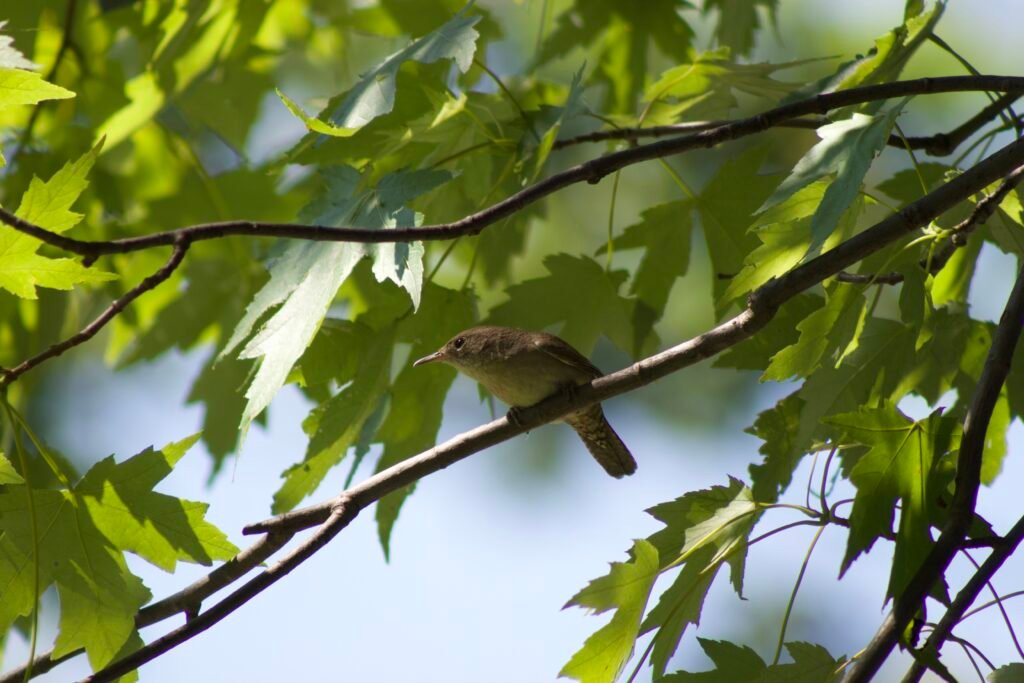
High above them, in the same silver maple, robins had built a nest of their own.
The two species shared the same tree, but they used the backyard very differently.
The robins searched for food in one way.
The wrens searched in another.
As I watched them day after day, I found myself paying less attention to individual birds and more attention to the habitat surrounding them.
The brush pile wasn’t simply a pile of sticks.
The maple wasn’t simply a shade tree.
The thicket behind the fence wasn’t simply an overgrown patch of vegetation.
Little by little, I began seeing how each piece of habitat influenced the others. What I was watching wasn’t an isolated backyard—it was one small part of a much larger ecosystem.
Becoming Part of Their Story
As I watched the young wren trying to reach one of the adults, I found myself thinking back over everything that had happened during the previous several weeks.
The birdhouses.
The brush pile.
The old red feeder.
The evenings spent sitting on the swing.
The songs.
The alarm calls.
The endless trips carrying insects back to the nest.
One observation had quietly led to another until, before I realized it, I had become invested in this little family.
Watching that fledgling explore my backyard, I felt something I wasn’t expecting.
Gratitude.
Not because the wrens owed me anything.
And not because I could say with certainty that the habitat I built was the reason they succeeded.
I can’t.
What I do know is that I had tried to build the kind of habitat wrens need.
And I had the privilege of watching a family choose to use it.
For me, that was enough.
It reminded me that creating habitat isn’t about controlling nature.
It’s about participating in it.
Sometimes, if you’re patient enough to pay attention, you get invited to witness the story that follows