
There was a small time period where I developed a habit of reclining in a zero-gravity chair on my back deck, leaning all the way back until I was looking directly overhead.
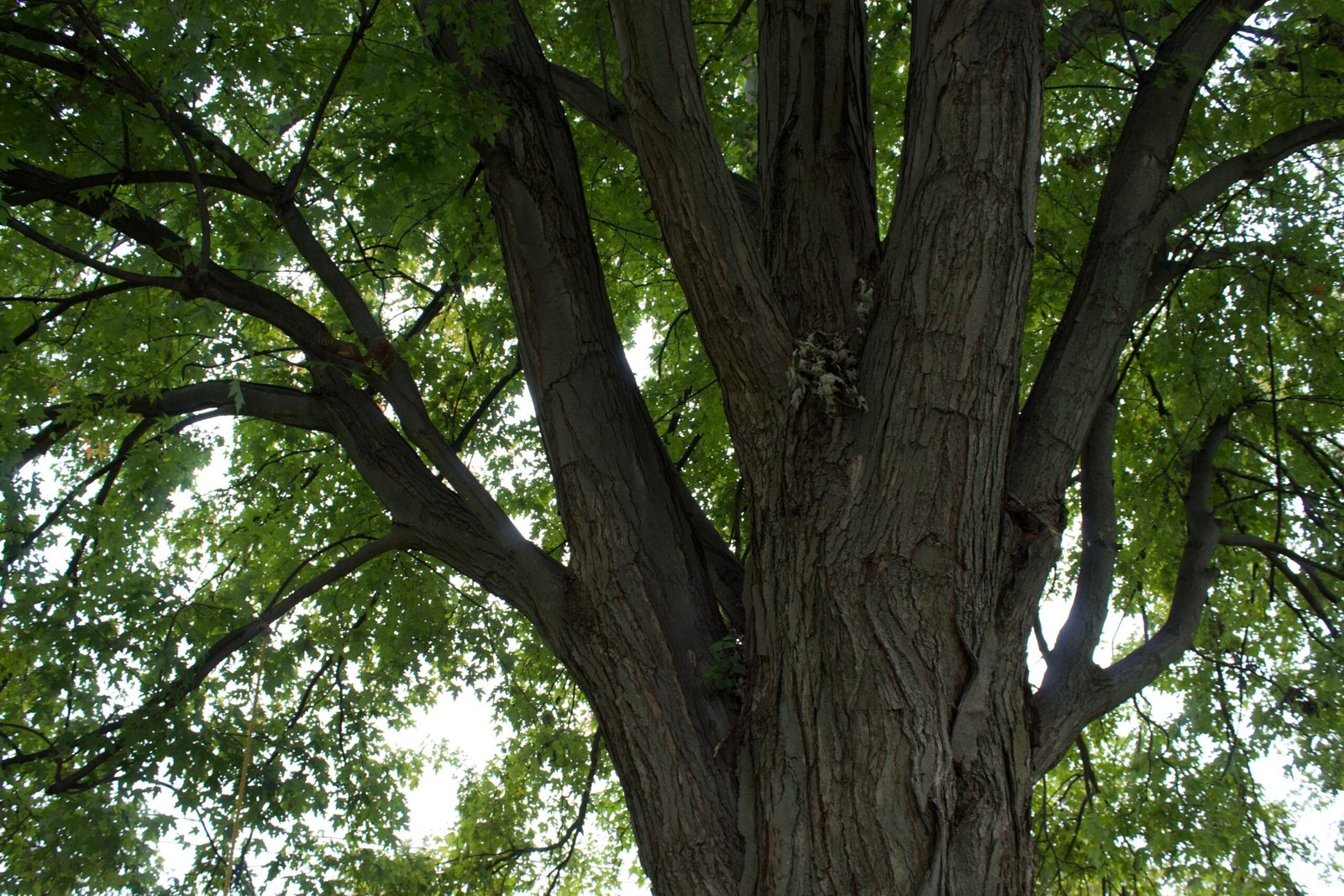
Above me was my enormous silver maple.
I’d lived beneath this tree for years. I watched my children play under it, listened to the squirrels chattering in its branches, and enjoyed the shade it provided during the hottest days of summer. But something about lying in that chair and looking straight up changed the way I experienced it.
I started noticing just how much was happening above my head.
Squirrels moved through the branches, sometimes disappearing into the canopy before reappearing somewhere else. Birds came and went. Sunlight filtered through the leaves, changing the appearance of the branches as the evening progressed.
Sometimes I just watched.
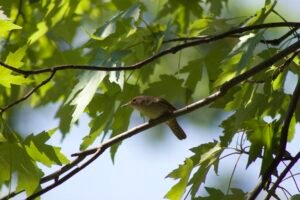
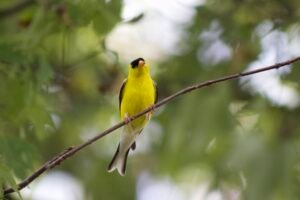
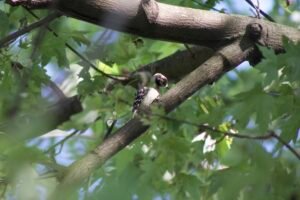
There was no particular reason to be looking for anything. I wasn’t trying to identify every bird or understand every movement. I was simply curious about what was happening in this enormous tree.
And the longer I watched, the more I noticed.
What I was beginning to discover was an entire little world that had been there all along.
A Century in the Making
This silver maple (Acer saccharinum) stands at least 75 feet tall in my backyard. Based on the research I’ve done, I estimate it to be around 100 years old, older than the house itself.
Honestly it’s probably the largest tree on my block. At least from what I can tell.
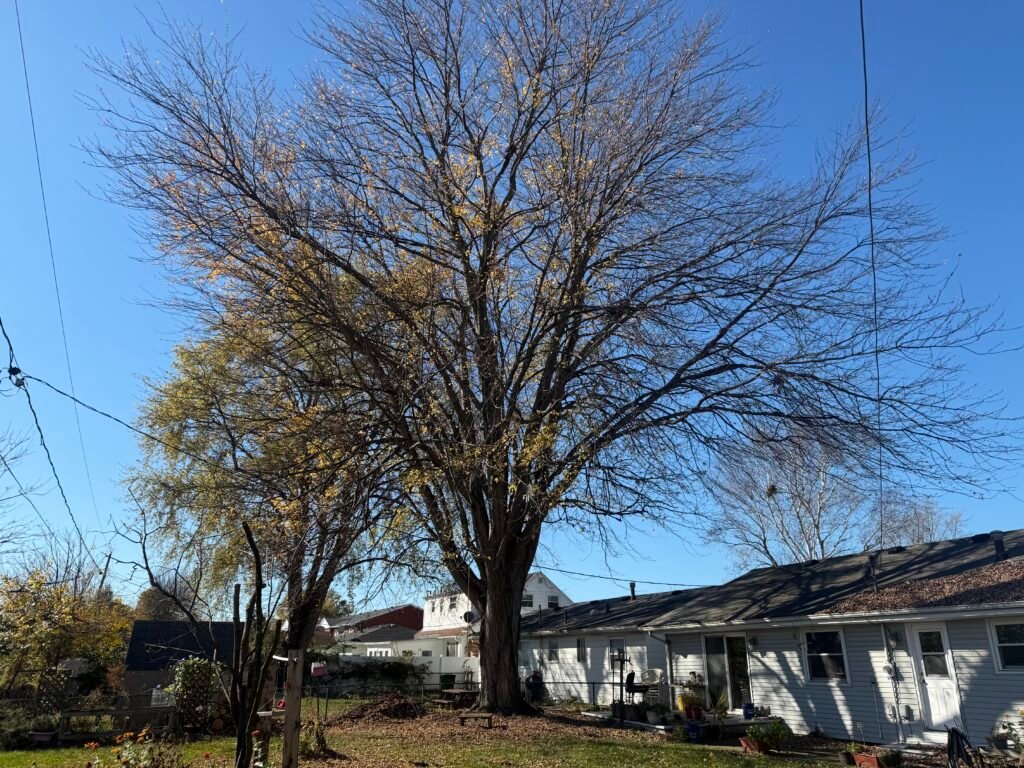
About 15 to 20 feet above the ground, the massive trunk begins dividing into several enormous limbs, branching in different directions to support the canopy overhead. The intersections between them create deep pockets and crevices, including one that, until recently, I hadn’t given much thought to. That changed this summer when my new friend Maddie began carrying sticks and nesting material into it, turning that space into a home.
Throughout the upper branches, I’ve counted approximately four squirrel nests.
I sometimes wonder what this tree has witnessed over the last century. Long before the houses and fences surrounded it, this silver maple was already growing here. From what I’ve learned, most of the homes on my block weren’t built until the 1950s and 1960s. But what did this place look like before then? Was it an open field, a woodland, or something entirely different? How many generations of squirrels and birds have depended on this tree, long before I ever came along?
When I first moved into the house about ten years ago, though, I wasn’t thinking about any of that.
I was thinking about shade.
The tree towers over the southern portion of my backyard, spreading its branches above the deck and helping shield the rear of the house from the summer sun.
At the time, that was more than enough reason to appreciate it.
I’ve always been a curious person, but my curiosity had been directed elsewhere for much of my adult life. I’d spent years learning skills, working, raising a family, and pursuing different experiences. My childhood fascination with nature hadn’t disappeared so much as it had been pushed into the background.
Eventually, I began finding my way back to it.
And the entire time this tree was waiting in my backyard.
A Place to Ground Myself
Long before I understood the ecological importance of the silver maple, I had already developed a personal connection with it.
During the first couple of years I lived here, I was beginning a journey of meditation, spirituality, and self-discovery.
Sometimes I would sit directly against the tree’s trunk, resting on its large exposed roots.
Other times, during meditation, I would imagine myself sitting there, with my feet resting against those roots and our energies intertwining. It was a way of grounding myself, settling my thoughts, and journeying deeper into meditation.
I can’t fully explain the feeling of connection I experienced. I can only say that it was meaningful to me.
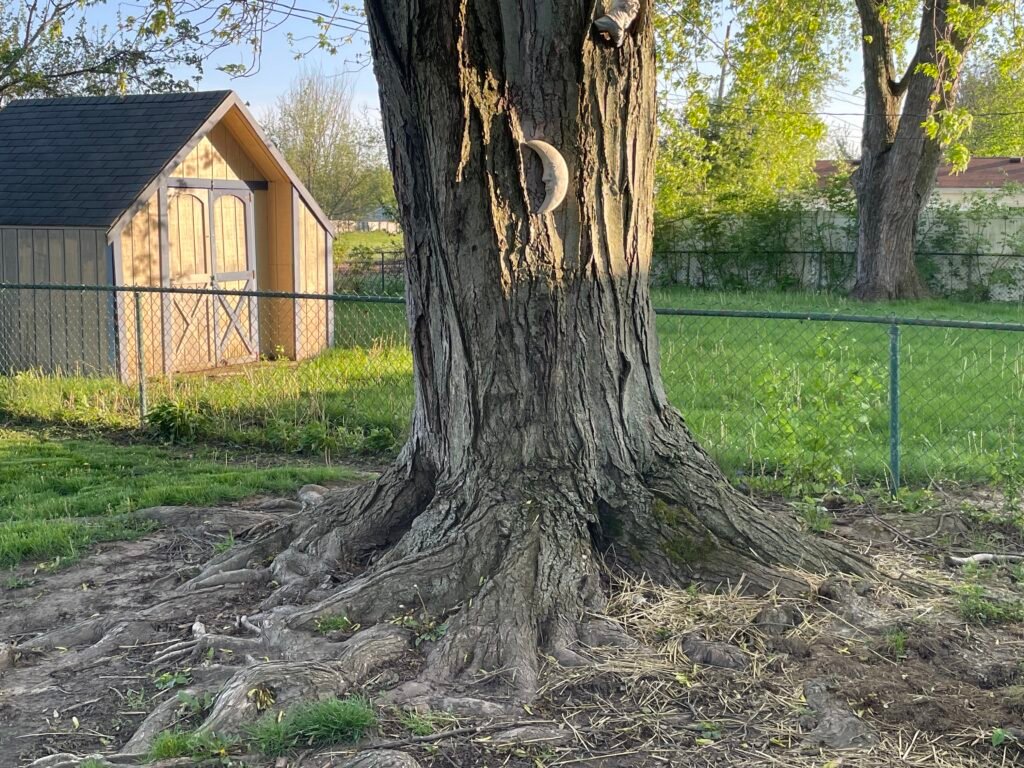
There was something comforting about sitting against something so large, so old, and so firmly rooted in the earth.
I admired its resilience, too.
This tree had endured decades of storms, wind, snow, insects, and whatever else nature had thrown at it. It had lost branches along the way, as trees do, but it continued growing.
I recognized something in that resilience.
I had experienced plenty of difficult seasons in my own life, and there was something about looking at this enormous living thing, still standing and apparently thriving, that I appreciated.
There was no need to understand every biological process taking place inside it to feel grateful for its presence.
That appreciation came first.
The ecological understanding would come much later.
The Swing Beneath the Maple
One of my favorite memories of the silver maple and this may come as shocking but it has very little to do with ecology.
It involves a swing.
When we first moved into the house, I hung a thick rope from one of the branches and made a simple swing with a wooden board for a seat.
A couple of years later, I received a blue fabric hammock-style swing during a Christmas gift exchange. It had a wooden spreader bar across the top and a single attachment point that allowed it to swing and spin.
Every spring, when the weather warmed, I would bring it out of the garage, attach it to the rope hanging from the maple, and leave it there throughout the season.
The kids loved that thing.
My sons, nieces, nephews, their friends, and just about any kid who came over would run straight for that swing. Sometimes they’d even fight over whose turn it was.
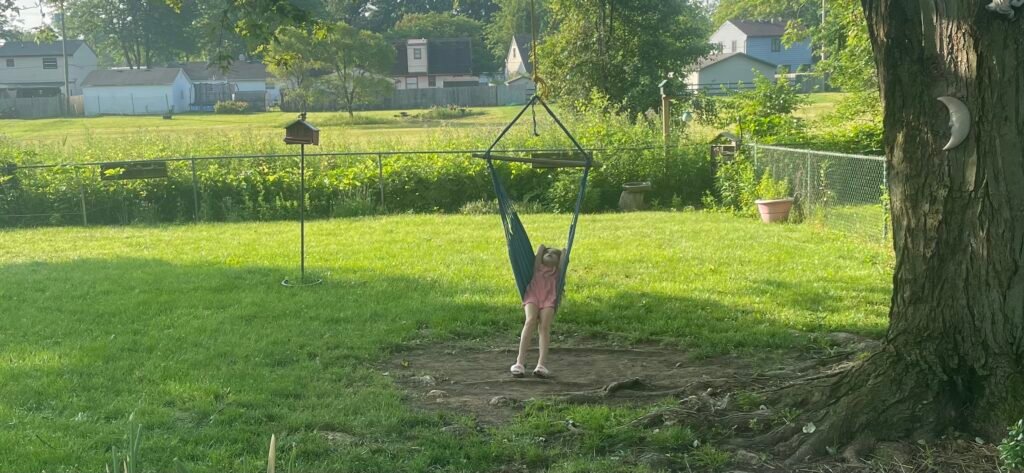
They would sit in it, lie across it on their stomachs, spin around until they were dizzy, push one another, and see how high they could swing. I watched more than one kid get sick from all that spinning. My sons and their friends would be dying laughing as they tried to push each other higher and higher, sometimes even trying to send one another straight into the tree.
Man, do I miss all that noise.
I rarely used the swing myself.
Most of my enjoyment came from watching them.
And then there was Kyra (KEE-ruh).
Kyra was my dog, and she spent almost her entire life at this house (minus 4 weeks). She had a particular talent for inserting herself into whatever the children were doing, especially if she thought someone might throw her ball.
I can still picture the kids swinging and spinning beneath the maple while Kyra stood directly underneath them, barking and demanding attention.
“Kyra, get out of the way!”
The kids were worried they might hit her. Me, in true dad fashion, I’d just say, “She’ll learn the hard way.”
Kyra, meanwhile, just wanted somebody to throw the damn ball.
Those were the kinds of summer moments that filled the backyard with life.
The swing lasted more than seven years. Its final summer was 2025, when the fabric eventually gave out.
My sons are teenagers now, but I suspect they’d still use that swing if it were hanging there today.
The rope remains attached to the tree.
But I’ll come back to that.
Kyra and the Squirrels
The children weren’t the only ones who found entertainment beneath the silver maple.
For nearly ten years, Kyra had an ongoing relationship with the squirrels. Relationship, yeah that’s what we’ll call it.
She would chase them up the tree, and they would retreat into the branches or escape along the nearby telephone wires.
Sometimes the squirrels would chatter from above. Other times, they would venture closer while remaining safely beyond her reach.
From my perspective, I honestly think they were just teasing her.
Kyra certainly took the encounters seriously. Sometimes I’d have to remind her to take a break from all that aggression and go get herself a drink.
Over time, I began paying more attention to the squirrels myself.

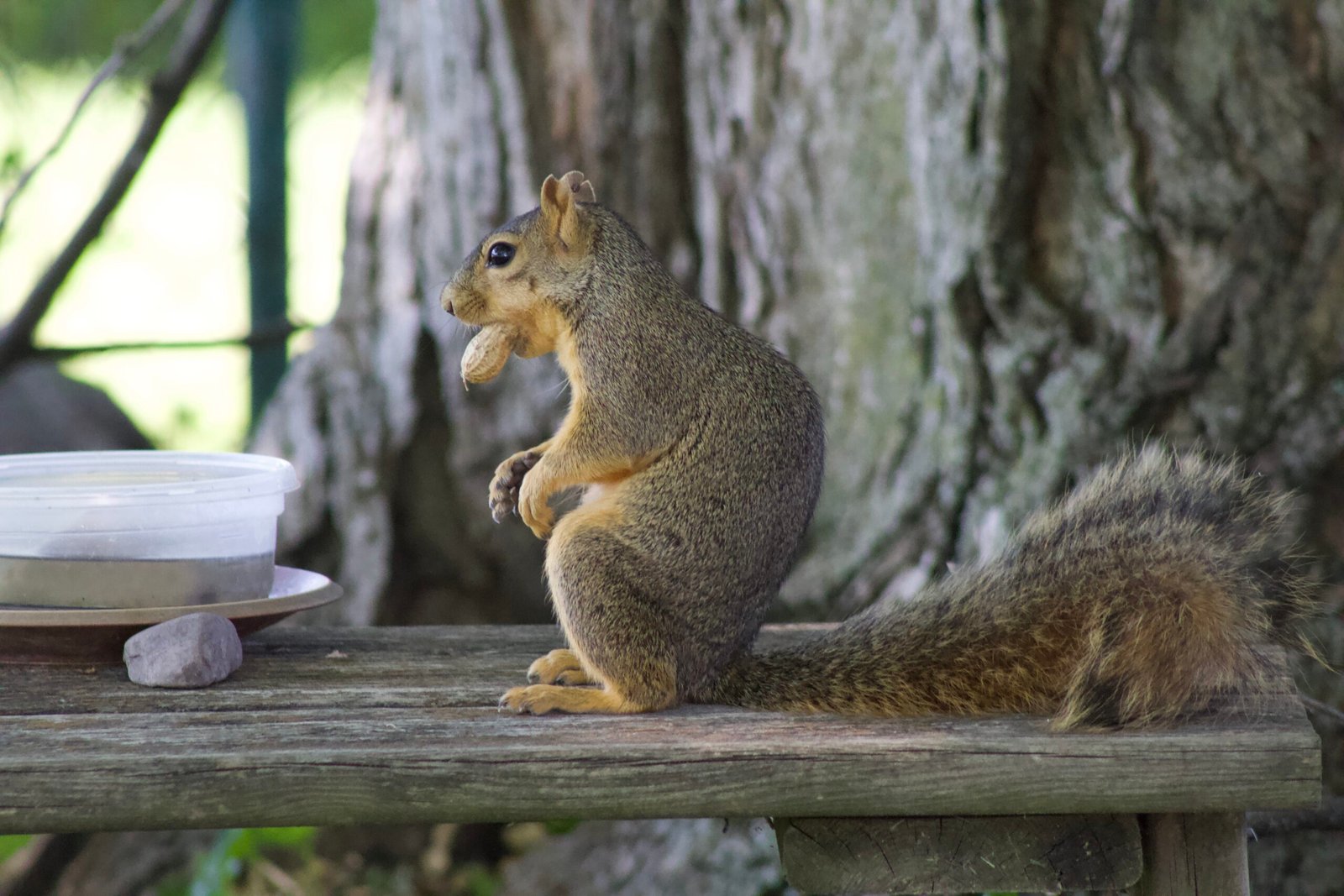
Toward the end of Kyra’s life, I even started offering some of them peanuts. Kyra didn’t seem particularly enthusiastic about this new arrangement, and sometimes I had to tell her to settle down while I fed them.
One of those squirrels was Maddie.
Her story deserves an article of its own.
But before I came to know Maddie as an individual, the squirrels were already teaching me something about the tree.
The Sounds of Summer
Of all the seasons, summer is when I enjoy the maple most.
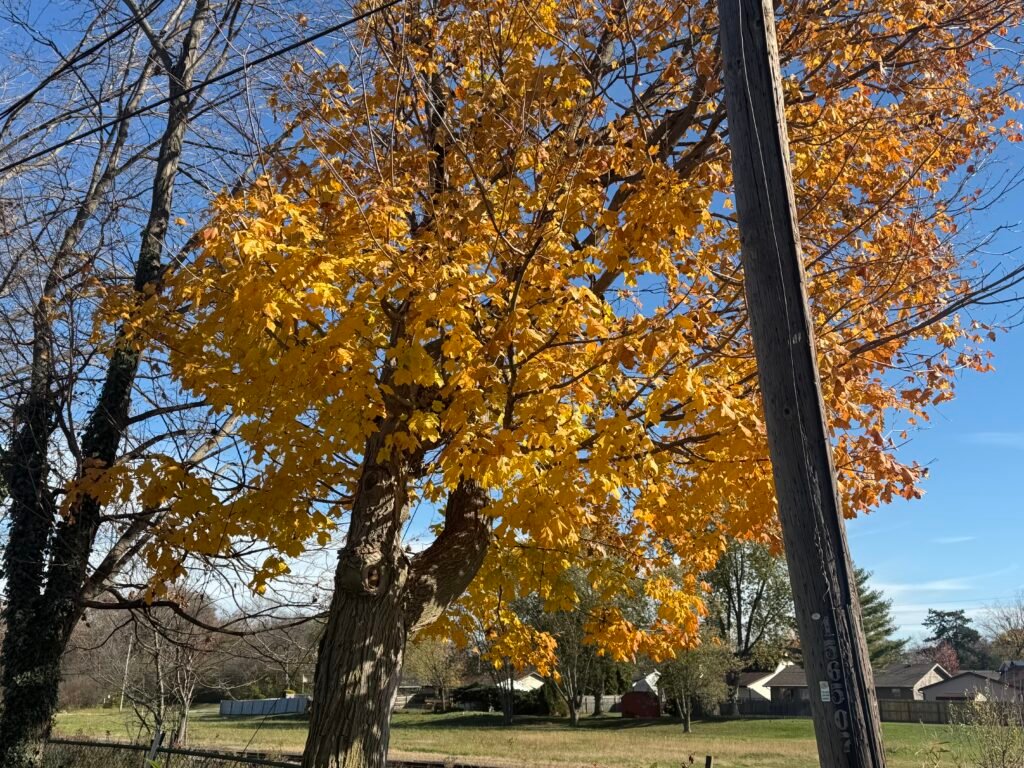
Not because it’s especially beautiful compared with other trees. The sugar maples in my neighborhood put on a much better show in autumn, and my neighbor’s black maple is no exception, with its beautiful golden foliage. My silver maple mostly turns a pale yellowish-brown, often covered in the dark spots I’ve noticed on its leaves for years. But its beauty was never really what made me fall in love with it.
What I love about summer is the life.
The tree is full of activity. Birds move through the branches, squirrels travel along the limbs, and insects fill the air with sound.
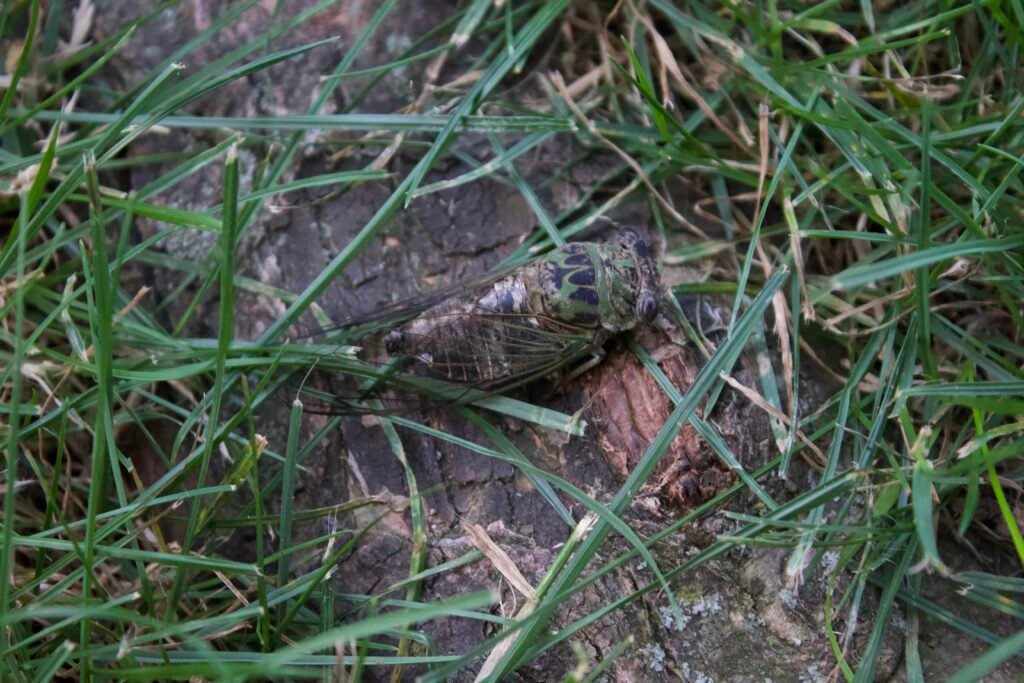
And then there are the cicadas.
I’ve always loved hearing cicadas.
The sound takes me back to my grandma’s house as a kid.
When I was growing up, her house was a very different environment from our little two-bedroom apartment, where my mom was raising five kids on her own. Our home was naturally full of activity, noise, and the chaos that comes with a big family. Grandma, on the other hand, lived alone in a three-bedroom house, where things moved at a much slower pace. Everything seemed to have its place, and grandma wasnt having chaos unless it was a football game. There was a certain calmness about being there that I really enjoyed.
I liked that atmosphere.
I remember her front yard, sometimes sitting on the steps, sometimes playing off to the side with my Hot Wheels or action figures, creating little imaginary worlds of my own.
And in the background, during those summer days, were cicadas.
Now I don’t think about my grandma’s house every time I hear them today. The sound just brings a feeling to me I cant describe.
But I know where some of that feeling comes from.
Sound has always been one of the strongest ways I experience the world around me.
The birds calling in the morning. Cicadas filling the evening air. Crickets after dark. The shifting sounds of life as evening settles over the backyard.
Sometimes, when I come home from work, I simply just need to get outside.
I need to slow down, walk through the garden, listen, and observe.
It has become a way for me to reset.
And the silver maple is at the center of so much of that experience.
A Neighborhood Above My Head
One of the most fascinating things about the silver maple is its structure.
Those three enormous limbs create an intersection high above the ground. I’ve watched squirrels carry nesting material into that area.
I’m not sure exactly how deep the opening goes.
I’ve been curious enough to consider looking more closely, but during one attempt Maddie became pretty upset. I guessed she might have young inside, so I left her alone.
From a squirrel’s perspective, it seems like prime real estate.
High above the ground, surrounded by massive limbs, and somewhat sheltered from the wind by the surrounding houses and the tree’s structure.
But that’s only one nesting location.
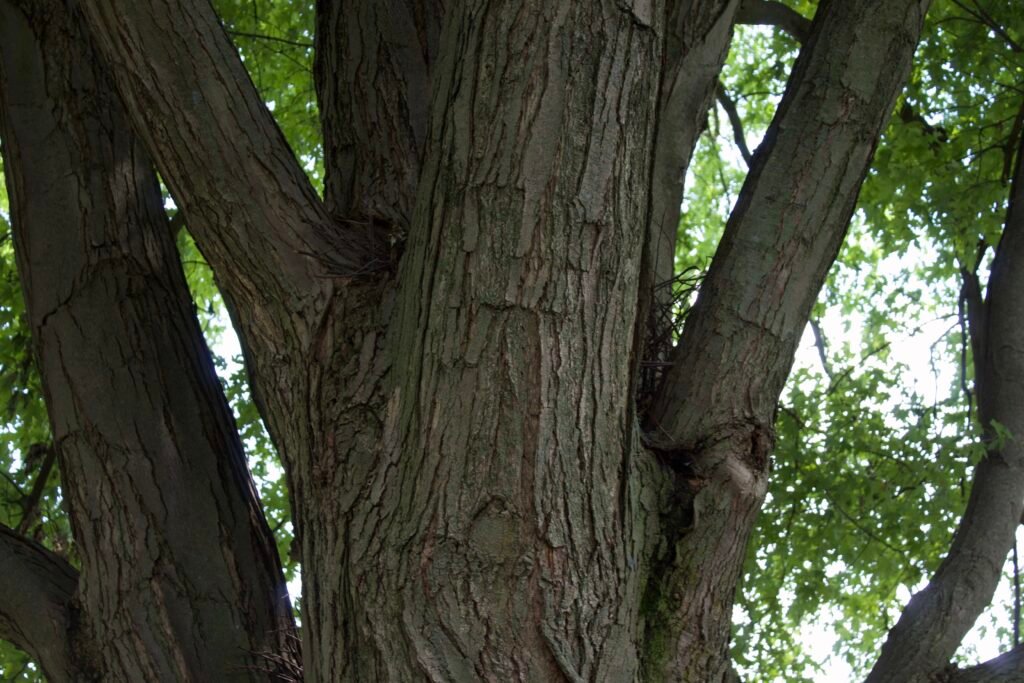
Throughout the canopy, squirrels construct exposed nests of leaves and twigs, known as dreys.
I’ve watched them chew off small branches, gather materials, and carry them into the upper canopy.
When the leaves fall in autumn, those nests become much easier to see.
I remember teaching my sons to look up into the trees as we drove through the neighborhood.
Once the leaves were gone, we could spot squirrel nests everywhere.
It became another way of recognizing the wildlife living around us.
I also noticed that many of the exposed nests visible in autumn seemed to disappear by late winter or early spring. Weather and deterioration can take their toll on these structures, and this is when I learned squirrels may use different nesting locations throughout the year.
Those observations helped me appreciate the importance of sheltered cavities, mature trees, and even standing dead trees that provide nesting opportunities.
As a child, I was fascinated by animals found in other parts of the world.
I wanted to see tigers and other magnificent creatures that seemed so different from the wildlife around me.
Squirrels were just squirrels.
They were everywhere.
But the older I’ve become, the more I’ve realized how interesting these familiar animals actually are.
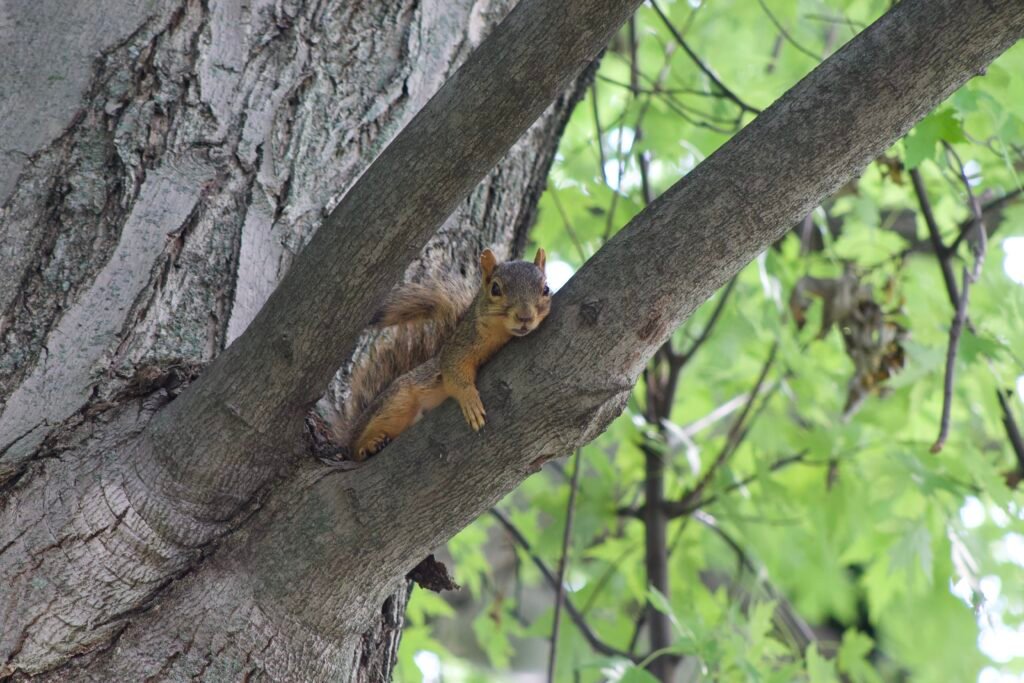
I find myself wondering which squirrel is using which nest, how they interact with one another, and what their daily routines look like.
I wish I could identify every individual squirrel in the neighborhood. Give them all some kind of cool hair-do, maybe a rad t-shirt and sweet name.
I think of my yard and the surrounding properties almost like one enormous zoo habitat, except the animals are free to come and go.
My challenge is simply to find them, sit still, and watch.
And there’s always something new to discover.
An Unexpected Invasion
Not every discovery in the backyard has been pleasant.
During the spotted lanternfly outbreak around 2024 and 2025, my yard became overwhelmed with them.
I remember first noticing these strange-looking insects and thinking I’d discovered something fascinating.
Their different life stages looked so unlike one another that I initially thought I was seeing several different species.
They looked almost alien.
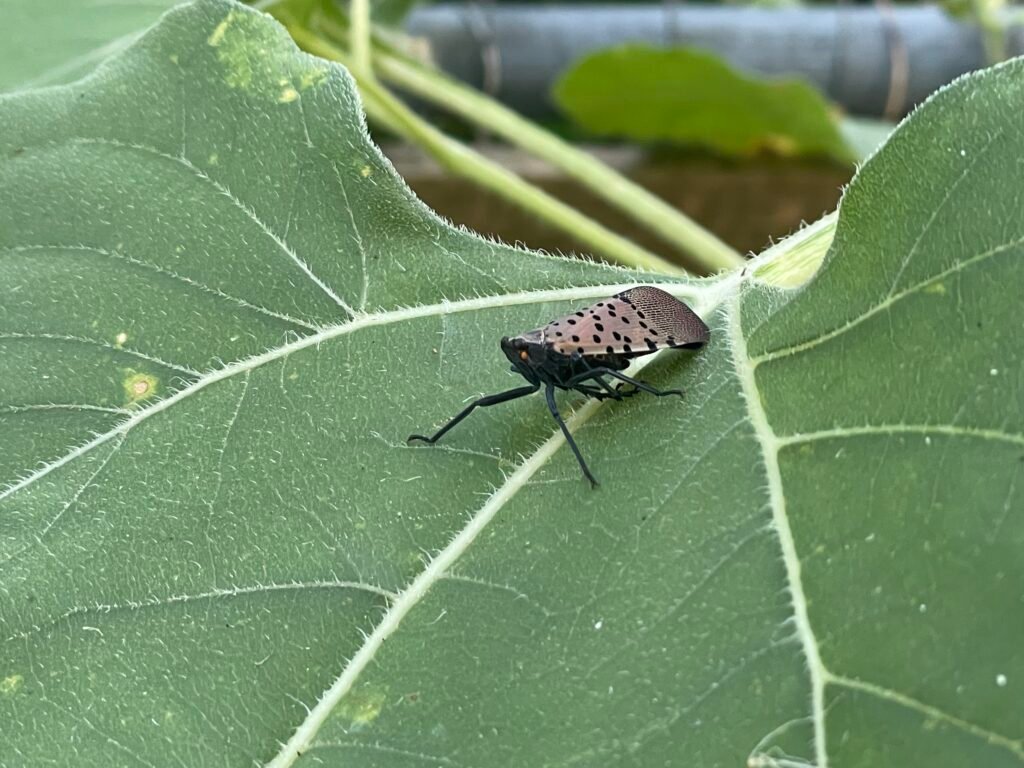
Then I learned what they were.
And apparently, everyone else was discovering them, too.
At the height of the outbreak, there were thousands everywhere throughout my backyard.
They lined the fence, gathered heavily on the grapevine, appeared all over the Virginia creeper, and climbed the silver maple.
There were so many that simply walking through the grass meant having them jump or land against me. Or walking by taller vegetation resulted in an occasional shot to the head, which was always fun.
I tried spraying them with soapy water and experimenting with different ways to reduce their numbers.
I was concerned about what such an overwhelming population might do to the plants and world around me.
Luckily, everything survived. The grapevine and the maple continued looking healthy. By 2026, I was seeing only a handful of lanternflies compared with previous years—and by a handful, I mean fewer than twenty throughout the entire summer.
But that experience was another reminder that the tree wasn’t separate from the larger ecological world.
It was participating in it, including the difficult parts.
Learning to See the Whole Tree
When I first started gardening in this backyard, I looked at the silver maple and thought about sunlight.
I spent time observing where its shadow fell and how that would change throughout the growing season.
I placed my garden where the sunlight was available and left much of the shaded ground open. Grass for Kyra to run on or shade for us to lay a blanket out and enjoy the weather.
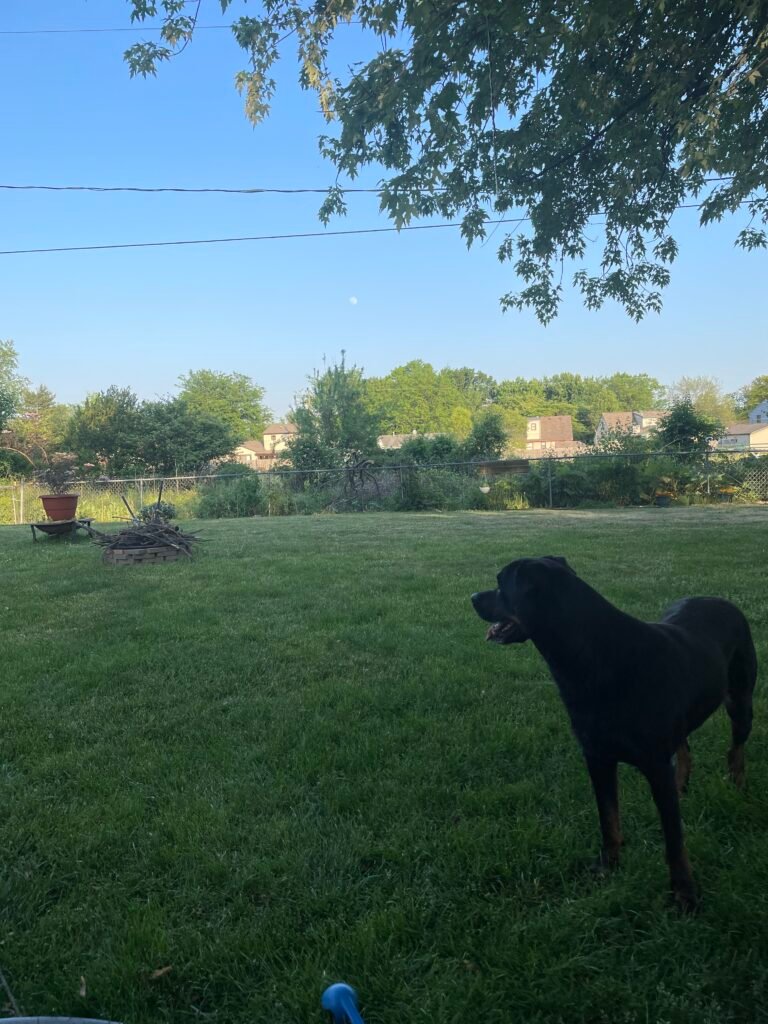
It was a practical decision.
As I began learning more about native plants and ecological relationships, though, I started seeing those shaded areas differently.
I became interested in woodland plant communities, particularly the way ferns and sedges grow among fallen leaves beneath mature trees.
There’s something about that environment I love.
The textures, the different shades of green, the decaying leaves, and the feeling of being surrounded by life remind me of walking through the woodlands of Oak Openings.
I wanted to bring a little of that experience into my own backyard.
Recently, I planted four ferns beneath the silver maple, given to me by a client whose yard had a beautiful carpet of ferns growing beneath several large oak trees. I’ve also planted three sedges and scattered seeds collected from other sedges growing throughout my garden.
It’s only the beginning.
I’m still learning which plants will thrive in that particular space, and part of the motivation is to gain more experience with woodland habitats through my work with Backyard Habitats.
But there’s another reason.
For decades, the silver maple has stood above a landscape that people have shaped around it. A house, a lawn, fences, and all the other features of a residential neighborhood.
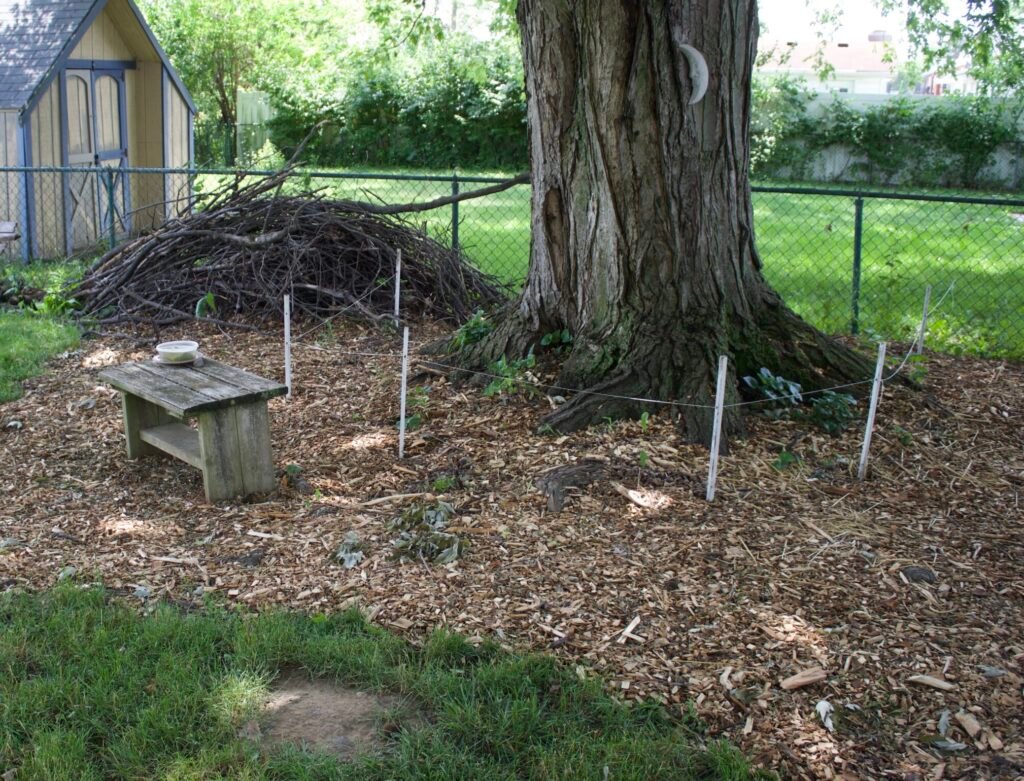
I like thinking that, by planting beneath it, I’m beginning to return some of the plant community that might otherwise surround a mature tree in a more natural setting.
The ferns and sedges can provide additional cover and structure for wildlife, including the chipmunks that move through the yard. Hopefully there’s some nutrient sharing happening amongst the plants and fungi.
And for me, they create another place to observe, explore, and enjoy.
After all these years of benefiting from the tree, I’m finally beginning to contribute something to the habitat beneath it.
The Giving Tree
One of my favorite books as a kid and now as an adult is The Giving Tree by Shel Silverstein.
I bought it years ago for my boys because its message meant something to me.
It’s a story I’ve thought about many times, particularly the way the tree continues giving throughout its life.
When I look at my maple, I can’t help thinking about that book.
This tree has given my family so much.
Shade during hot summer days. A place for the children to play. A home for the squirrels Kyra spent years chasing. A place for me to sit, meditate, reflect, and eventually rediscover my curiosity about the living world.
But when I think about everything the tree has given, I realize the squirrels have received even more.
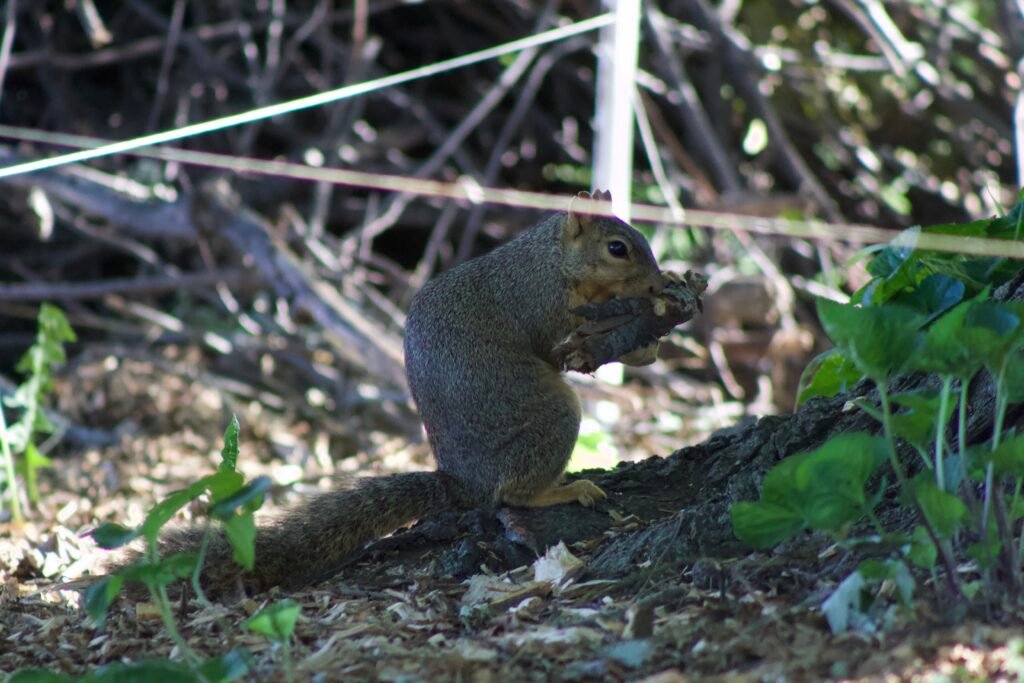
For them, this tree provides food, shelter, nesting opportunities, pathways, and places to raise their young.
It’s a central part of their world.
And they’re only one of the many forms of life that depend on it.
The tree doesn’t need to know any of this for me to appreciate it.
I don’t know how many more years it will stand. I hope it’s many.
What I do know is that I’ve been fortunate to spend a small portion of its life beneath its branches.
And now, as I begin developing the woodland garden beneath it, I feel like I’m giving something back.
Not because the tree needs my gratitude.
Because I have it to give.
There’s one last detail about the swing that I love.
After more than seven years of children playing beneath the maple, the blue fabric finally wore out in the summer of 2025.
The swing came down, but the rope remained.
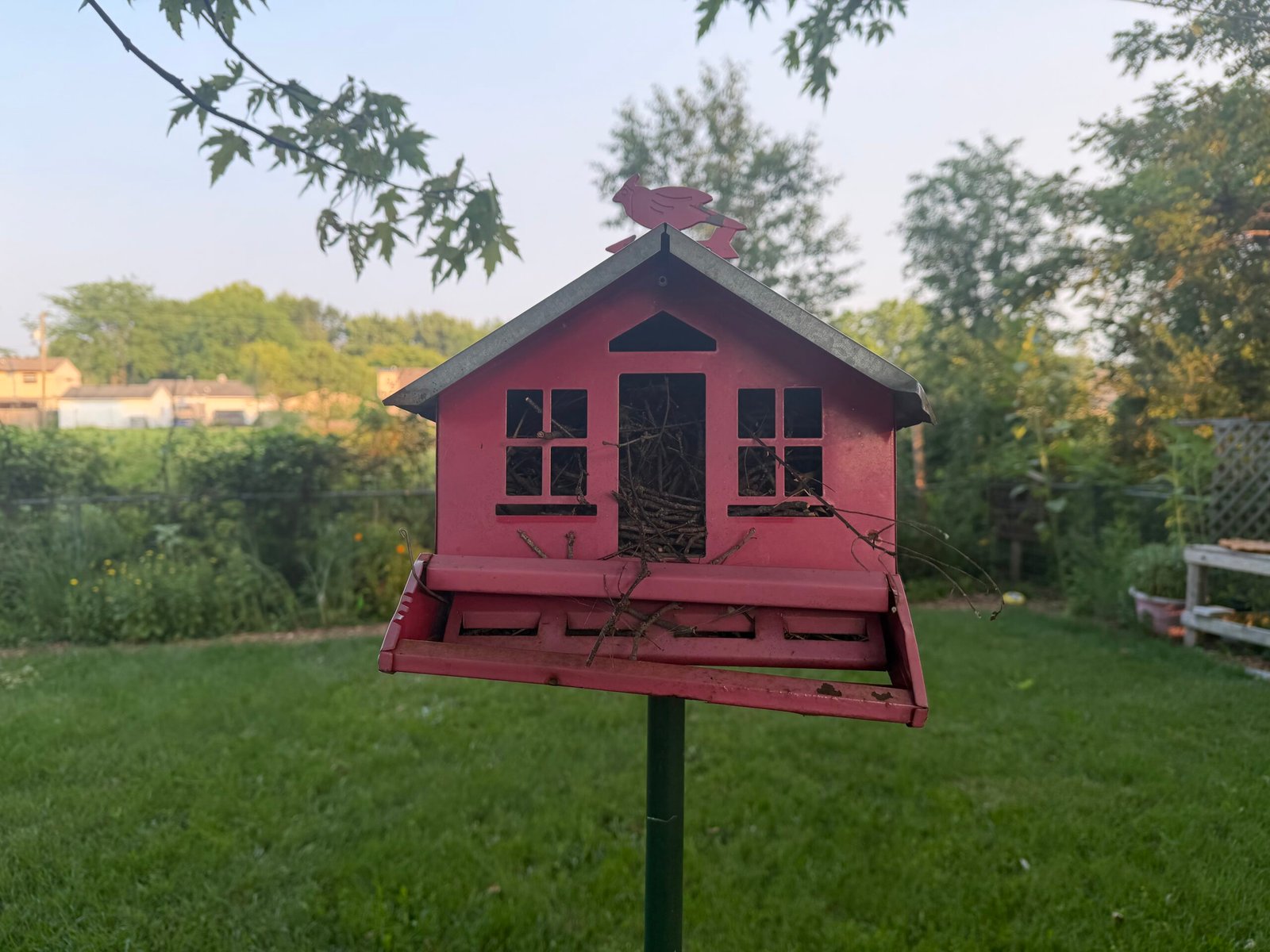
Today, that same rope has an ear of corn hanging from it.
It’s there for the squirrels.
For years, that branch helped provide a place for my children to play.
Now it’s providing something for the animals I’ve spent so much time observing.
The tree is still giving.
And I’m still discovering just how much.
This is the first story in a three-part Backyard Habitats series about the relationships that developed in my backyard, the living things that became part of my life, and how reconnecting with nature helped me find balance, gratitude, and a renewed sense of purpose.
Next: Maddie and the Silver Maple — the story of one eastern gray squirrel who became much more than another animal in the backyard.