

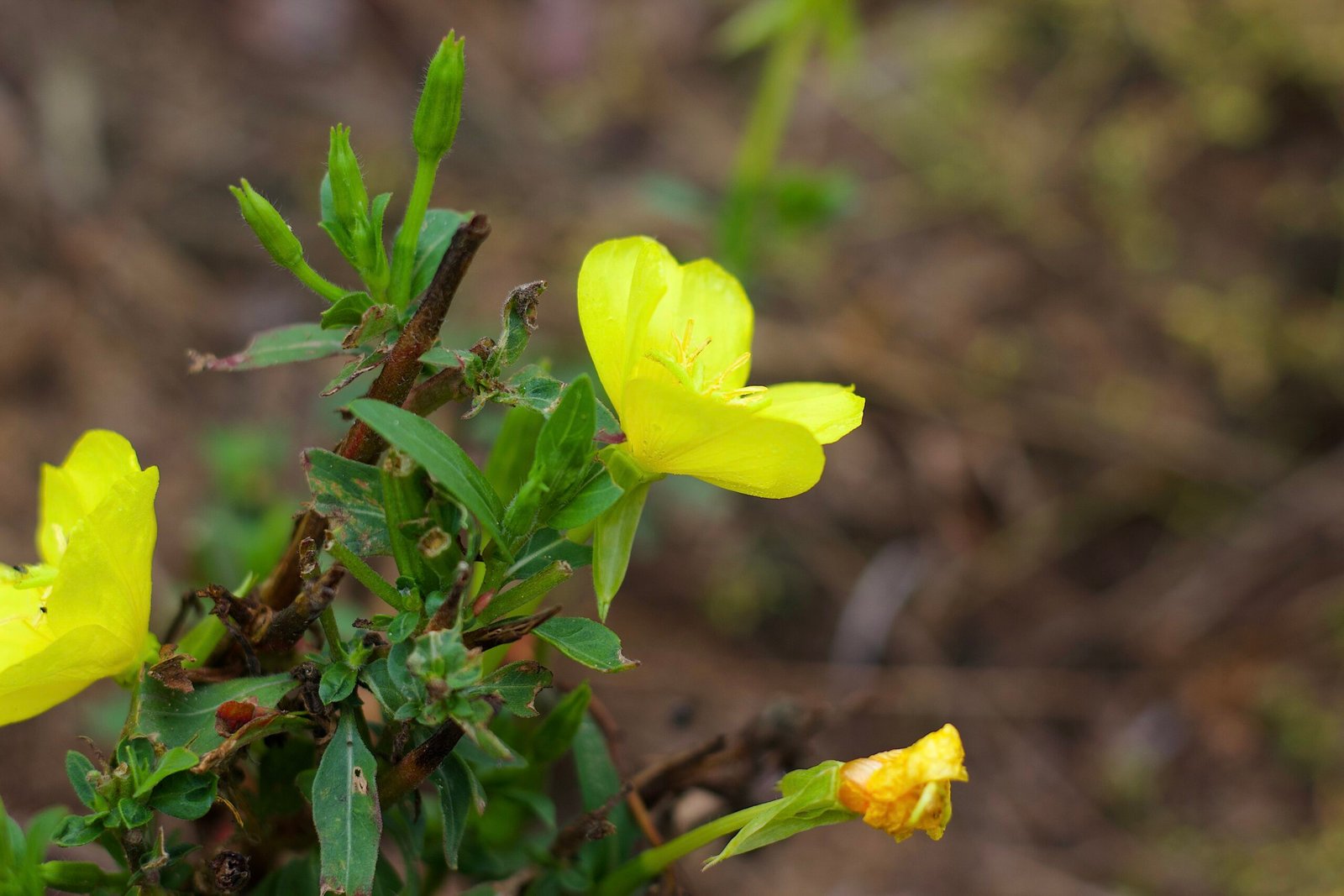
Oenothera biennis
Not every native plant needs to be beautiful to earn its place in a habitat.
Some plants attract our attention through colorful flowers, interesting textures, or the way they complement the surrounding landscape. Others have a much quieter presence, contributing to the ecosystem in ways that aren’t immediately obvious.
Common evening primrose (Oenothera biennis) is one of those plants.
I originally became interested in growing common evening primrose because of a particular moth that uses it as a host plant. Although I never encountered the moth itself, growing evening primrose in my backyard revealed something else worth appreciating.
This plant gets eaten. A lot.
And in a functioning habitat, that’s not necessarily a bad thing.
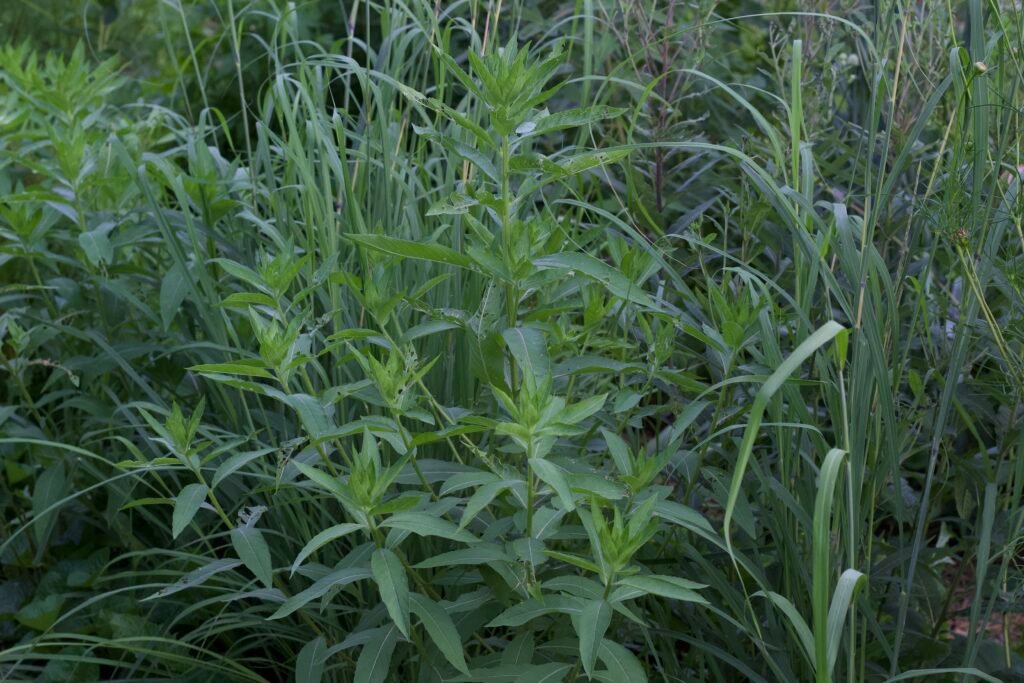
Getting to Know Common Evening Primrose
Common evening primrose is a native wildflower found throughout much of North America, including Northwest Ohio. It belongs to the evening primrose family, Onagraceae.
Unlike many native wildflowers grown primarily for their ornamental appeal, common evening primrose has a relatively simple appearance.
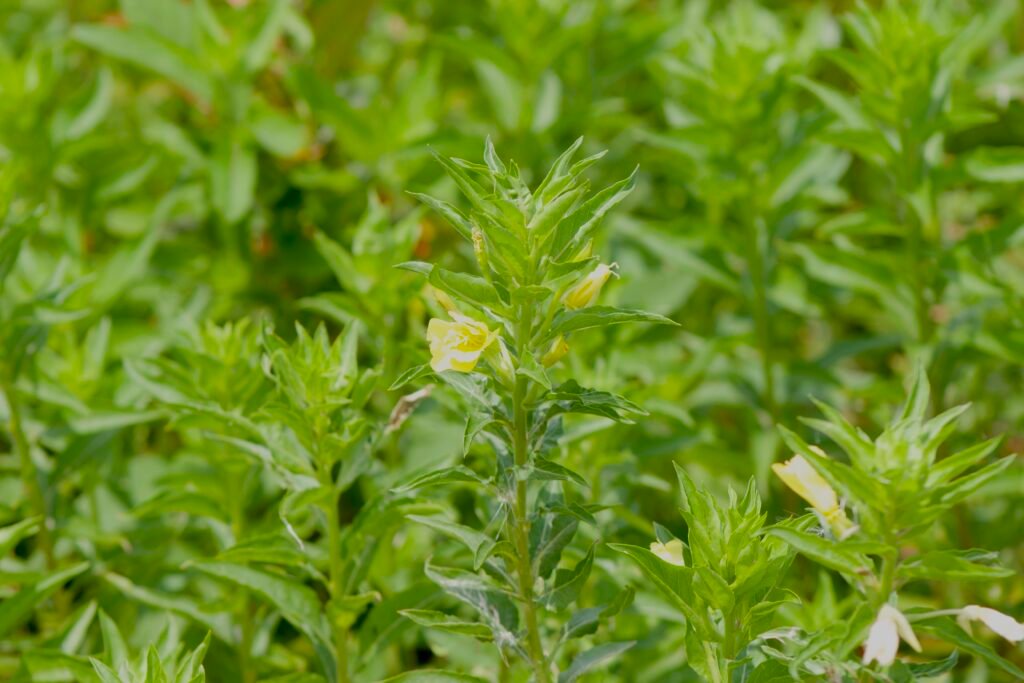
Its tall, upright stems support narrow, lance-shaped leaves and yellow flowers that develop along the upper portions of the plant.
The flowers are particularly interesting because of their timing.
Common evening primrose gets its name from its unusual flowering schedule. Rather than opening during the brightest part of the day, its flowers typically open around dusk, remaining open through the night and into the following morning.
Individual flowers are short-lived, often fading within a day, but the plant continues producing new flowers throughout its blooming season.
This makes common evening primrose especially interesting to observe, although it can also make photographing its flowers challenging.
Its nighttime flowering schedule is closely connected to its ecological relationships, particularly with moths that visit flowers after dark.
Common Evening Primrose at a Glance
- Scientific name: Oenothera biennis
- Family: Onagraceae (Evening Primrose)
- Native range: Much of North America
- Life cycle: Primarily biennial
- Mature height: Approximately 3–6 feet
- Sun exposure: Full sun to partial sun
- Soil: Adaptable; generally prefers well-drained conditions but still thrives in my heavy clay
- Bloom period: Summer through fall
- Flower color: Yellow
- Wildlife value: Supports moths, bees, herbivorous insects, and seed-eating birds
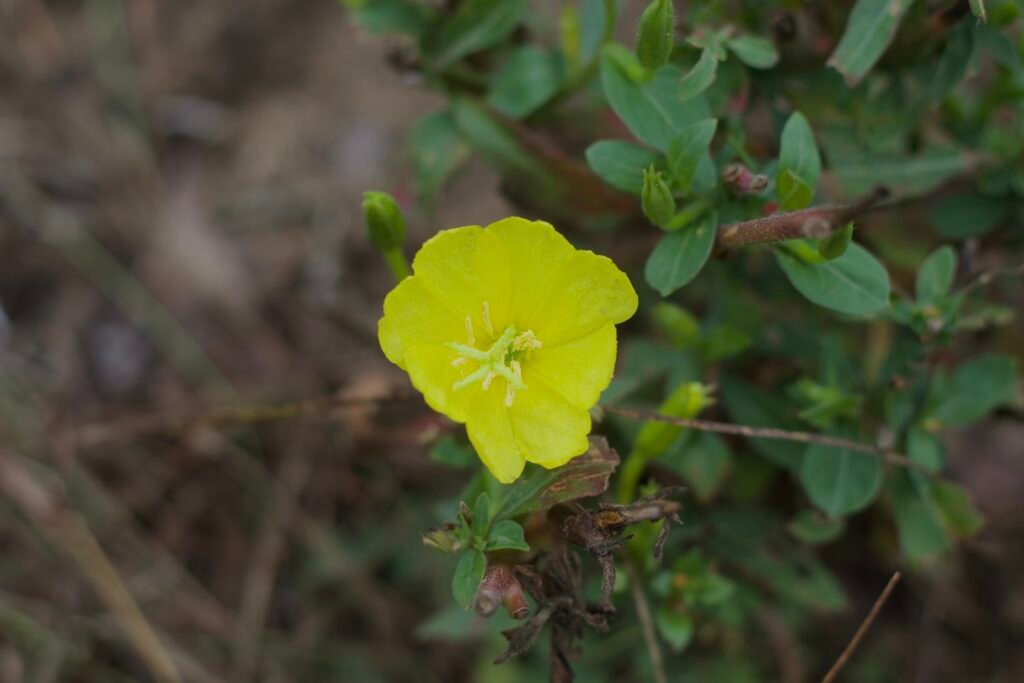
Growing Common Evening Primrose in My Backyard
One of the things that impressed me most about common evening primrose was how easily it established itself.
I originally discovered a volunteer growing in my backyard. After collecting its seeds, I intentionally introduced the plant into several areas of my garden.
This year, six plants grew to approximately four or five feet tall and flowered successfully.
I’ve also noticed common evening primrose growing in roadside ditches, prairie-like environments, and other relatively open areas. It doesn’t appear to need particularly favorable garden conditions to establish itself.
That adaptability was evident in my own yard.
But what surprised me even more was its resilience.
At one point, I cut approximately one to two feet from the top of a plant. Rather than simply ending its flowering season, the plant began developing additional lateral stems.
Within roughly three weeks, it was flowering again.
Even after repeated cutting, each plant continued attempting to produce new flowers.
Common evening primrose is primarily a biennial, typically developing a basal rosette during its first growing season before producing flowering stems and seeds during its second.
After flowering and setting seed, the original plant generally dies. However, common evening primrose can maintain a presence through self-seeding wherever suitable conditions allow new seedlings to develop.
I’ve already noticed plants appearing in areas where I didn’t intentionally introduce them, suggesting that evening primrose may continue finding opportunities to establish itself in my backyard.
For me, this is a plant better suited to the informal edges of a habitat than the center of a carefully arranged garden.
A Plant That Becomes Part of the Food Chain
The most interesting thing I observed about common evening primrose wasn’t its flowers or its ability to recover after pruning.
It was the amount of herbivory occurring on its leaves.
Several plants growing in Zone 6 of my backyard developed extensive feeding damage. In some areas, large portions of the leaf tissue had been consumed, leaving behind irregular openings and, occasionally, little more than the network of veins.
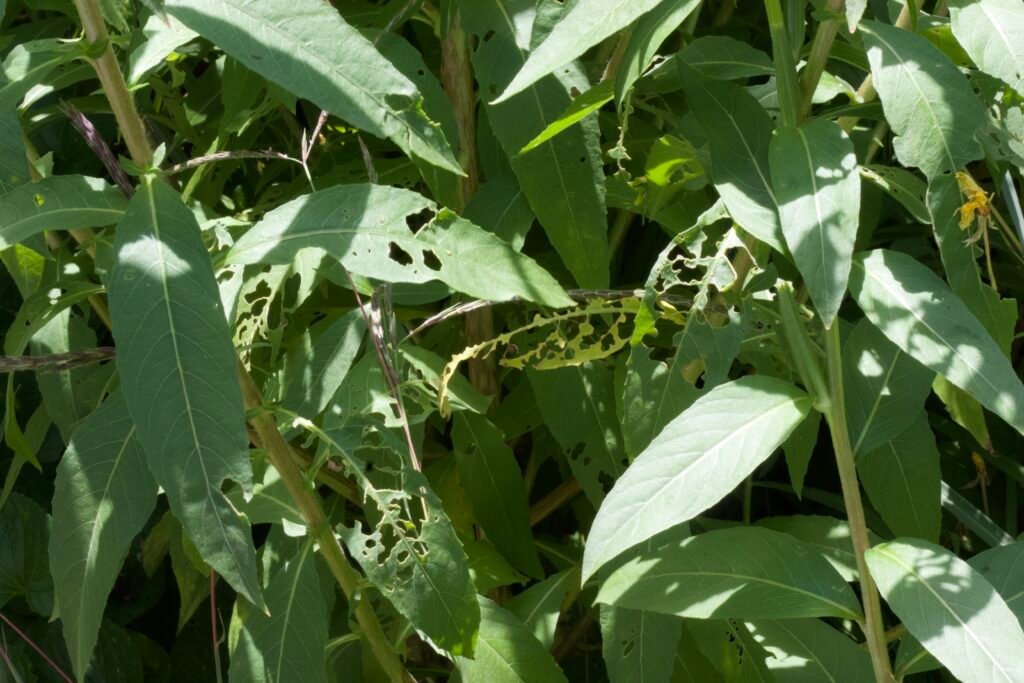
I spent some time looking over the plants, trying to identify what was responsible.
Despite the amount of damage, I couldn’t find an insect actively feeding.
Caterpillars were certainly a possibility, although without observing the insects themselves, I couldn’t determine exactly what was eating the leaves.
Something else caught my attention later in the season.
While inspecting several remaining evening primrose plants growing closer to the fence, I noticed they hadn’t experienced nearly the same level of herbivory as those in Zone 6.
The plants were growing in the same backyard, yet something appeared to be feeding much more heavily on the plants in one particular area. Two of the six were in this zone, where the other four were in different locations.
I don’t know what caused that difference, but it’s an interesting observation.
Perhaps the insects responsible were concentrated in that portion of the garden, or perhaps the surrounding vegetation/plant community influenced where they were feeding.
Whatever the explanation, the evidence was clear.
Something was using these plants as a food source.
And that’s an important part of understanding habitat.
We often evaluate garden plants by how healthy their foliage looks, how many flowers they produce, or how well they maintain their appearance throughout the growing season.
But a plant with damaged leaves may be performing an ecological function that isn’t immediately visible.
Native plants support food webs in many ways, including providing the foliage, flowers, and developing seeds consumed by herbivorous insects.
Those insects, in turn, become food for birds, predatory insects, spiders, and other wildlife.
The feeding damage I observed wasn’t evidence of a failed plant.
It was evidence that something was using it.
The Primrose Moth: The Reason I Wanted This Plant
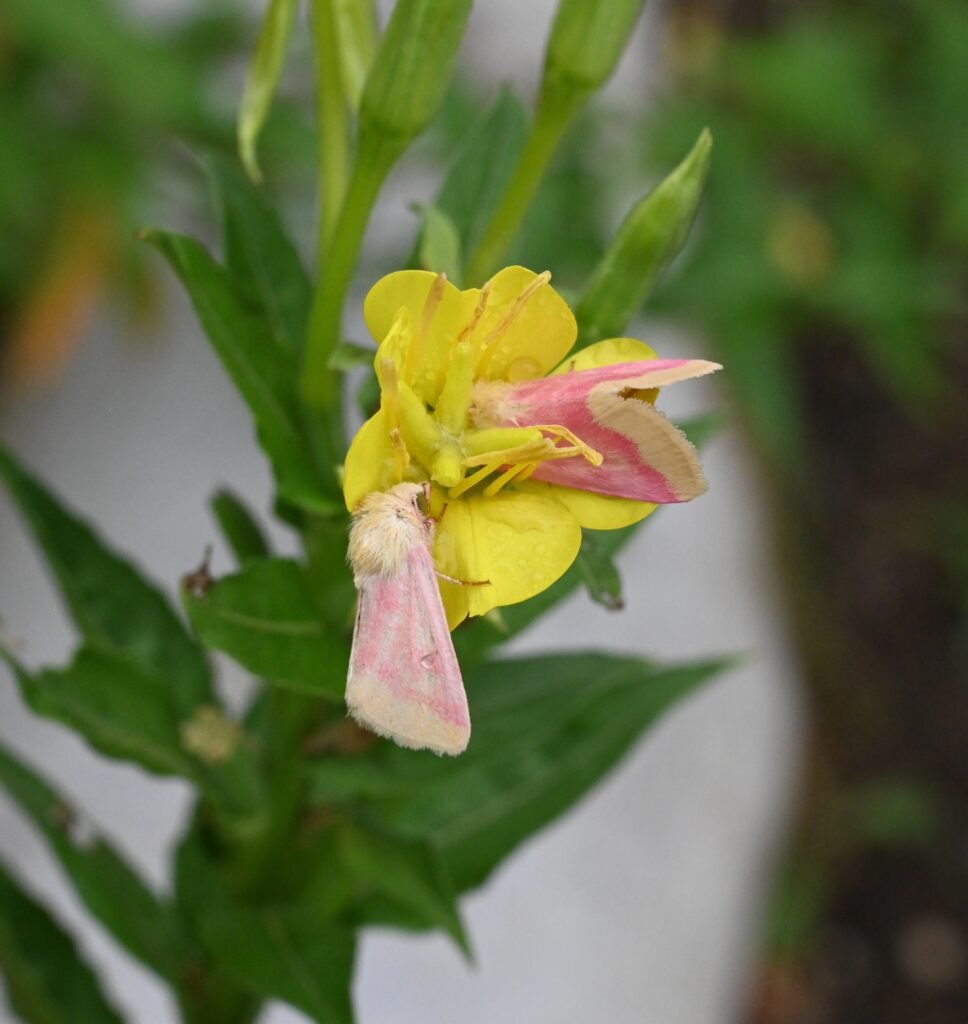
My original interest in common evening primrose came from learning about the primrose moth (Schinia florida).
This small, beautifully colored moth has pink and yellow markings that allow it to blend remarkably well with the flowers of evening primroses.
Its caterpillars feed on the flowers, buds, and developing seed capsules of evening primrose plants.
Unlike insects that simply visit flowers for nectar, the primrose moth has a much more intimate relationship with its host plants.
Its offspring depend on these plants for food during their development.
That relationship was enough to make me want to introduce common evening primrose into my backyard.
I liked the idea that growing a relatively ordinary-looking native wildflower might create an opportunity for such an interesting moth to complete part of its life cycle.
Unfortunately, despite growing several plants and occasionally searching for the moth, I never managed to find one.
And while I observed considerable herbivory, I never identified the insects responsible.
It’s possible that primrose moths visited my plants without my noticing, but I have no evidence that they were present.
Still, the possibility is fascinating.
Beyond the primrose moth, common evening primrose supports other herbivorous insects and provides floral resources for nocturnal moths and bees. Its seeds can also be consumed by birds.
This is where the plant’s ecological value becomes much more interesting than its appearance.
Making Room for Plants That Serve a Purpose
Despite my appreciation for common evening primrose, it isn’t a plant I would typically select as a centerpiece for one of my habitat garden designs.
Its upright growth, relatively inconspicuous flowers, and ability to establish itself in open areas make it better suited to informal habitat spaces where its growth can be accommodated.
In my own backyard, I eventually removed several plants from the main garden area.
I left others growing near the fence, where they had more room and didn’t interfere with the surrounding garden composition.
I also scattered seeds into the neighboring railroad thicket, hoping the plant might establish itself in an area where it could grow more freely.
That distinction matters.
Creating habitat doesn’t mean every native plant needs to grow everywhere. Biodiversity is always important.
Different spaces serve different purposes, and part of designing a functioning habitat is understanding where particular plants can contribute most effectively.
For homeowners who discover common evening primrose growing naturally along a fence, at the edge of a garden, or in another suitable location, it may be worth considering what the plant is supporting before removing it.
Sometimes allowing a volunteer plant to remain can provide an ecological benefit without requiring an entirely new planting project.
Final Thoughts
Common evening primrose isn’t one of the most visually impressive plants I’ve grown.
Its flowers are relatively small compared with its overall height, and their short-lived nature makes them easy to overlook.
But after watching these plants establish themselves, recover from pruning, and experience extensive feeding damage, I came away appreciating something entirely different about this native wildflower.
I originally grew it hoping to attract a particular moth.
I never found that moth, but I did find evidence that the plant was becoming part of the food chain.
And perhaps that’s the most important thing common evening primrose has to offer.
A plant doesn’t need to be the most beautiful part of a garden to be one of its most useful inhabitants.


