

Some plants become part of a garden because you carefully decide exactly where they belong.
Others seem more interested in making that decision themselves.
Plains coreopsis (Coreopsis tinctoria) has become one of those plants for me.
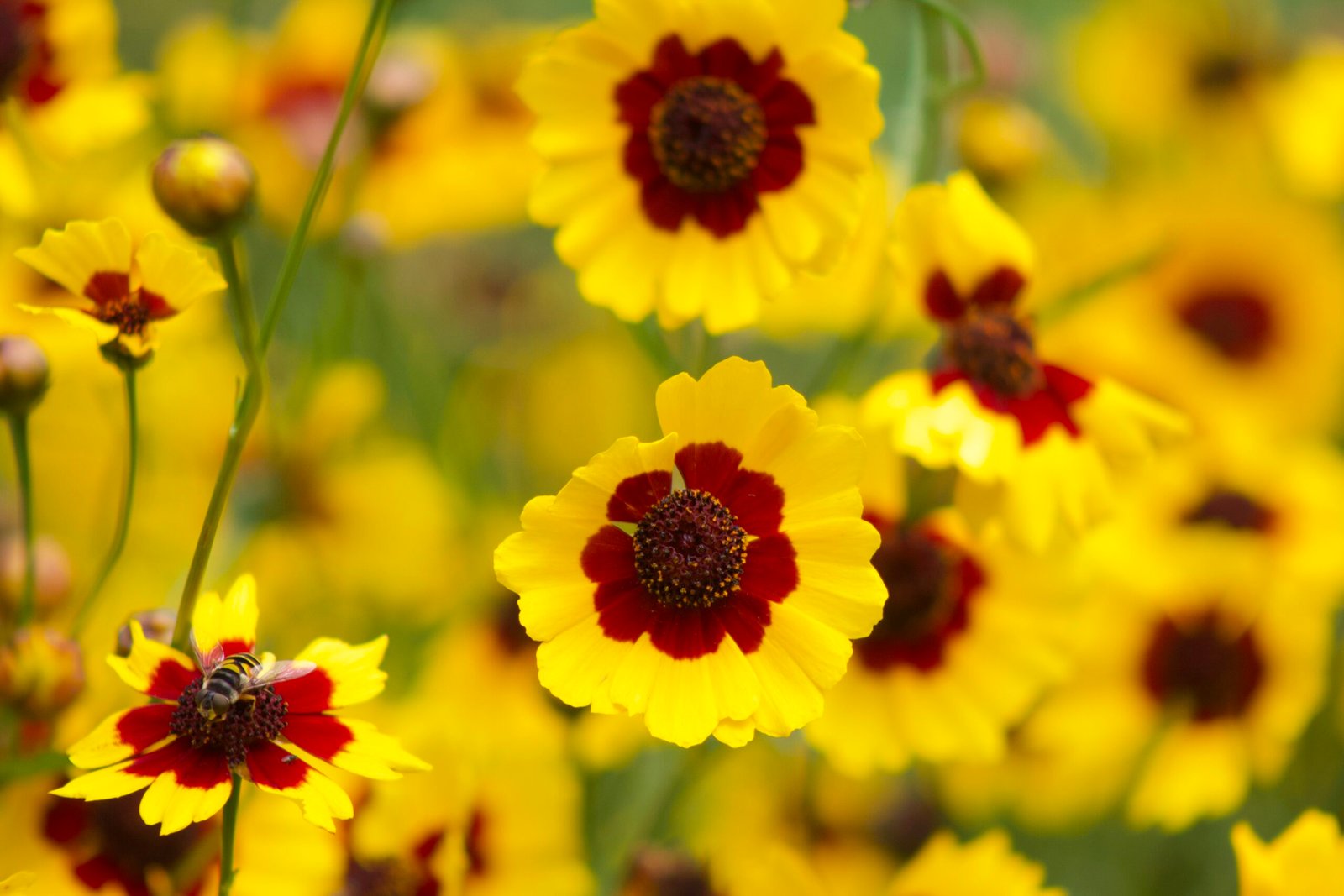
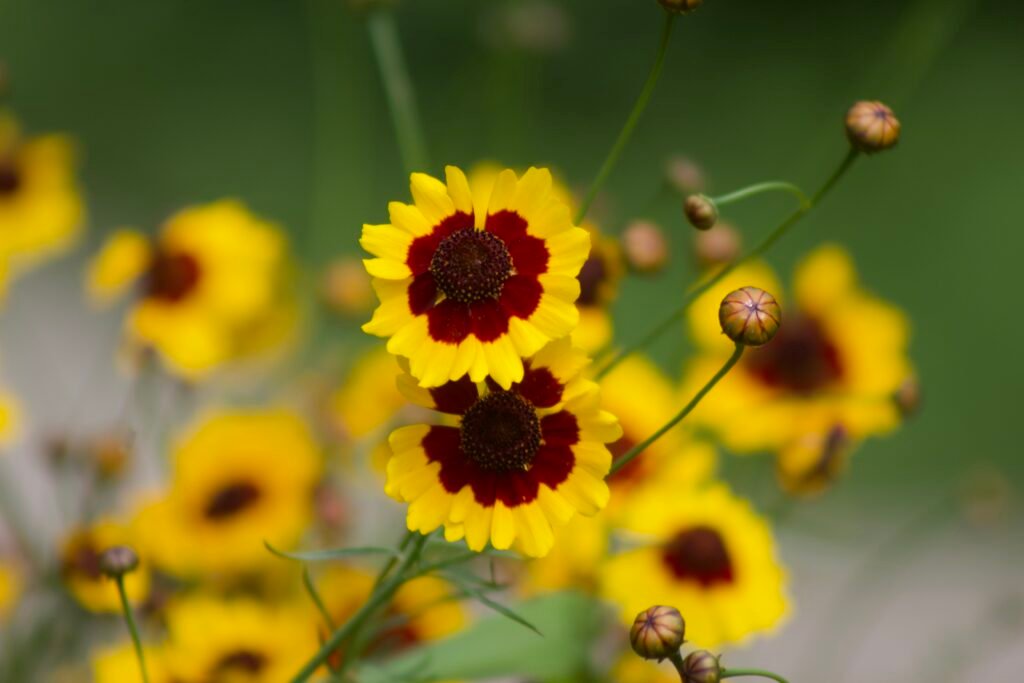
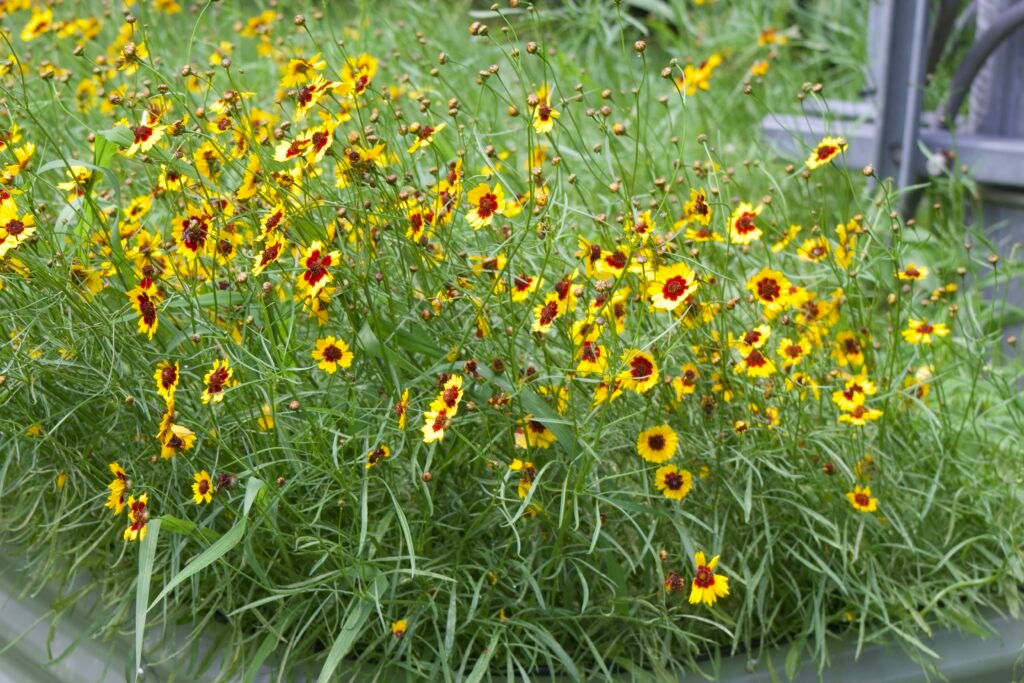
Its small yellow flowers, usually marked with deep reddish-brown near the center, don’t dominate the garden. Instead, they seem to appear between grasses and taller native plants, creating little flashes of color throughout the growing season.
That’s exactly what I’ve come to appreciate about it.
Plains coreopsis is also different from many of the native plants I grow because it’s an annual. Instead of establishing a long-lived crown or root system and returning from the same plant each year, its continued presence depends on producing seed and finding suitable places for the next generation to grow.
That makes it an interesting plant not only to grow, but to observe.
Plains Coreopsis Quick Facts
Scientific name: Coreopsis tinctoria
Common names: Plains coreopsis, golden tickseed, calliopsis
Plant family: Asteraceae
Plant type: Native annual forb
Height: Usually 1–3 feet, sometimes reaching around 4 feet
Bloom time: Late spring through summer and potentially into fall
Light: Full sun; tolerates some light shade
Soil: Adaptable, but generally prefers well-drained soil
Moisture: Dry to medium; performs well with adequate moisture
Flower color: Yellow with reddish-brown markings near the center
Wildlife value: Provides pollen and nectar for bees and other pollinating insects
Propagation: Seed
Garden behavior: Can readily self-seed where open soil and suitable conditions are available
A Different Kind of Native Plant
When people begin gardening with native plants, it’s easy to focus almost entirely on perennials.
That makes sense. Plant a perennial once and, if conditions are right, it can return for years.
But annual plants fill a different ecological role.
Plains coreopsis lives quickly.
It germinates, grows, flowers, produces seed and completes its life cycle. The next generation then depends on those seeds finding the right conditions.
That means the population can move around.
One year a plant might appear beside a grass. The following year several may emerge somewhere else. Some years there may be many, while other years there may be relatively few.
Instead of occupying one permanent location, it becomes part of the changing structure of the garden.
Why I Grow Plains Coreopsis
What I enjoy most about plains coreopsis is the way it works between other plants.
I don’t necessarily want a large solid patch of it.
I like seeing individual plants scattered throughout the garden.
The flowers are relatively small compared with plants like coneflowers, blazing stars or sunflowers, but that is part of their appeal. Against the greens and textures of native grasses, those yellow and reddish-brown flowers create little sparks of color.
Because the stems are relatively thin and airy, the plant can also weave through neighboring vegetation without creating a heavy block of foliage.
In a naturalistic planting, that can be incredibly useful.
Not every plant needs to be the structure of the garden.
Some plants can simply move through that structure.
Wildlife Value of Plains Coreopsis
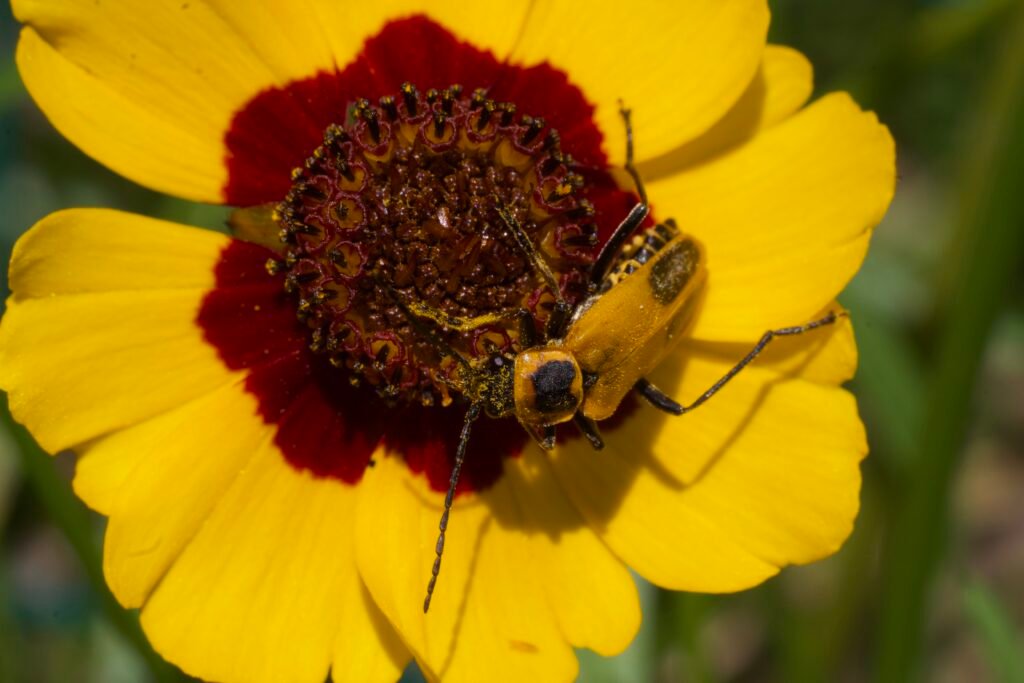
The flowers of plains coreopsis provide both pollen and nectar for visiting insects.
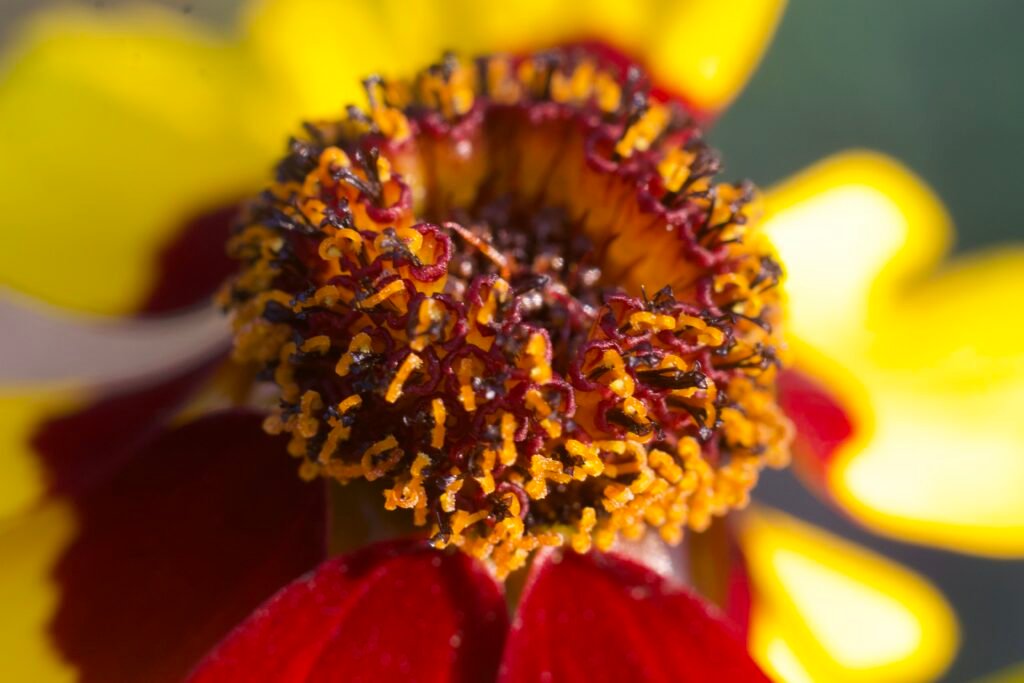
Like other members of the aster family, what appears to us as a single flower is actually a flower head containing numerous individual flowers. That creates a concentrated feeding area where small bees and other insects can forage.
Research conducted in pollinator habitat plantings has also shown just how useful plains coreopsis can be. In one U.S. Forest Service project, plains coreopsis and black-eyed Susan were the two plants most frequently used by bees in seeded plots, with the two species together providing pollen and nectar resources for 34 bee species.
That doesn’t mean plains coreopsis alone supports 34 species, but it does demonstrate that this seemingly simple annual can become an important part of the floral resources available within a larger plant community.
And that is usually how I prefer to think about wildlife value.
It isn’t about finding one perfect pollinator plant.
It’s about providing many different plants flowering at different times and creating continuous opportunities for insects to find food.
Plains coreopsis can be one piece of that system.
An Annual That Depends on Opportunity
One of the most interesting things about plains coreopsis is that keeping it in the garden isn’t necessarily as simple as allowing it to produce seed.
The seeds also need somewhere to germinate.
In a young planting with exposed soil, that can be relatively easy.
But as a native garden matures, grasses, sedges, perennial forbs, leaf litter and other vegetation begin occupying more of the available space.
Competition increases.
Bare soil becomes harder to find.
That can cause annual species such as plains coreopsis to become less abundant even though they successfully produced seed the previous year.
This is one reason disturbance matters in natural plant communities.
A small patch of exposed soil created by an animal, erosion, fire, shifting vegetation or another disturbance can suddenly create an opportunity for seeds waiting in or near the soil.
In the garden, we can imitate that process on a much smaller scale.
I don’t need to tear the garden apart.
Sometimes a little exposed soil is enough.
Growing Plains Coreopsis
Plains coreopsis is relatively easy to grow from seed.
Seeds should remain near the soil surface rather than being buried deeply. Good seed-to-soil contact is more important than covering them with a thick layer of soil.
It performs best with plenty of sunlight and can grow in a range of soil conditions.
Once established, the plants branch and produce numerous flower heads. Removing spent flowers can encourage continued flowering, but if your goal is to maintain the plant naturally from year to year, allowing at least some flowers to mature and produce seed is important.
I prefer the second approach.
Rather than deadheading everything for maximum flowering, I want the plant to complete its life cycle. Early in the season and through most of summer I “try” to deadhead the spent blooms right as they are about to drop the seeds. Then I save them in a container then spread them in spots that are ideal to add a little burst.
Flower.
Feed insects.
Produce seed.
And potentially begin again somewhere else.
Letting It Move Through the Garden
Plains coreopsis is a good example of why I’ve become less interested in treating every plant like an object with a permanent address.
A garden isn’t static.
Plants spread.
Plants disappear.
Seedlings emerge.
Some species become more abundant while others retreat.
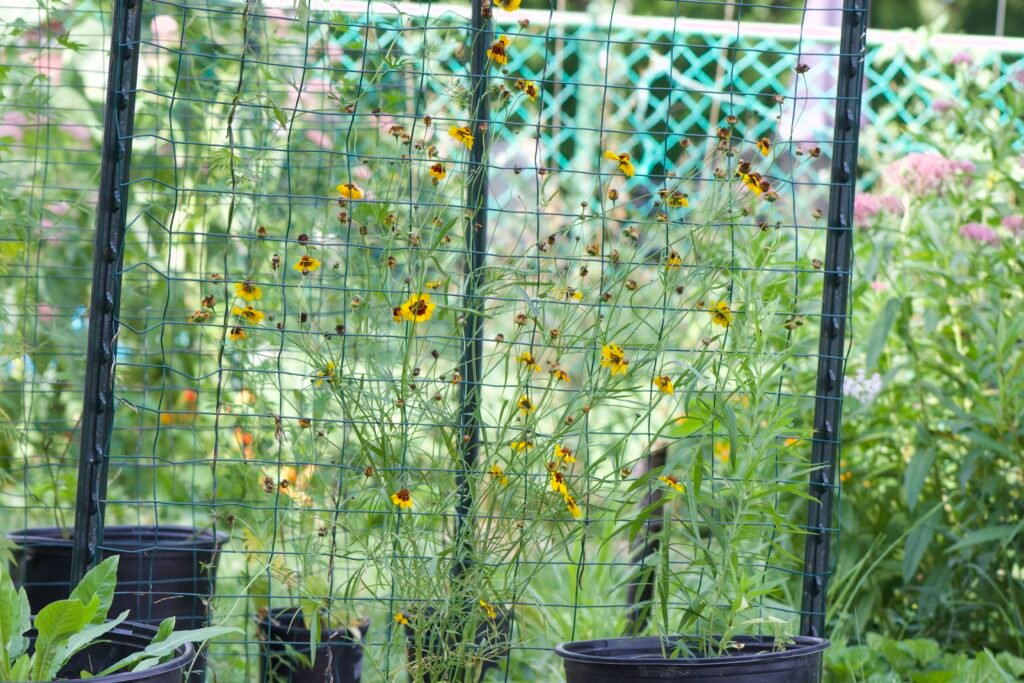
Annuals make that process particularly visible because an individual plant has only one growing season.
Where plains coreopsis appears next year depends partly on what happens in the garden this year.
That’s something I’ve started embracing rather than trying to completely control.
I can influence the garden.
I can collect seed, scatter it into areas where I’d like to see more plants, create small openings and remove plants that become too aggressive.
But I can also leave room for the plants themselves to respond.
Using Plains Coreopsis in a Naturalistic Garden
I think plains coreopsis works especially well mixed among grasses and other prairie plants.
Rather than planting a large isolated clump, I prefer scattering it through openings where the flowers can appear between neighboring plants.
A few plants that pair well with plains coreopsis include:
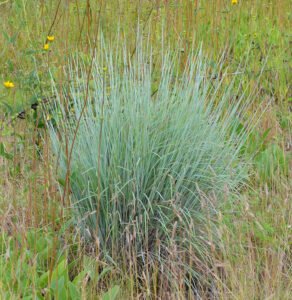
- Little bluestem (Schizachyrium scoparium)
- Sideoats grama (Bouteloua curtipendula)
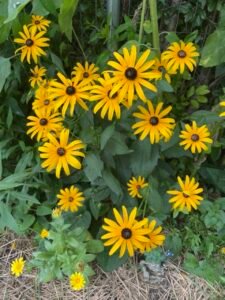
- Black-eyed Susan (Rudbeckia hirta)
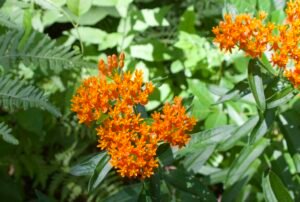
- Butterfly weed (Asclepias tuberosa)
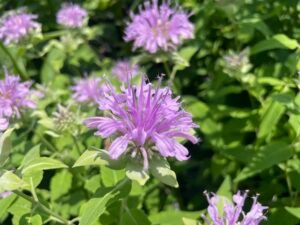
- Wild bergamot (Monarda fistulosa)
These aren’t meant to represent a complete plant community, but they provide a good starting point for combining different heights, textures and bloom times under similar growing conditions. Leaving occasional openings between longer-lived plants also gives plains coreopsis room to reseed and find new places within the garden.
What Plains Coreopsis Has Taught Me
One of the things I’ve been paying more attention to in my own garden is not simply whether a plant grows, but how it behaves.
Where does it appear?
What grows beside it?
What insects visit it?
Does it remain in the same location?
Does it disappear when neighboring vegetation becomes denser?
Those observations tell me more than simply reading a plant tag ever could.
Plains coreopsis has reinforced something I’ve increasingly come to believe about gardening with native plants:
Sometimes we don’t need to decide exactly where every plant belongs.
We can create the conditions, introduce the species and then pay attention to what happens.
The garden will tell us quite a bit if we’re willing to observe it.
And if plains coreopsis decides that next year’s perfect location is three feet away from where I planted it?
I’m becoming perfectly fine with that.


