

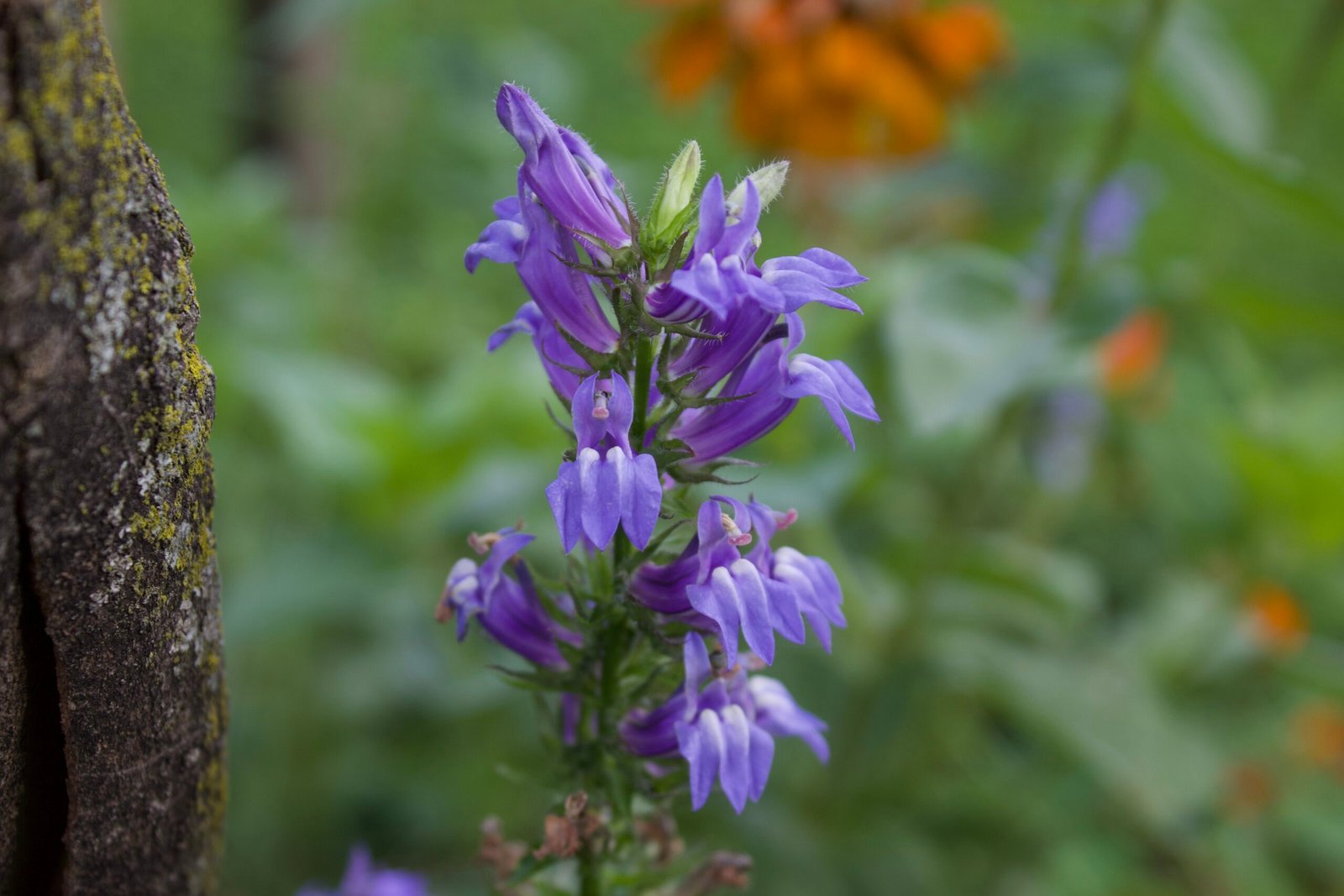
Lobelia siphilitica
There are some native plants I grow primarily because of what they do.
Goldenrods and asters support an incredible variety of insects. Swamp milkweed provides food for monarch caterpillars. Virginia mountain mint can become absolutely covered in pollinators. Late boneset seems to turn into an insect gathering place as soon as it begins flowering.
Great Blue Lobelia is a little different for me.
It certainly has ecological value, particularly as a flower visited by bumblebees and other bees. But if I’m being truthful about why I’ve fallen in love with this plant, ecology isn’t at the top of the list.
I just think it looks cool.
And I think there’s room for that in a habitat garden.
Discovering Great Blue Lobelia
I learned about Cardinal Flower (Lobelia cardinalis) fairly early in my exploration of native plants. With its brilliant red flowers stacked along a tall spike, it’s difficult to forget once you’ve seen it.
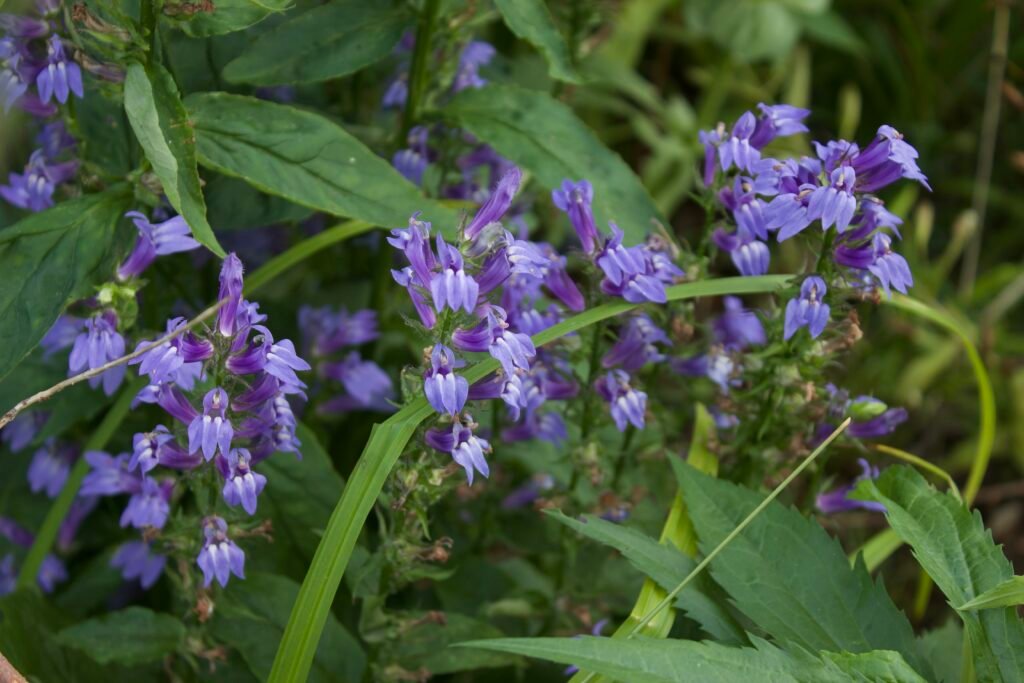
At some point along the way, I discovered that it had a blue-flowered relative: Great Blue Lobelia (Lobelia siphilitica).
I don’t remember exactly when I first learned about it, but I remember being intrigued. The flowers were completely different from so many of the other native plants I was learning about. Instead of another daisy-shaped flower or broad cluster of tiny blooms, Great Blue Lobelia had these unusual blue-violet flowers arranged vertically along a spike.
I wanted to see one growing.
I eventually found Great Blue Lobelia at 577 Foundation, but I arrived too late in the season to see it flowering. So although I’d seen plenty of photographs, I still hadn’t really experienced the plant in bloom.
That changed this year.
My First Year Growing It
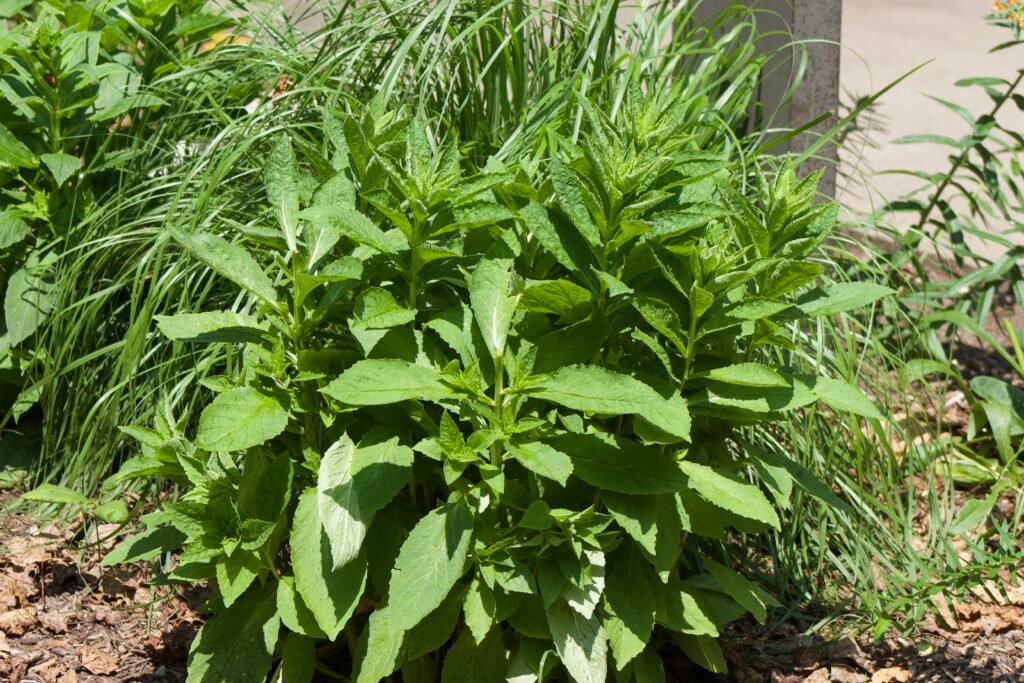
This was my first season growing Great Blue Lobelia, and I didn’t plant just one.
I put it in several places around my yard.
Part of that was experimentation. I wanted to see how it responded to slightly different conditions. But there was another reason that has become increasingly important to me as I’ve learned more about garden design:
I wanted to see what it looked like in different places.
How would that blue flower spike look coming through grasses? What would happen with yellow flowers behind it? Would it stand out against a dense planting or disappear into it?
Growing a plant tells you things that looking at photographs never can.
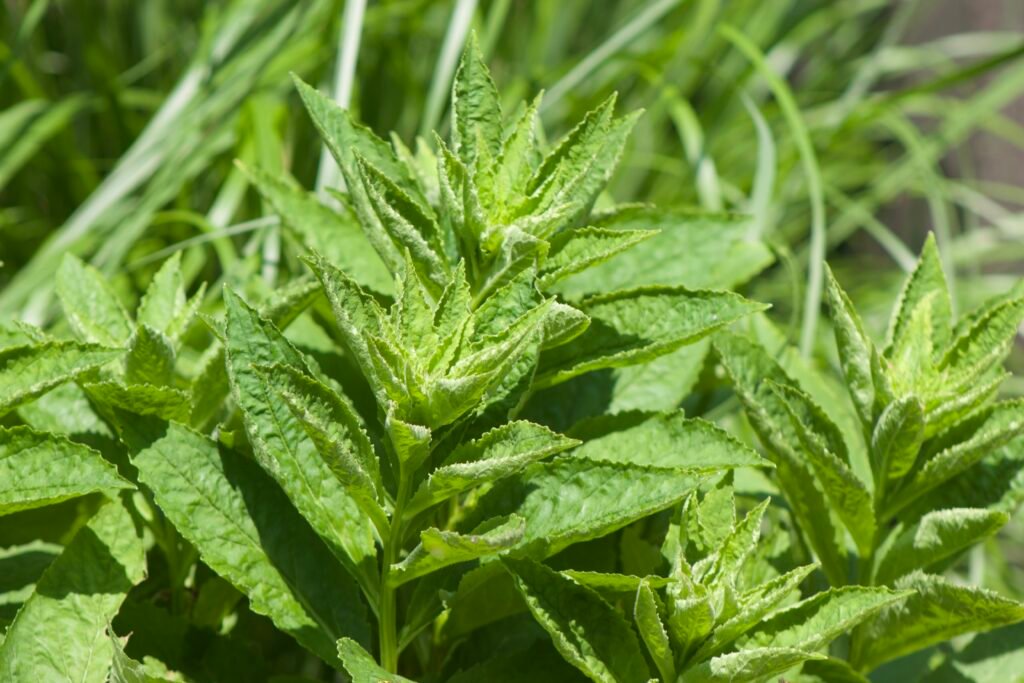
When the plants began developing flower stalks during their first season, I was excited. My Cardinal Flower had also bloomed during its first year in my garden, and now I was getting to watch its blue relative do the same.
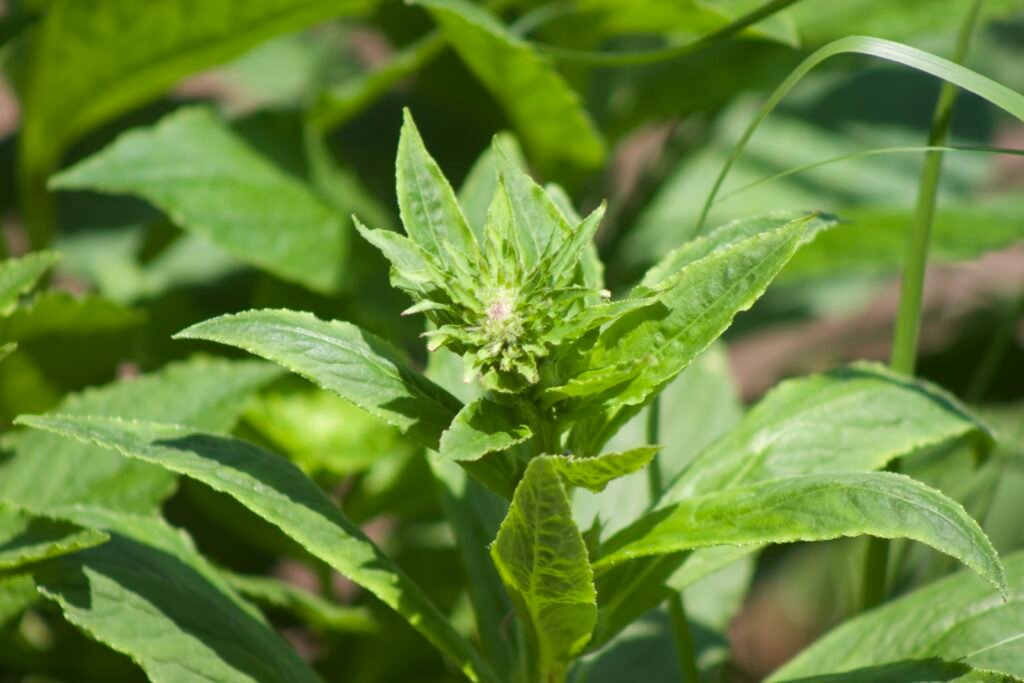
Eventually, those strange blue-violet flowers began opening.
A Flower Built for Bees
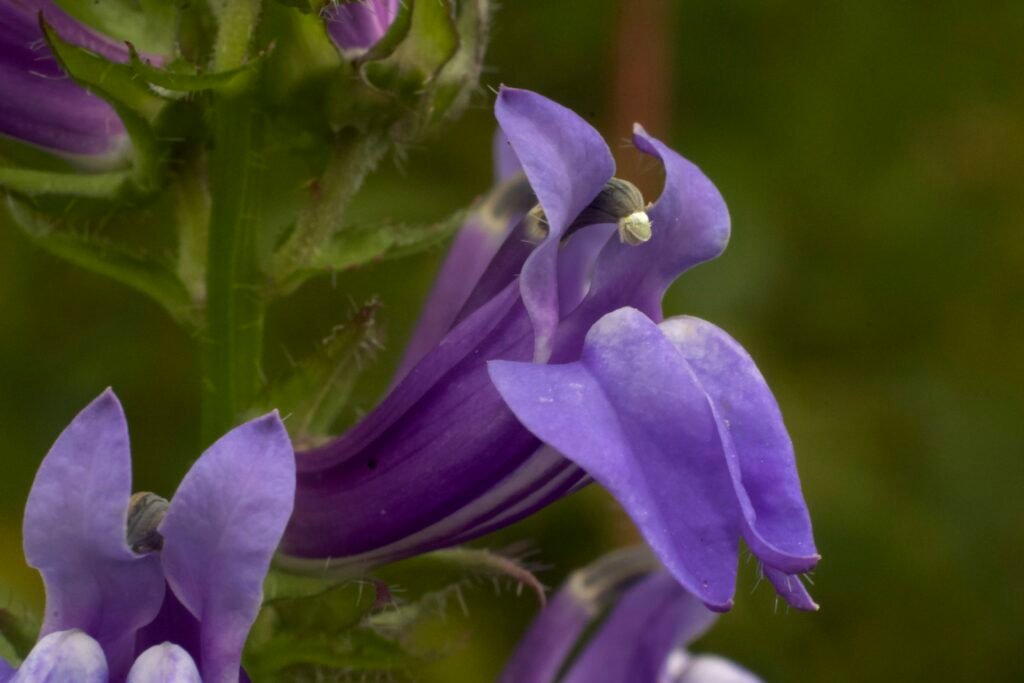
Great Blue Lobelia and Cardinal Flower are closely related, but their flowers tell two different ecological stories.
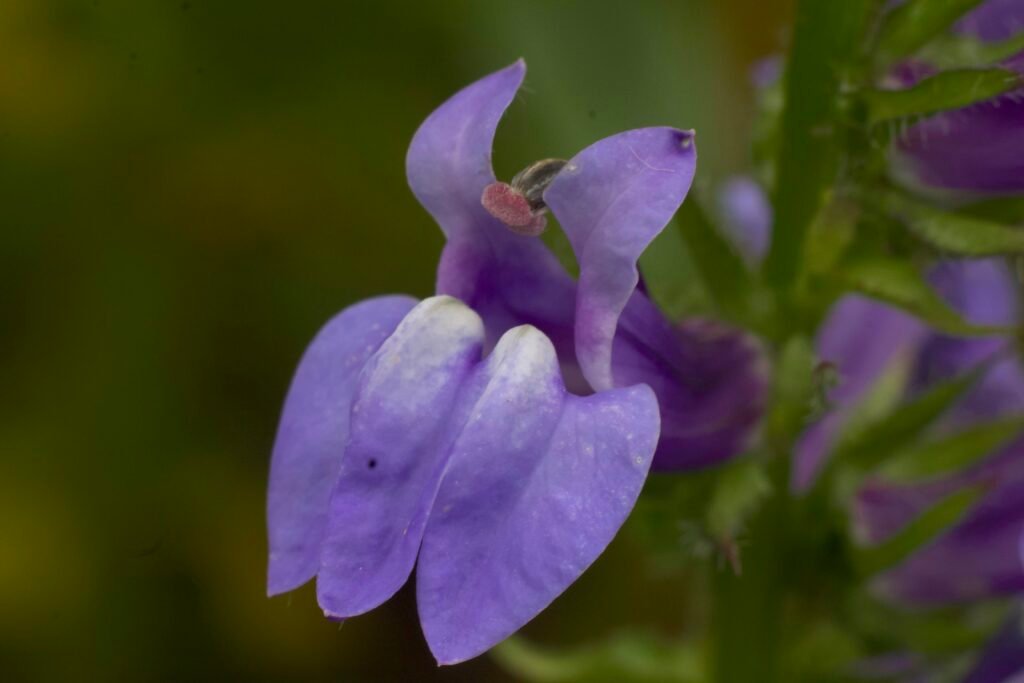
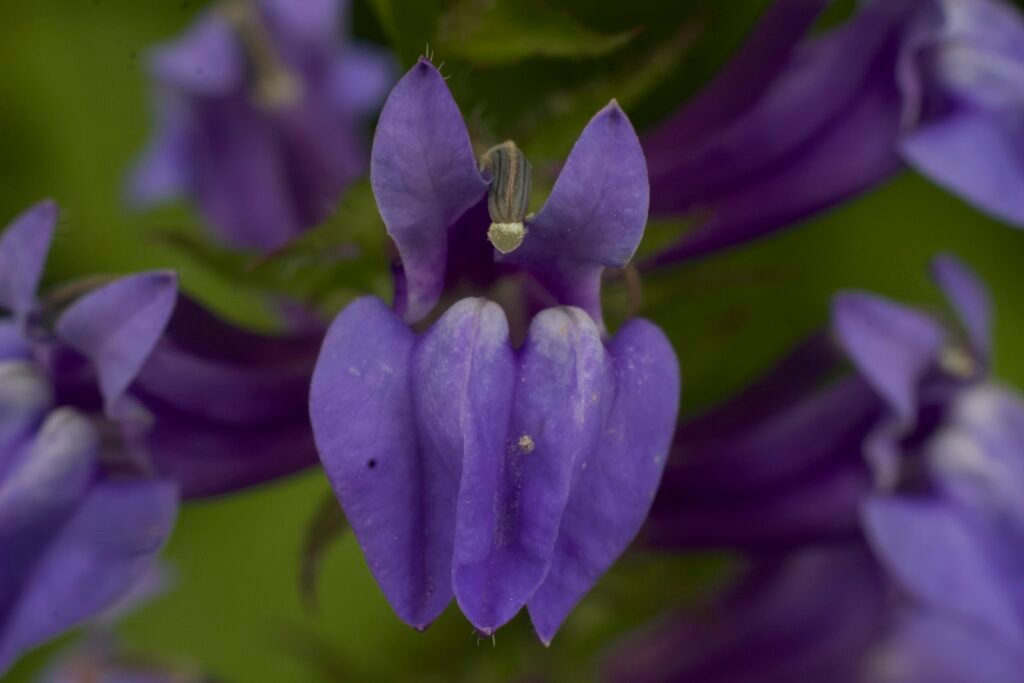
Cardinal Flower’s brilliant red, tubular flowers are strongly associated with hummingbird pollination. Great Blue Lobelia takes another route. Its blue-violet flowers are primarily associated with large bees, particularly bumblebees.
Watch the flower closely and its shape starts to make more sense.
Rather than providing an exposed landing pad like a coneflower or an easy cluster of tiny flowers like mountain mint, the flower has a more specialized structure. A visiting bee has to interact with the flower to reach its resources, making the relationship between flower and pollinator part of what makes this plant interesting.
I haven’t personally observed heavy pollinator activity on mine. It certainly hasn’t produced anything resembling the activity I’ve seen on plants such as Virginia mountain mint, late boneset, goldenrods or asters.
But that’s okay.
Not every native plant needs to perform the same ecological job.
Not Every Plant Has to Be an Ecological Powerhouse
This may be one of the biggest lessons Great Blue Lobelia has reinforced for me.
When I first started learning about native plants, I was understandably fascinated by ecological value. Host plants. Pollinator plants. Seeds for birds. Berries for wildlife. Shelter. Nesting material.
Those things still matter tremendously to me.
But a habitat garden is also a garden.
There is nothing wrong with choosing some plants simply because you love looking at them.
Great Blue Lobelia isn’t going to play the same ecological role in my yard as swamp milkweed, goldenrod, asters, sneezeweed or Virginia mountain mint. I’m not asking it to.
Instead, this has become one of the plants I want to play with.
Color. Texture. Structure. Contrast.
And especially vertical structure.
Vertical Punctuation in the Garden
I’ve realized lately how much I enjoy flowers that create strong vertical lines.
Blazing stars do it.
Cardinal Flower does it.
And Great Blue Lobelia does it beautifully.
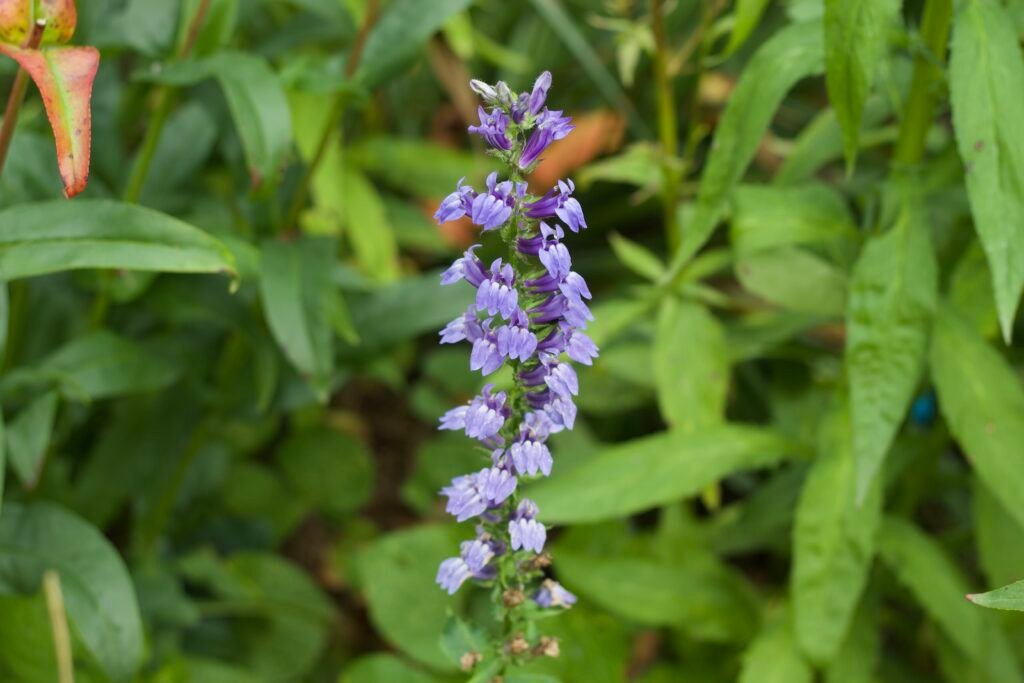
I’ve started thinking of these plants almost like vertical punctuation in the garden. Their upright flower spikes interrupt the softer shapes surrounding them and pull your eye upward.
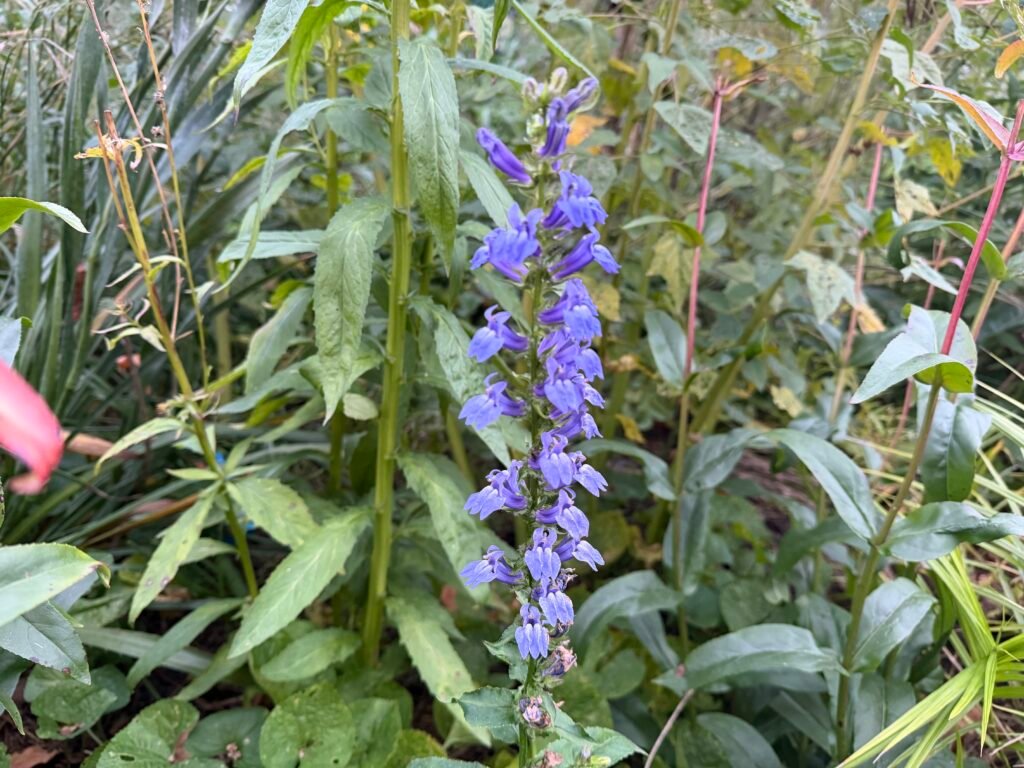
[IMAGE: IMG_0975 — flowering Lobelia within the surrounding vegetation]
That’s why I’m already imagining different combinations for next year.
Picture several Great Blue Lobelia flower spikes rising above a thicker-leaved sedge, with little bluestem weaving between them and a mass of yellow sneezeweed behind everything.
Or replace the sneezeweed with goldenrod.
Put those blue-violet spikes against yellow and gold. Surround their broad leaves with the fine texture of grasses and sedges. Let the rigid vertical flowers emerge from something softer and more fluid.
That’s where this plant becomes exciting to me.
It’s not simply another species to check off a native plant list.
It’s a design element.
Great Blue Lobelia and Cardinal Flower
Growing Great Blue Lobelia alongside Cardinal Flower has made the relationship between these two plants even more interesting to me.
They share that unmistakable Lobelia architecture, but they can look dramatically different in the garden. One difference I’m particularly interested in watching is height.
My Cardinal Flower grew close to five feet tall this year, while Great Blue Lobelia is generally a shorter plant. That got me wondering about something.
Both species can occur in the kind of moist environments where surrounding vegetation can become dense and tall. If a Cardinal Flower is competing visually with all of that vegetation, does getting its brilliant red flower spike higher into the landscape make it easier for a passing hummingbird to notice?
I don’t know.
Researchers have found evidence that flower-spike height can influence reproductive success in Cardinal Flower, but that doesn’t establish that hummingbird pollination is the reason Cardinal Flower evolved to be taller than Great Blue Lobelia.
Still, it’s exactly the kind of question that makes growing these two plants beside one another so interesting to me. Instead of seeing a red Lobelia and a blue Lobelia, I start noticing the differences in height, flower structure and the relationships happening around them—and wondering why those differences exist.
The two species can even hybridize, although natural hybridization appears to be uncommon. Their hybrid is known as Lobelia × speciosa. I currently have the two growing close together, and next year I may try hand-pollinating a few flowers just to see what happens.
There’s always something else to observe.
Growing Great Blue Lobelia
Great Blue Lobelia is a moisture-loving perennial that can grow in both sun and partial shade. In the wild, it’s associated with moist areas, and in the garden it performs best when the soil doesn’t remain excessively dry. Missouri Botanical Garden lists it at roughly 2–3 feet tall, with flowering from midsummer into early fall.
Scientific name: Lobelia siphilitica
Common name: Great Blue Lobelia, Great Lobelia
Plant type: Herbaceous perennial
Height: Typically 2–3 feet
Bloom time: Midsummer to early fall
Flower color: Blue to blue-violet
Light: Full sun to partial shade
Soil: Moist, consistently moist soils
Moisture: Medium to wet; performs best with consistent moisture
Hardiness: USDA Zones 4–9
Growth habit: Upright, clump-forming
Pollinators: Primarily bumblebees and other bees
Garden uses: Moist borders, rain gardens, pond edges, naturalized plantings and native gardens
Great Blue Lobelia’s tolerance of both sun and partial shade is one reason I’ve planted it in several locations around my yard. Next year, I plan to move one into one of my shadier areas and compare it with the plants receiving more sunlight.
I’m interested not only in how well it grows under those different conditions, but in how it looks in them. That’s become part of the experiment for me—learning where the plant works horticulturally while also figuring out where its blue flowers and strong vertical structure work best in the garden.
Given adequate moisture and favorable conditions, Great Blue Lobelia can also self-seed and gradually spread rather than necessarily remaining a single isolated plant.
Designing With Great Blue Lobelia
There are almost too many combinations I want to try.
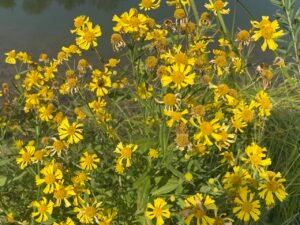
For simultaneous flowering and strong visual contrast, sneezeweed (Helenium autumnale) gives you yellow against blue with dramatically different flower shapes.
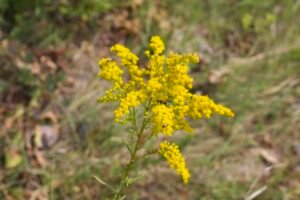
Goldenrods (Solidago spp.) can provide the same blue-and-yellow contrast, particularly species with lighter, airier flower structures behind the stronger Lobelia spikes.
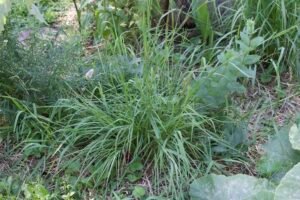
Little bluestem (Schizachyrium scoparium) introduces fine texture and movement around the heavier leaves and upright flowers.
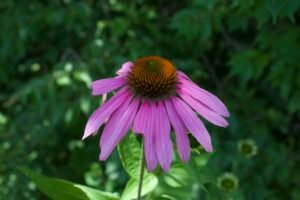
Purple coneflower (Echinacea purpurea) creates another kind of contrast, placing large horizontal flower heads against narrow vertical spikes.
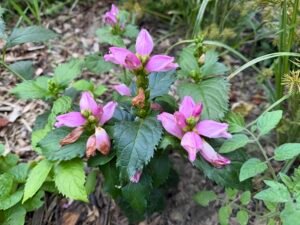
And red turtlehead (Chelone obliqua) creates an especially interesting ecological combination because both plants attract bumblebees and appreciate moisture.
Then there are plants that don’t necessarily need to flower simultaneously.
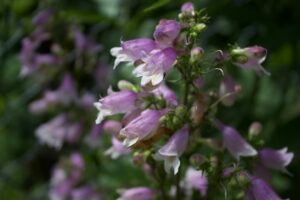
Penstemons: Foxglove and Calico beardtongue (Penstemon digitalis and calycosus) flowers earlier, creating the possibility of a succession of bee resources: Penstemons are earlier in the season, followed later by Great Blue Lobelia and turtlehead. But the relationship doesn’t end when the Penstemon finishes flowering. In my garden, its green foliage begins taking on shades of red and burgundy later in the season, just as Great Blue Lobelia is still producing its blue-violet flowers. That creates another unexpected combination—this time based on foliage rather than flowers.
That’s another way to think about companion planting.
The question doesn’t always have to be, What looks good flowering beside this?
Sometimes it’s, What happens before it? What happens after it?
A Plant I’m Just Beginning to Understand
After one season, Great Blue Lobelia has already become one of my favorite flowers in the garden.
But I’m still learning it.
I want to see what these first-year plants look like after another growing season. I want to compare plants growing under different amounts of sunlight. I want to watch more closely for bumblebees interacting with the flowers. I want to experiment with combinations of grasses, sedges, goldenrods and other late-summer flowers.
And I want to see what happens when Cardinal Flower and Great Blue Lobelia grow side by side.
That’s why I think Great Blue Lobelia is going to become a staple in my Backyard Habitats designs.
Not because it’s the most ecologically important plant I grow.
Because it’s beautiful.
Because it’s interesting.
Because it gives me another tool for creating a garden that is both habitat and art.
And there’s nothing wrong with planting something simply because it makes you want to spend more time in the garden.


