
Field observations recorded July 14, 2026.
Habitats Explored: Wet Prairie • Dry Sand Prairie • Oak Woodland • Oak Savanna
Learning to Read a Landscape
When I first pulled into Salamander Flats, I wasn’t entirely sure what to expect.
The name immediately made me picture water—perhaps a marsh, a vernal pool, or at least a place where amphibians would be easy to find. It was the middle of July, though, with temperatures already climbing into the 90s, so I wasn’t expecting to find much standing water even if the name suggested otherwise.
Instead, I found a sandy parking area, a simple gate, a small sign asking visitors to leave pets at home, and a narrow trail disappearing into a prairie bordered by oak woods.
I purposely avoided reading the interpretive sign.
I wanted the landscape to tell its own story first.
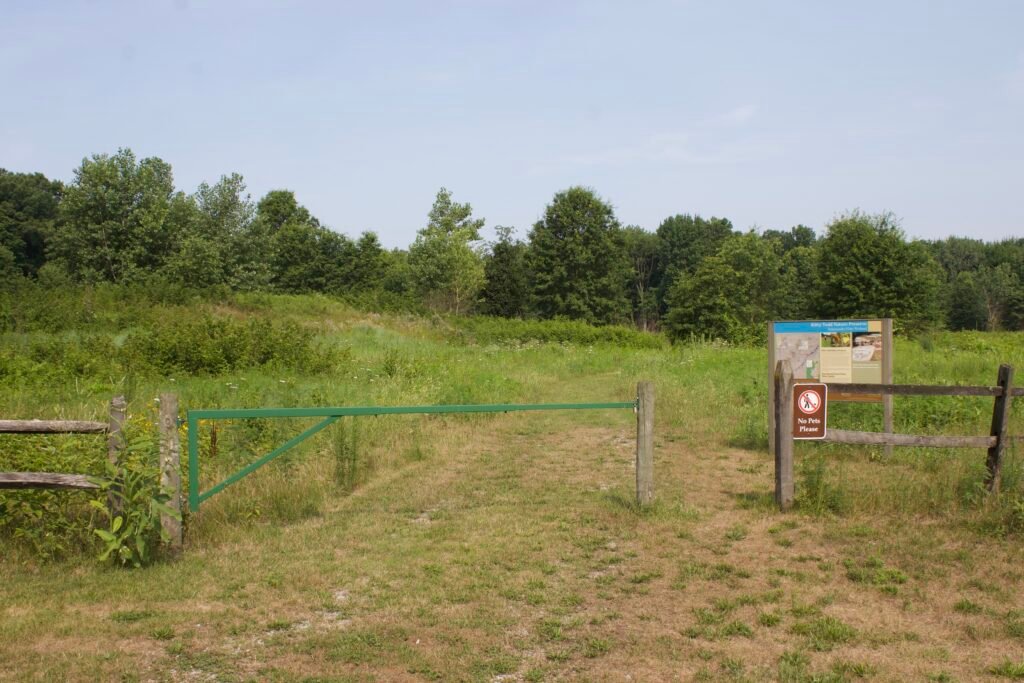
The trail immediately opened into a broad prairie stretching toward a line of mature oaks. At first glance it seemed relatively simple—open grassland, scattered wildflowers, and patches of dense Allegheny blackberry growing throughout the preserve.
One of my first encounters of the morning came from those blackberry thickets.
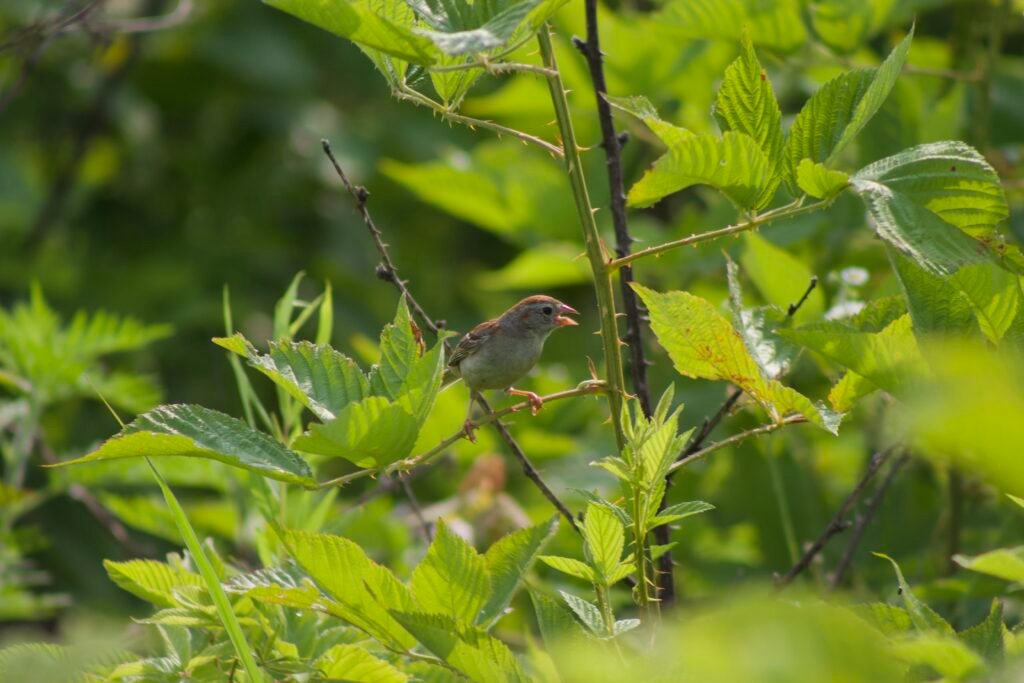
A Field Sparrow hopped from cane to cane only a few feet away. It never seemed alarmed enough to fly, instead moving deeper into the thorny stems whenever I stepped a little closer. Whether it had a nearby nest or simply understood the protection those blackberry thickets offered, it was perfectly content staying where it was.
I spent several minutes trying to photograph it while sweat slowly began running down my face.
The heat had already become part of the experience.
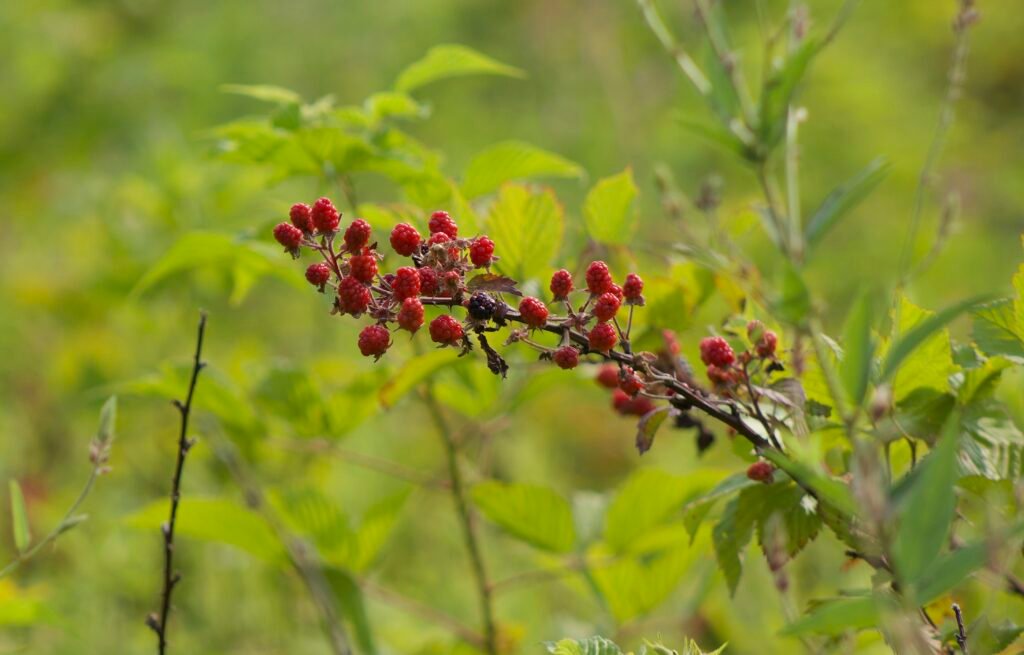
While watching the sparrow, I couldn’t help noticing the blackberry itself.
Bright red berries were beginning to ripen among a sea of green leaves, each cluster protected by an impressive collection of sharp thorns. Those thorns may discourage people, but they create excellent shelter for wildlife.
It was a simple reminder that plants often provide far more than flowers.
Butterflies floated almost constantly across the prairie despite relatively few plants being in bloom. A handful of Black-eyed Susans added color here and there, but there wasn’t an abundance of nectar plants this early in my walk.
The prairie felt open, bright, and incredibly hot.
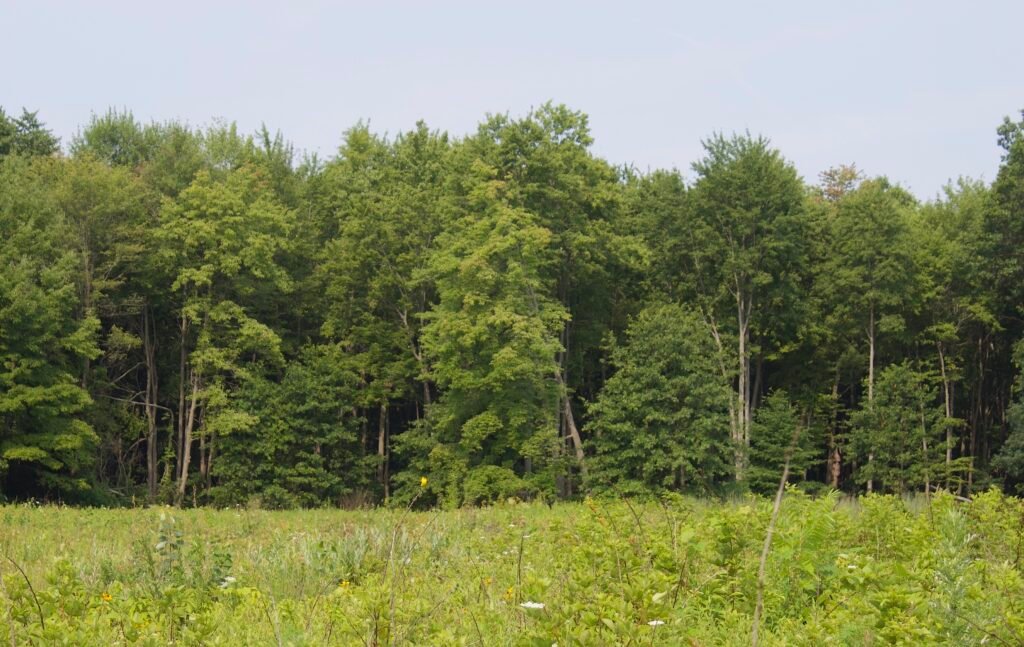
Then the trail entered the woods.
Into the Woods
The change was immediate.
The temperature dropped.
The sounds changed.
Shade replaced the open sun.
Mosquitoes quickly reminded me they preferred this part of the preserve much more than I did, forcing me to stop and finally apply insect repellent.
As I continued walking, another story began revealing itself.
Evidence of prescribed fire remained visible throughout the woodland.
Blackened bark marked several trees, but surprisingly little else suggested a recent burn. The understory had already rebounded with remarkable speed, making it difficult to imagine fire had passed through only a few months earlier.
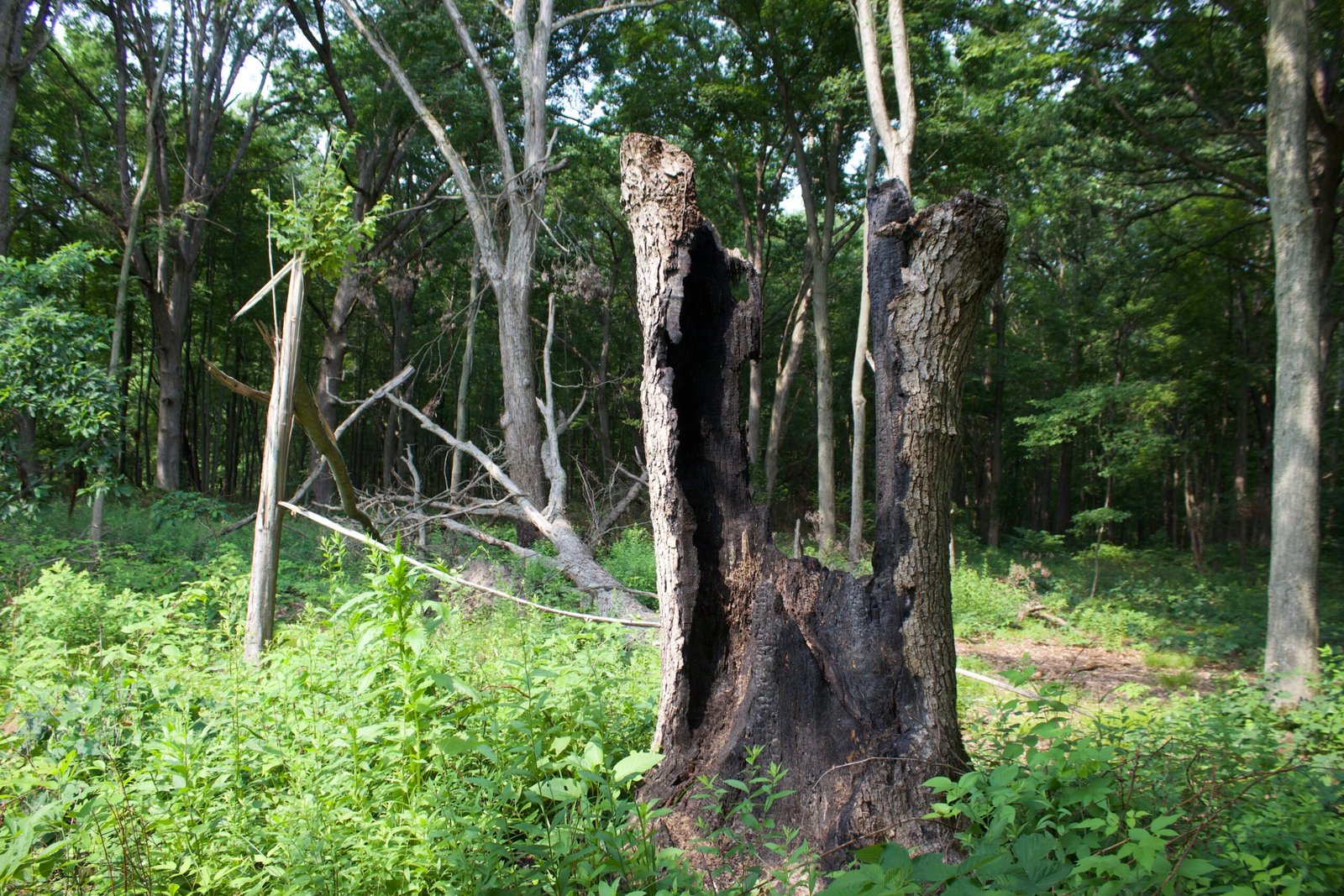
Then I came upon one tree that stopped me in my tracks.
This burned oak became one of the defining stories of the walk. These different views show not only the tree itself, but also the opening it created in the woodland and the new generation of oaks already taking advantage of the extra sunlight.
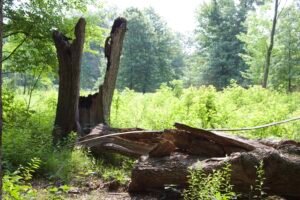
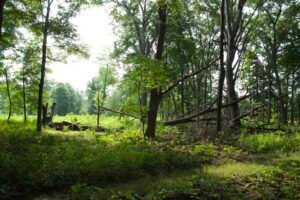
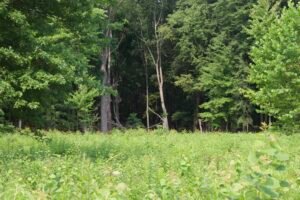
The trunk stood hollowed and blackened, while the massive fallen tree still stretched across the woodland floor.
What looked to be a mature pin oak appeared to have already been in decline before the prescribed burn. Fire had burned upward through the hollow trunk, and at some point the tree finally gave way, crashing into neighboring trees as it fell.
Standing there, I couldn’t help but imagine the moment it happened.
For the crew conducting the prescribed burn, watching a tree of that size come down must have been unforgettable.
Yet what fascinated me even more wasn’t the fallen tree itself.
It was everything happening because it had fallen.
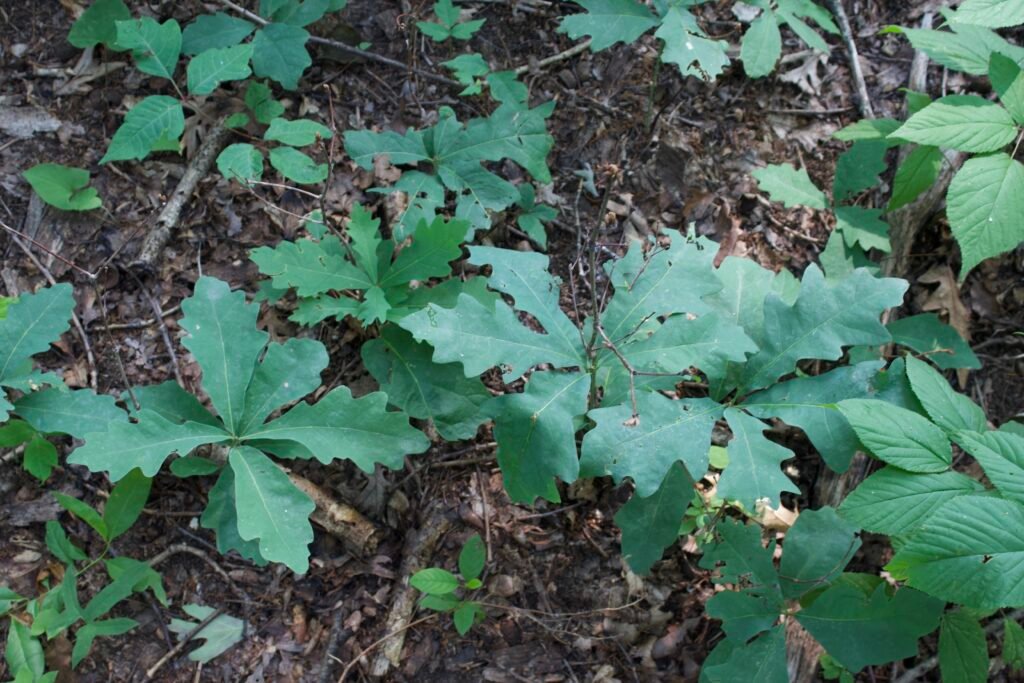
Sunlight now poured through the opening in the canopy.
The forest floor beneath that opening was filled with young oak seedlings beginning their own lives in the space the old tree had left behind.
The fallen tree had become habitat.
The opening had become opportunity.
Nature rarely leaves empty spaces for long.
Following the Water
Leaving the woodland, the trail gradually opened once again.
This time, however, something felt different.
The vegetation became noticeably taller and lusher than it had been in the prairie where I began my hike.
Blue vervain, jewelweed, meadowsweet, and ferns began appearing together, hinting that this part of the landscape held moisture differently than the drier prairie only minutes away.
I still hadn’t seen any standing water.
But something was changing.
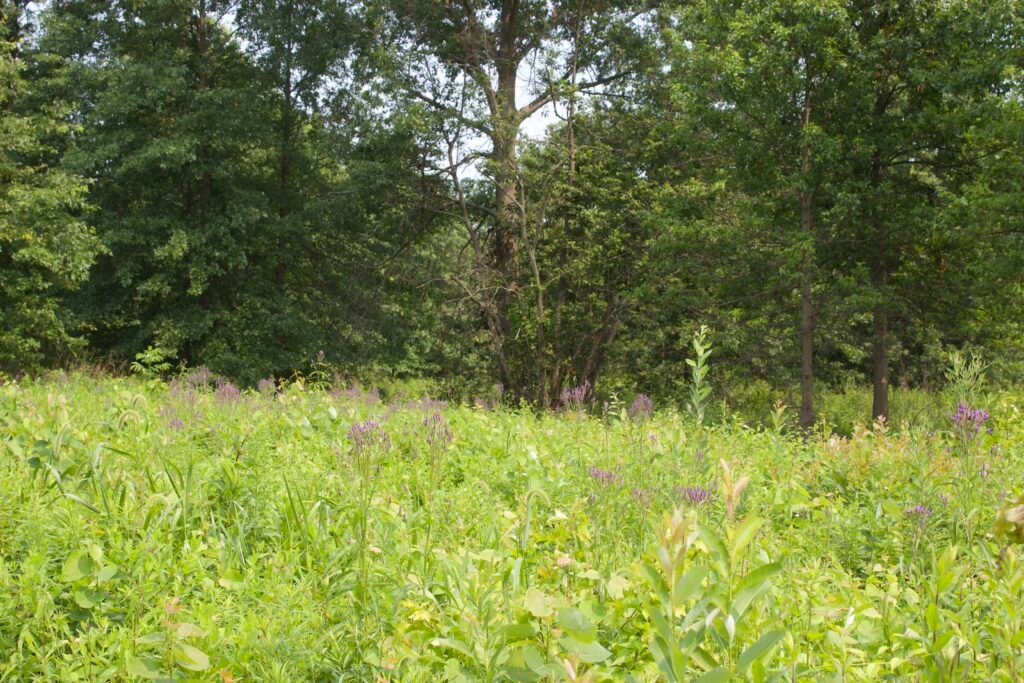
As I continued walking, the landscape slowly shifted once again.
The ground became sandier.
Plant height dropped.
The prairie felt drier.
Scattered clumps of Big Bluestem towered above the surrounding vegetation, while Black-eyed Susans and spotted beebalm became more common.
It wasn’t a sudden change.
The preserve transitioned almost seamlessly from one landscape into another.
The plants were quietly revealing changes in soil and moisture that were often much harder to notice simply by looking at the ground.
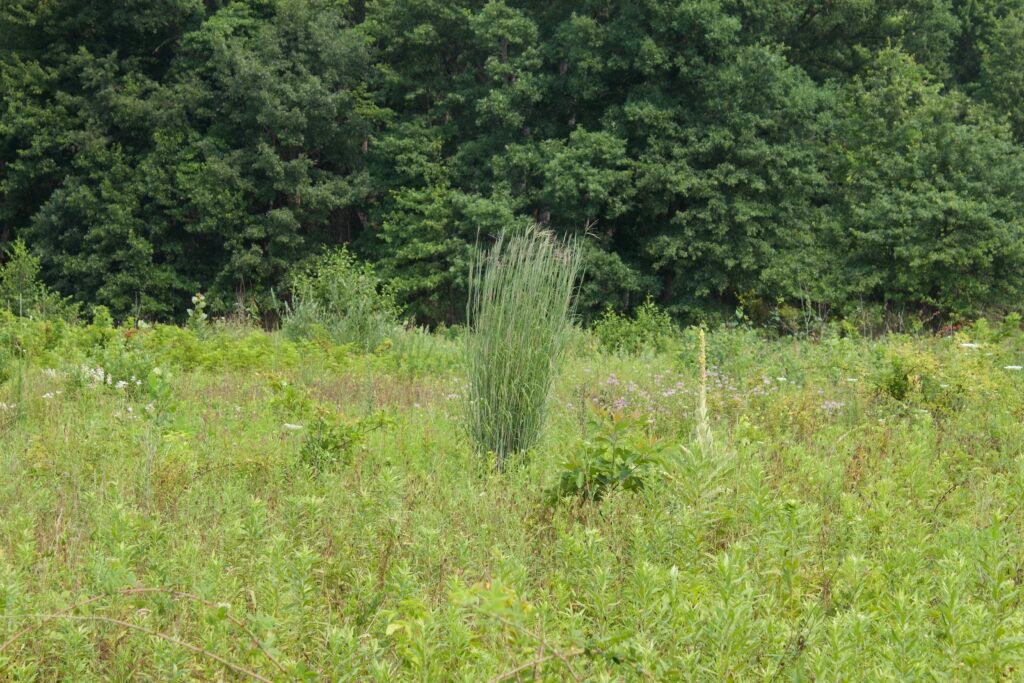
One plant that immediately caught my attention was a large clump of Big Bluestem rising well above the surrounding prairie.
Its height made the subtle changes across the landscape even easier to notice.
Most of the surrounding vegetation remained relatively short, while only a handful of species reached several feet into the air.
Looking across the prairie, I found myself paying less attention to individual plants and more attention to the patterns they created together.
Each plant helped tell the story of changing moisture across the preserve. Together they revealed transitions that were easy to overlook until you began paying attention to the vegetation.
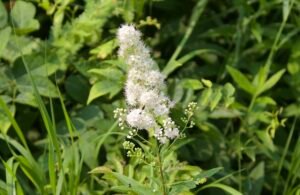
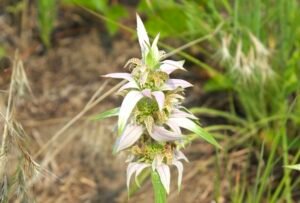
White meadowsweet turned out to be one of the busiest flowers of the morning.
Although several species were blooming, pollinators seemed especially drawn to its clusters of white flowers. Even spotted beebalm, which I expected to be much busier, attracted surprisingly little activity by comparison.
Small observations like these are often my favorite part of visiting a preserve.
You never quite know what you’ll find.
Eventually I reached an open area that finally helped the name Salamander Flats begin to make sense.
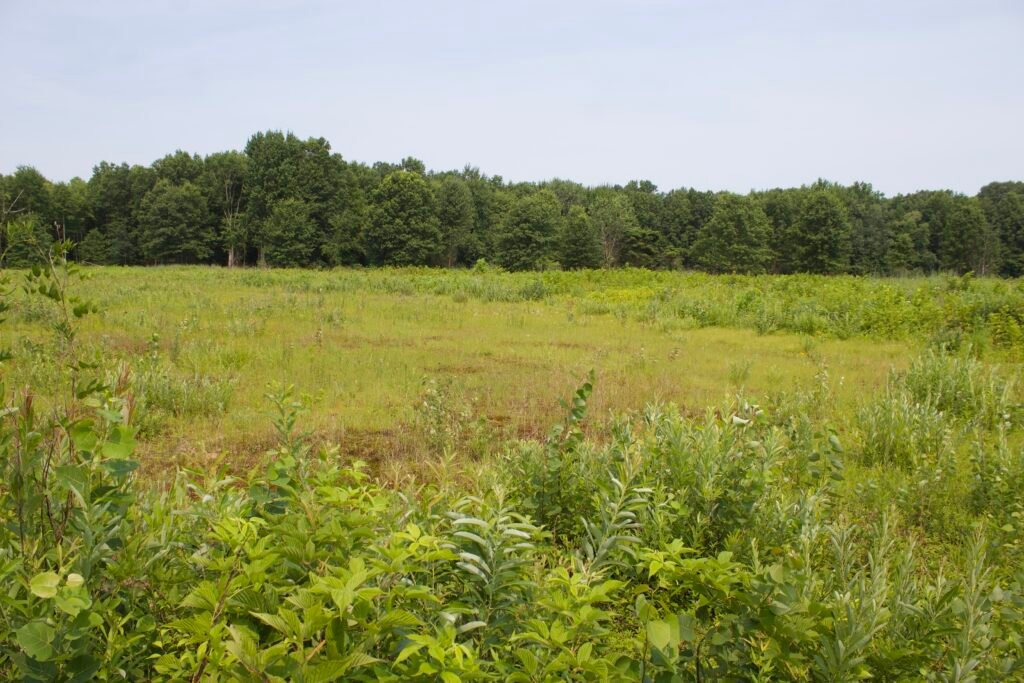
The restored basin appeared mostly dry during my visit, surrounded by taller vegetation marking its edges.
Without reading the interpretive signs, I walked right past this area earlier in the hike without realizing what I was looking at.
Only later did everything begin coming together.
Looking Back
After finishing the trail, I finally stopped to read the restoration signs near the entrance.
I learned that this area had once been drained for agriculture. Ditches lowered the water table, soils were altered, and much of the natural diversity disappeared.
Restoration involved filling the drainage ditch and removing portions of the altered soil—not reseeding the site, but allowing the buried seed bank to respond on its own.
Several years later, rare prairie species began returning.
Suddenly many of the observations from my walk made much more sense.
The shifting vegetation.
The subtle changes in elevation.
The evidence of seasonal water.
The prescribed fire.
None of it stood alone.
It was all connected.
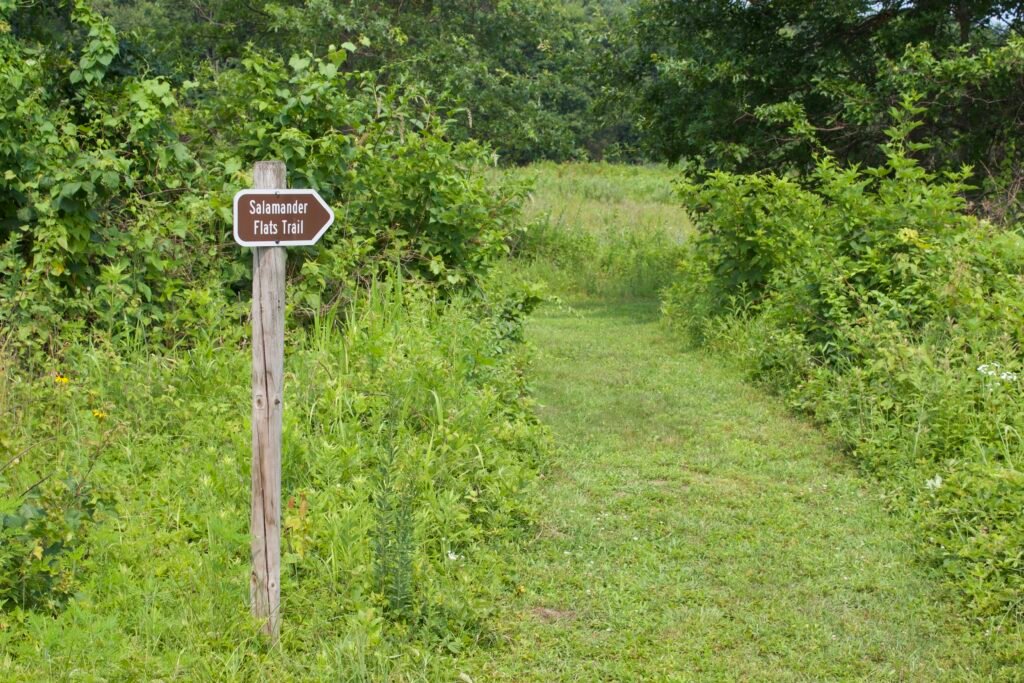
As I made my way back toward the parking lot, I passed the small Salamander Flats sign pointing back toward the trail.
I smiled.
I never actually saw the water.
Looking back, I realized I had been seeing its influence the entire time.
After nearly two hours in the July heat, I was more than ready for the air conditioning before heading to explore the main Kitty Todd Nature Preserve.
Sometimes the landscape doesn’t reveal its story all at once.
Sometimes it asks us to slow down, observe carefully, and let understanding come one step at a time.