
Field observations recorded July 14, 2026.
Habitats Explored: Oak Savanna · Dry Sand Prairie/Openings · Oak Woodland
Following the Sand Through an Oak Savanna
After leaving Salamander Flats, I wasn’t quite ready to head home.
The preserve had left me thinking about hidden water and how subtle changes in elevation could shape an entire ecosystem. After cooling off for a few minutes, I knew another trail was only a couple of minutes away.
Kitty Todd Nature Preserve, another protected piece of the larger Oak Openings Region.
To many people around Toledo, “Oak Openings” means the Metropark. But the Oak Openings is actually a much larger ecological region stretching across northwest Ohio and into southeast Michigan—a landscape shaped by sand and home to a remarkable collection of habitats.
I had visited before, but that trip had been during the fall, and I was mostly focused on identifying plant species. This time felt different. I wasn’t simply looking for plants anymore—I wanted to understand why they were growing where they were.
At the time, I didn’t realize every answer would eventually point back to the same place.
The sand.
A Classroom Before the Trail
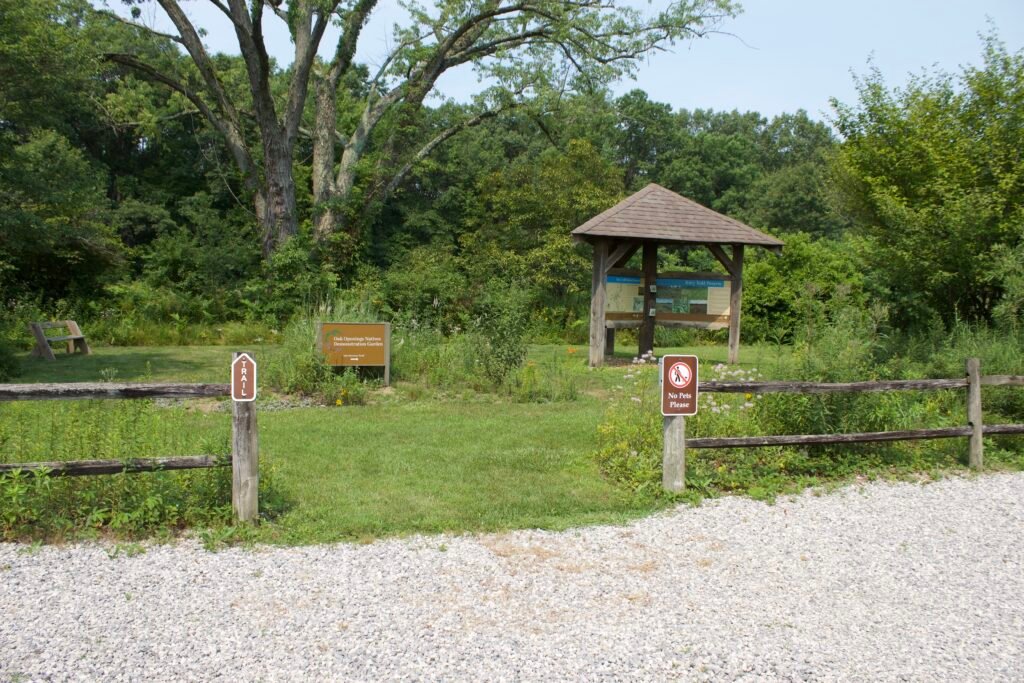
Before the trail even begins, Kitty Todd quietly prepares you for what you’re about to see.
Surrounding the entrance is a native demonstration garden filled with species found throughout the preserve. I immediately appreciated the idea. Rather than handing visitors a plant list, the preserve introduces them to many of the plants they’ll encounter later on the trail.
It almost turns the hike into a scavenger hunt.
Instead of wondering, What is that plant?, you’ve already been introduced to many of the answers before taking your first steps into the preserve.
As someone who encourages people to learn the plants around them, I thought it was a fantastic way to begin the experience.
The First Clue
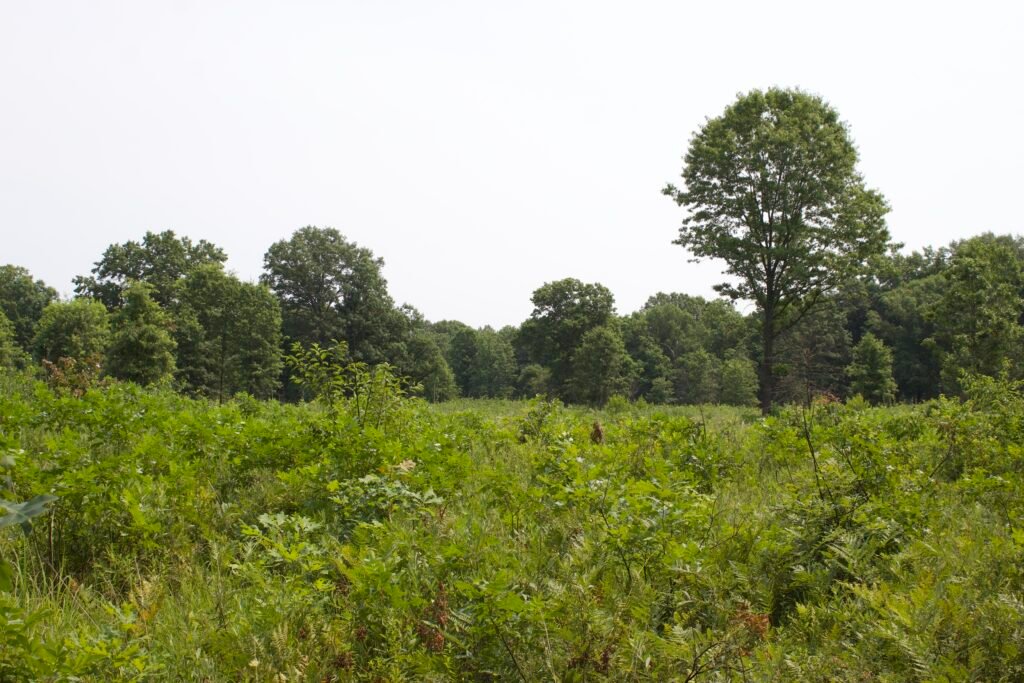
The first thing I truly noticed wasn’t something I saw.
It was something I smelled.
The scent stopped me almost immediately. Sweet, resinous, almost impossible to compare to anything else I’ve experienced in nature. Even weeks later, it’s still one of the strongest memories from the day and a species I will be on the lookout to add to the backyard.
Not long after, I came across a patch of native lowbush blueberries growing naturally along the trail.
I knew blueberries often thrive in acidic, sandy soils, but at the time I didn’t think much about it. Looking back, it was one of the first clues the preserve was quietly giving me.
The trail itself didn’t immediately feel unusual.
There were scattered oaks.
Shrubs.
Open areas.
Woodland ahead.
At first glance, it simply looked like another beautiful preserve in northwest Ohio.
But little by little, patterns started appearing.
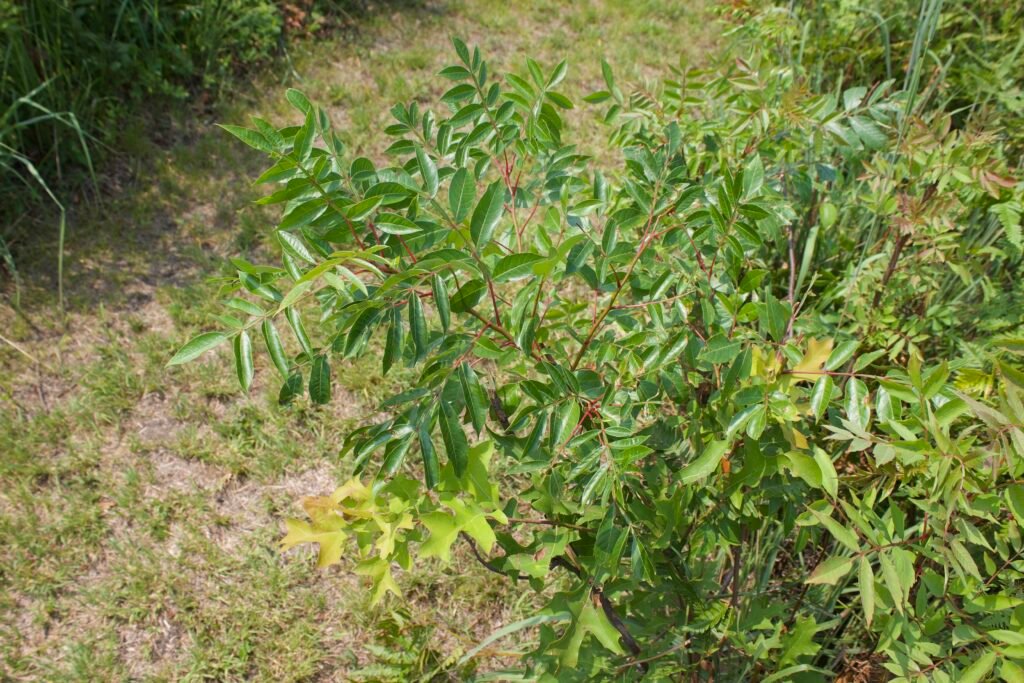
Winged sumac.
Again.
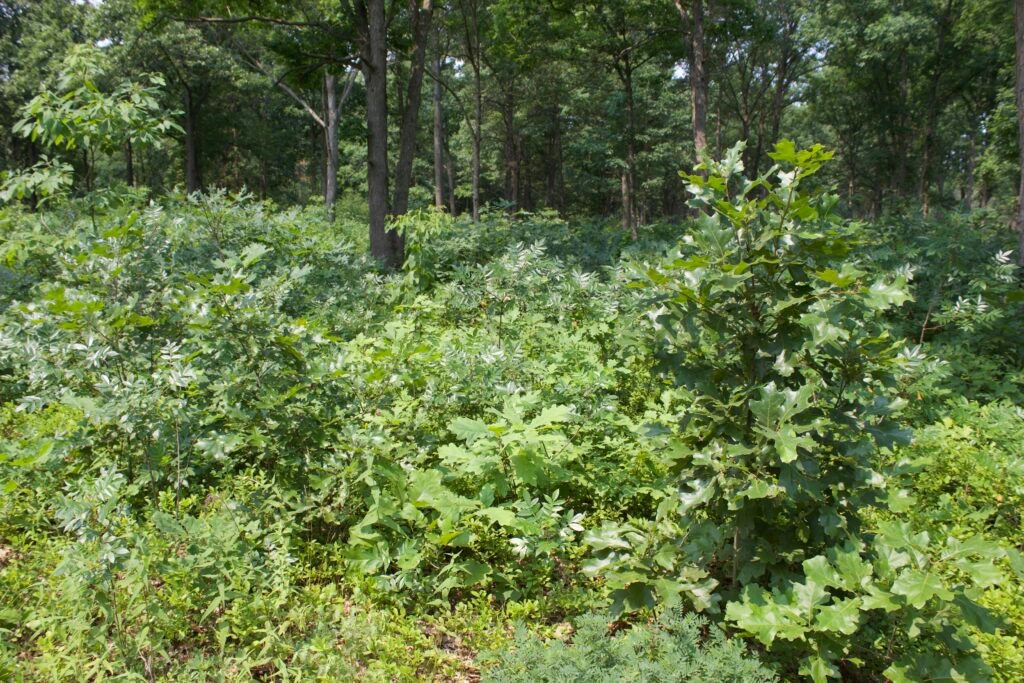
Young oaks.
Again.
Sweet fern.
Again.
Everywhere I looked, the landscape seemed to repeat itself.
Reading the Landscape
As I continued walking, one thing became increasingly obvious.
This preserve wasn’t trying to impress visitors with endless flowers and pollinators.
Instead, it was defined by a handful of species that appeared over and over again.
Young oaks were scattered throughout the preserve, while winged sumac became one of the most recognizable shrubs on the trail. Its blue-green foliage almost shimmered in the sunlight, creating a texture that stood apart from the surrounding vegetation.
The more I walked, the more I realized I wasn’t discovering new species as often as I was seeing the same ones repeated in different parts of the landscape.
That repetition didn’t make the preserve feel less diverse.
It gave the ecosystem an identity.
Later, while talking with staff, I learned that maintaining an oak savanna isn’t as simple as letting nature take its course. I knew that prescribed fire and other management practices help prevent the landscape from gradually becoming dense woodland. But I didn’t know that some native species—like winged sumac—can become so successful that they occasionally need to be managed to preserve the balance of the habitat. I thought they just let all the plants duke it out.
That conversation was a great reminder that restoration isn’t about allowing every native plant to dominate.
It’s about maintaining the relationships that define an ecosystem, balance.
Following the Sand
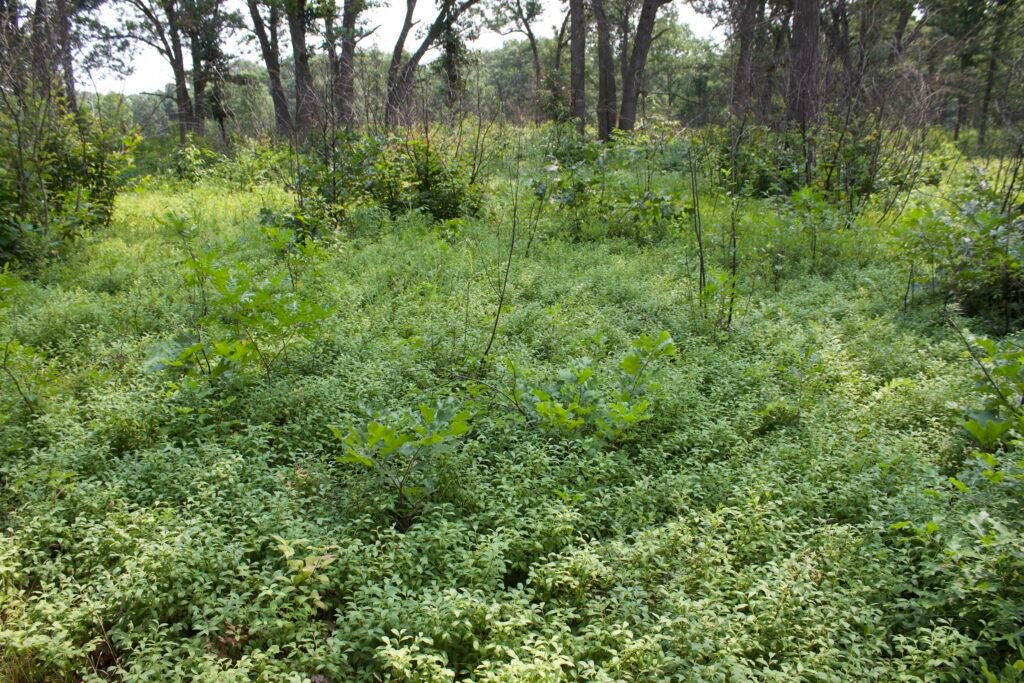
The deeper I walked, the more one idea quietly worked its way into every observation.
Everything here seemed adapted to dryness.
Unlike Salamander Flats, where subtle depressions constantly hinted at hidden moisture, I rarely found myself thinking about water at all.
Instead, the preserve kept directing my attention somewhere else.
The sandy soil.
Even though the terrain only rose and fell gently, the plants surrounding me all seemed perfectly suited for dry conditions.
Sweet fern.
Winged sumac.
Scattered bur oaks.
Soon, little bluestem would join that list as the landscape opened into the savanna.
None of these observations felt dramatic by themselves.
Together, however, they were beginning to tell the same story.
When the Woods Opened
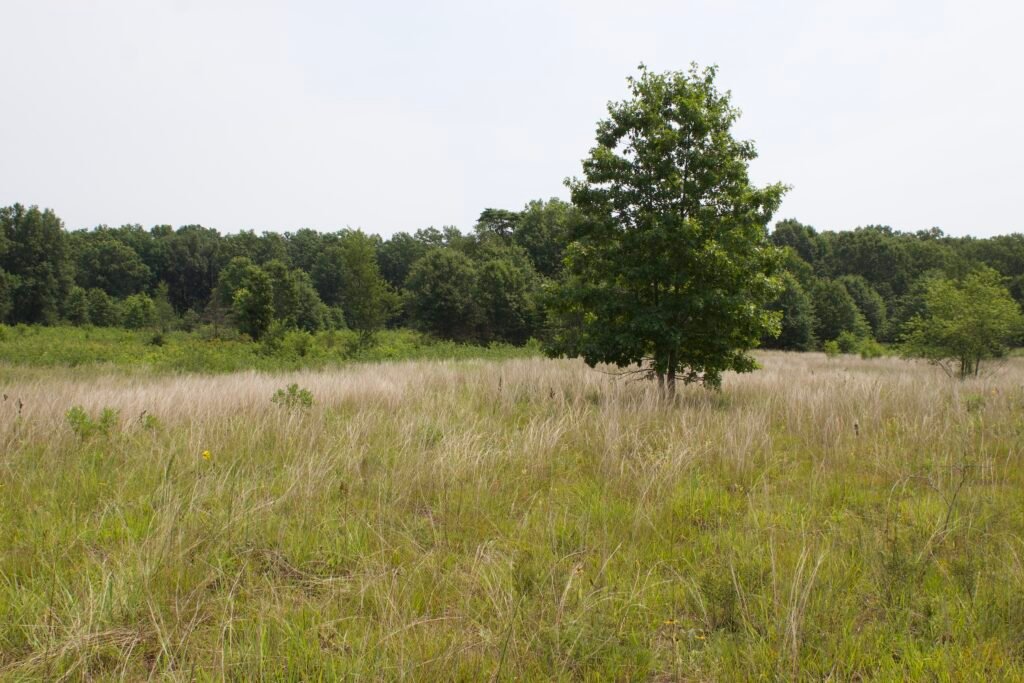
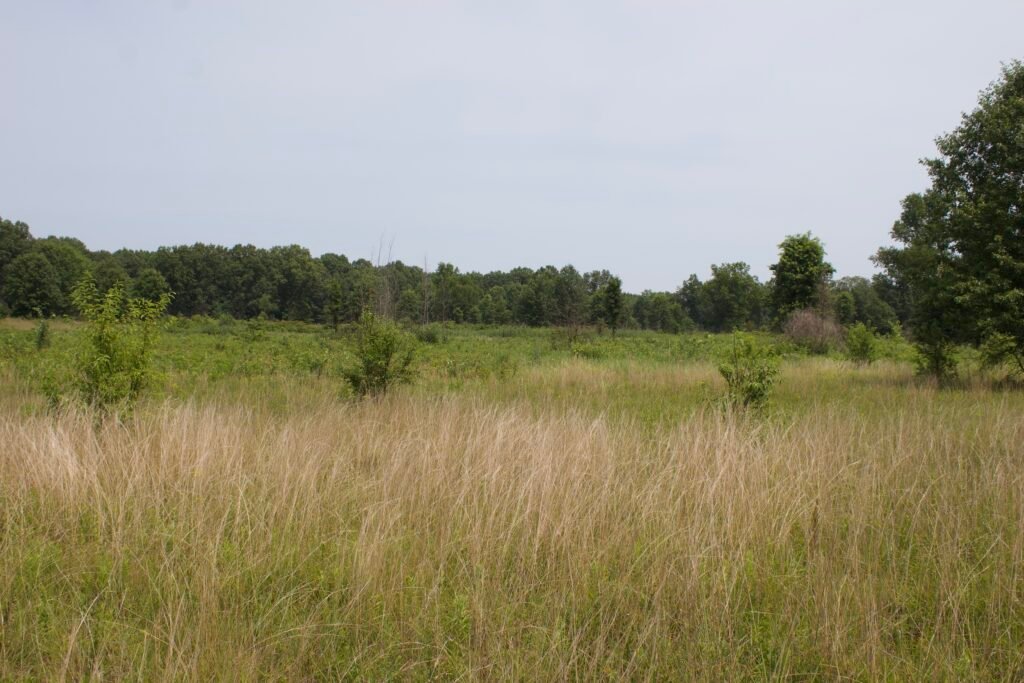
Stepping out of the woodland completely changed the experience.
The shade disappeared.
The temperature immediately climbed.
The little bluestem stretched across the landscape in broad silver-gray patches, broken only by scattered oaks and shrubs.
At over 95 degrees, standing out there felt surprisingly different from the forests I had just walked through.
A red-tailed hawk called somewhere in the distance.
For just a moment, standing in the heat with scattered trees and open prairie, I felt like i was out west. Not because this was a desert—it wasn’t—but because the combination of heat, openness, and the distant call of the hawk created a feeling unlike anywhere else I’ve explored in northwest Ohio.
The farther I walked, the more I realized this ecosystem wasn’t defined by abundance.
It was defined by restraint.
The Answer I Had Been Looking For
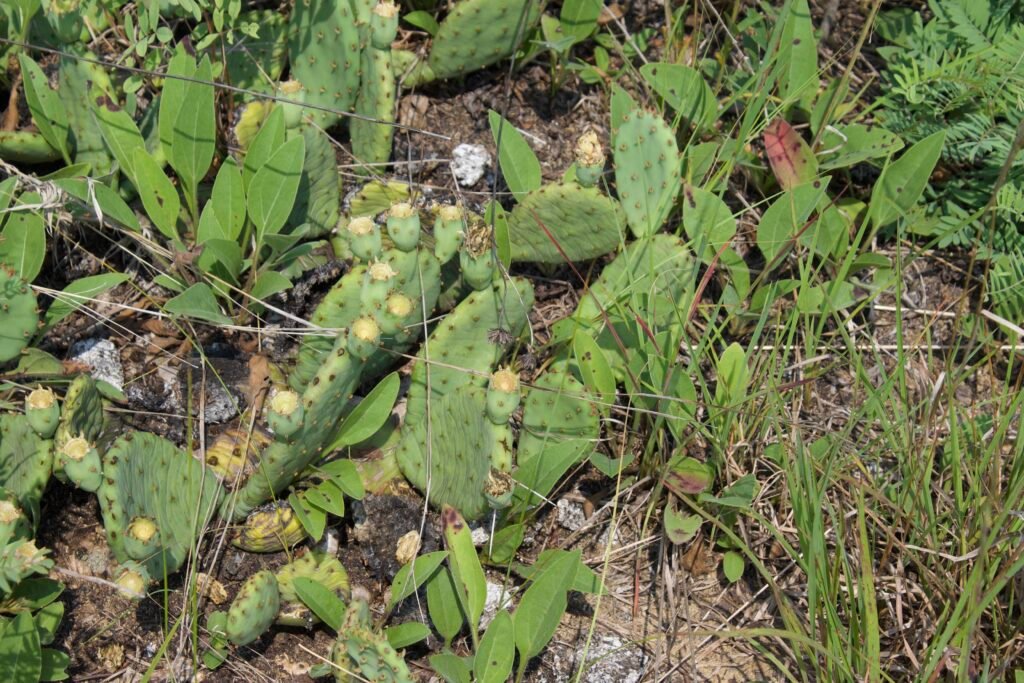
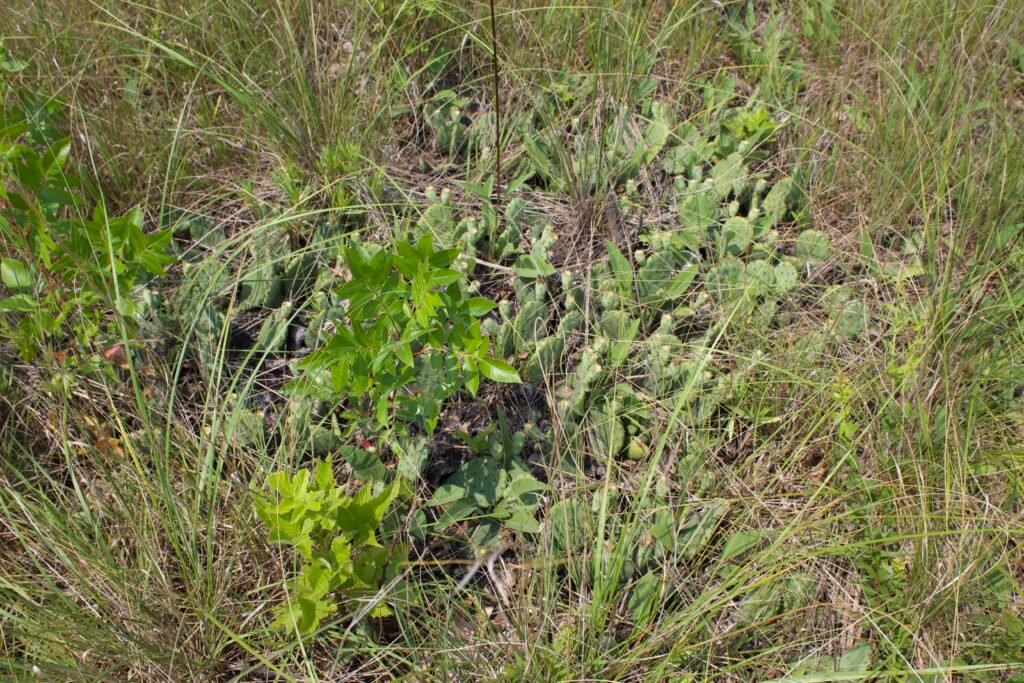
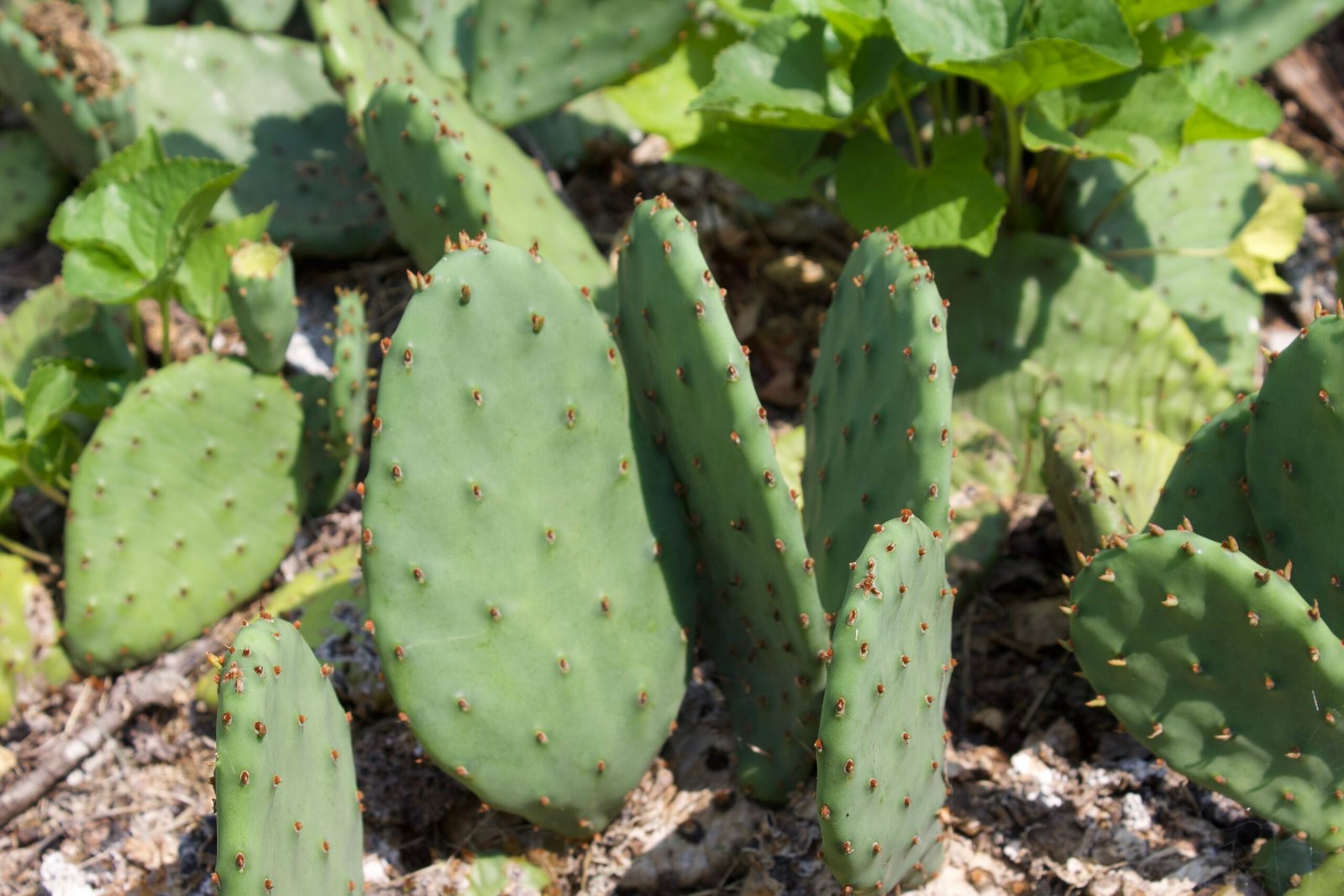
The first time I ever saw an eastern prickly pear cactus wasn’t here.
It was at a Wild Toledo native plant sale.
I remember staring at it and thinking how incredible it was that Ohio had a native cactus.
But one question immediately came to mind.
Where does this actually grow?
If I walked into the woods somewhere in northwest Ohio, where would I ever expect to find a cactus?
Kitty Todd finally answered that question.
Not by simply showing me a cactus.
By showing me its home.
Standing there, surrounded by little bluestem, sweet fern, scattered oaks, and deep sandy soil, the cactus no longer felt unusual.
It felt inevitable.
What fascinated me even more was realizing that two plants growing only a few feet apart survive the same harsh conditions in completely different ways.
Little bluestem sends roots several feet into the ground, reaching moisture far below the surface.
The cactus solves the same problem almost entirely differently, storing water and enduring long periods of drought.
Different strategies.
Same environment.
Neither is better.
Each simply found its own way to belong.
That may have been my favorite lesson of the entire day.
Looking Back
Compared to Salamander Flats, Kitty Todd initially felt simpler.
There weren’t dramatic wetland transitions.
There weren’t hidden vernal pools quietly revealing themselves beneath the forest.
Instead, this landscape repeated itself with remarkable consistency.
At first, I wondered if there was less to see.
By the end of the walk, I realized there was simply a different story to read.
Every observation eventually connected back to the same foundation.
The sweet fern.
The little bluestem.
The blueberries.
The winged sumac.
The scattered bur oaks.
Even the cactus.
Each one was another thread leading back to the same place.
The sand.
Perhaps that’s what I enjoy most about returning to places I’ve visited before.
The first visit is often about discovering species.
The second begins teaching you why those species are there.
As I walked back toward the parking lot, I noticed one final detail I had somehow missed at the beginning of the hike.
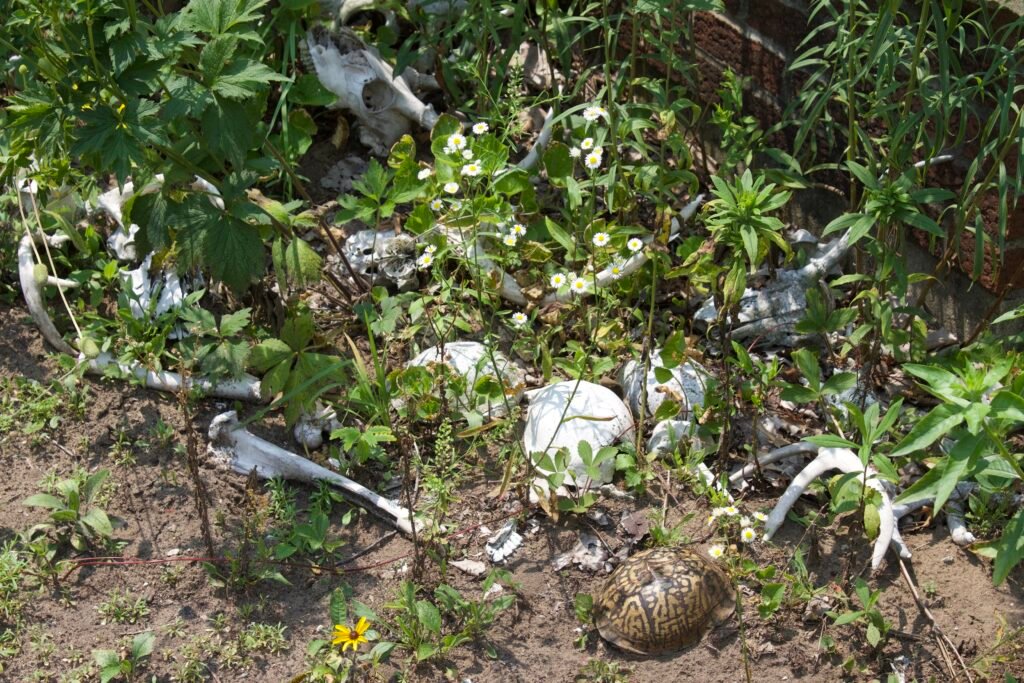
Near the nature center sat a collection of skulls, bones, antlers, and even an eastern box turtle shell, thoughtfully arranged as another opportunity to learn from the natural world.
It felt like a fitting way to end a visit to a landscape that, at times, felt more like a desert than northwest Ohio.
The preserve had spent the entire afternoon quietly encouraging visitors to look a little closer.
Not just at individual plants.
But at the relationships that tie an ecosystem together.
Sometimes those relationships begin with water.
Sometimes they begin with fire.
And sometimes…
they begin with sand.