

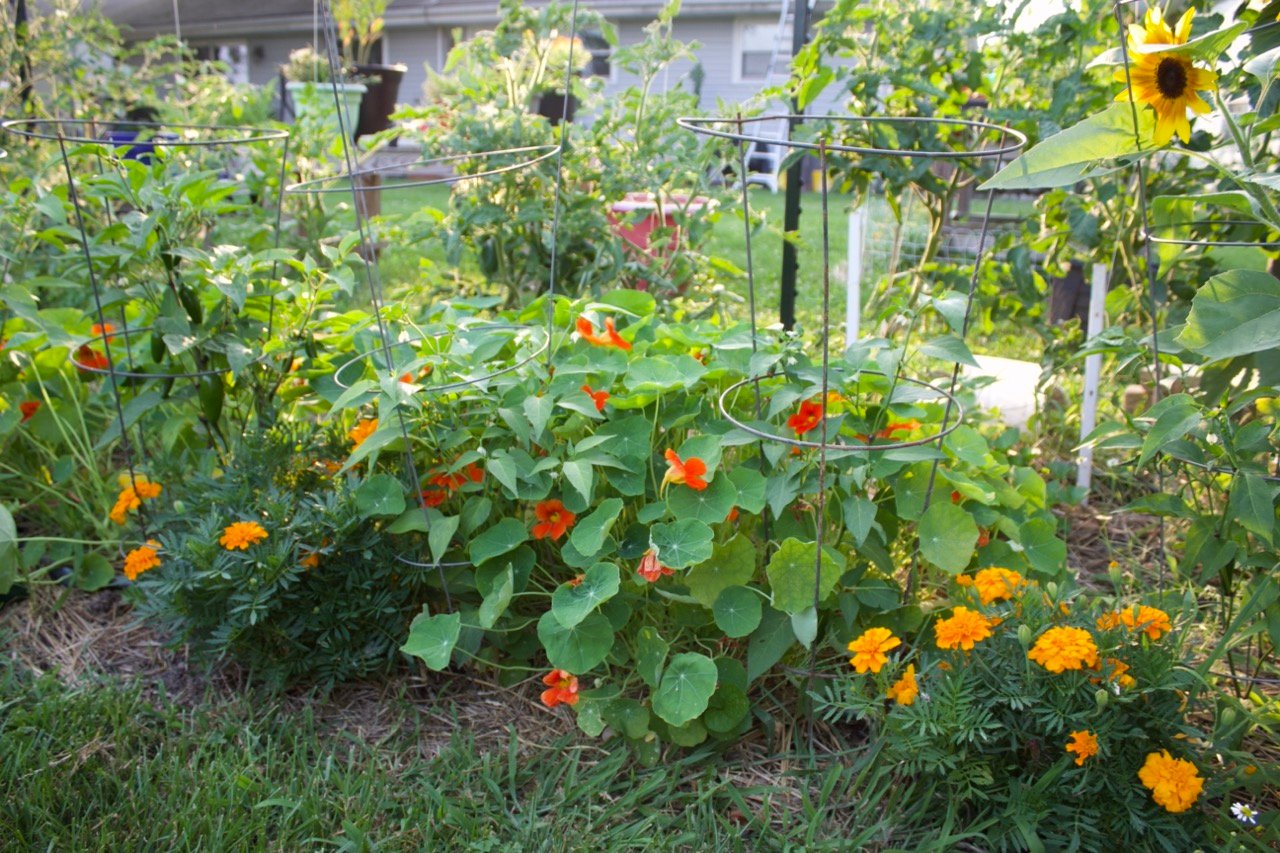
A lot of people grow herbs for cooking, teas, or fragrance.
But one of the most overlooked things about herbs is how valuable many of them are for pollinators and other beneficial insects.
In fact, some of the busiest plants in my garden every summer aren’t vegetables or ornamental flowers at all.
They’re herbs.
Bees, butterflies, hoverflies, and countless other insects are constantly moving between blooms, especially once the heat of summer kicks in.
And the best part is that many herbs are incredibly easy to grow.
🐝 Why Herbs Are So Valuable for Pollinators
Many herbs produce clusters of small flowers that are packed with nectar and pollen.
These blooms often attract:
- Native bees
- Bumble bees
- Butterflies
- Hoverflies
- Predatory insects
And because herbs are usually allowed to flower for long periods of time, they can provide a steady food source throughout the growing season.
A diverse herb garden doesn’t just benefit pollinators either.
It helps support the larger ecosystem surrounding your garden.
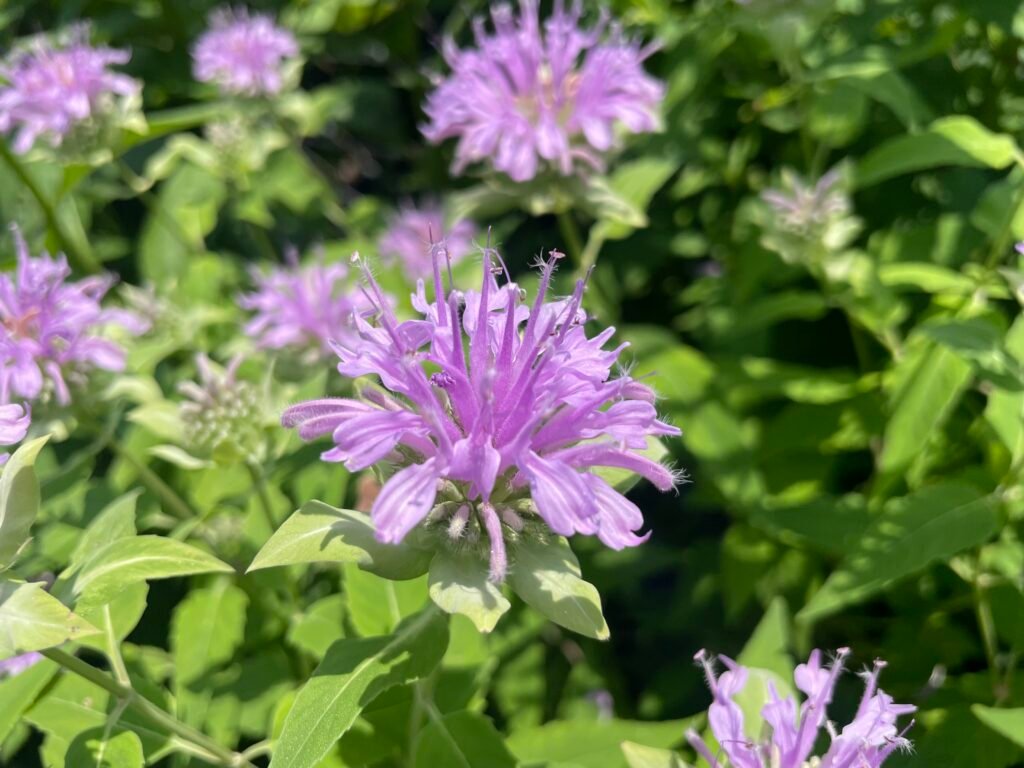
🌿 Wild Bergamot
Wild Bergamot is one of the best native plants you can add to a backyard garden for pollinators.
Its lavender-colored blooms attract:
- Bumble bees
- Butterflies
- Hummingbirds
- Beneficial insects
It also has a long history of traditional herbal use and can be used in teas.
Beyond the ecological benefits, it simply brings life into a garden. On summer evenings, the flowers are often covered in activity.
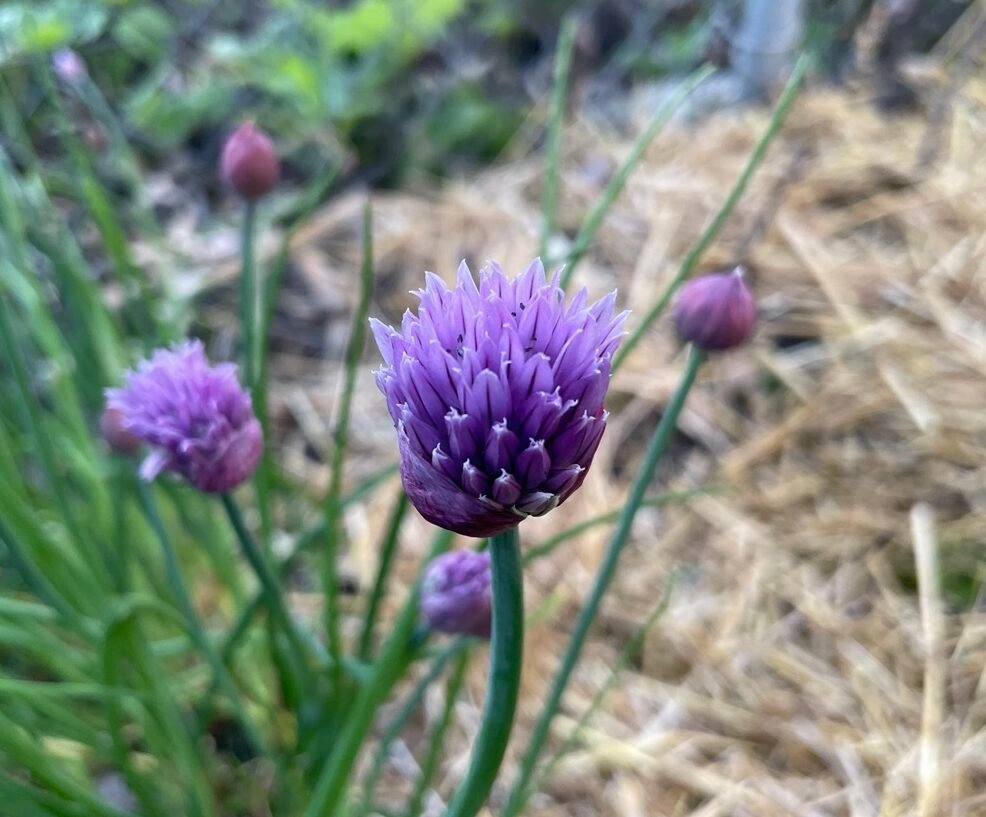
🌱 Chives
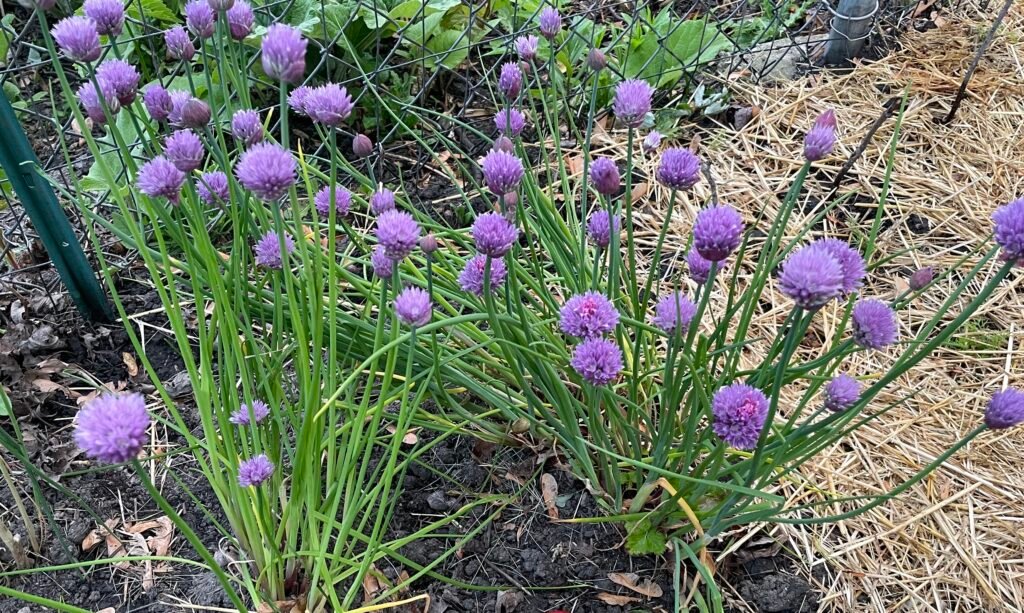
Chives are one of the easiest herbs for beginners, and pollinators absolutely love the flowers.
When allowed to bloom, the purple globe-shaped flowers attract a surprising amount of bee activity.
They’re also compact, easy to grow, and fit well into vegetable gardens or containers.
🌼 Chamomile
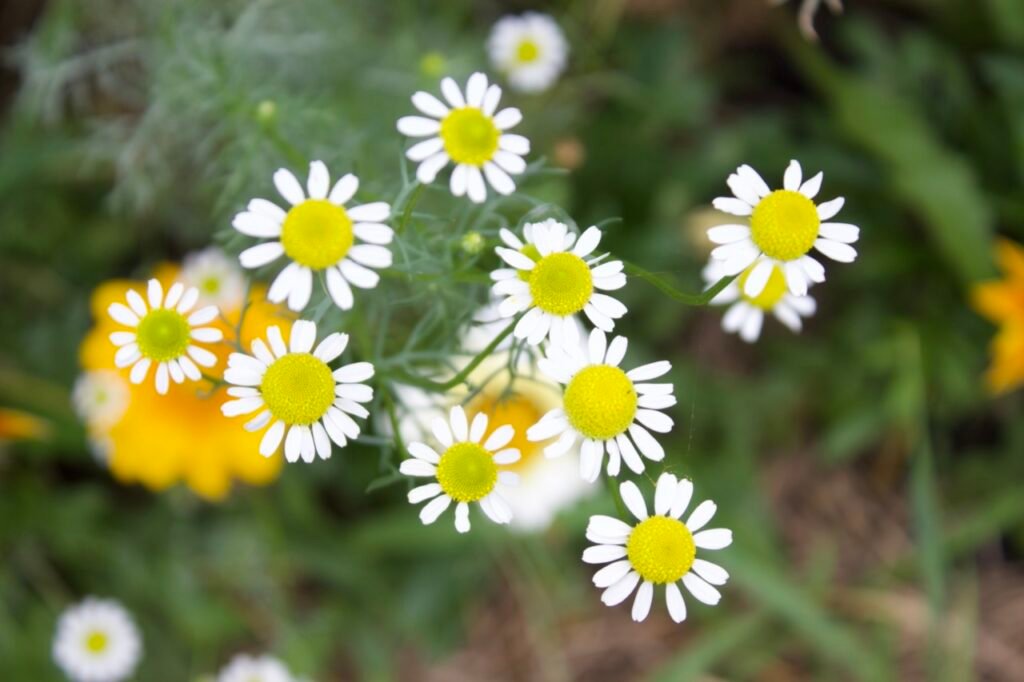
Chamomile is one of the easiest herbs to grow from seed and has long been used in teas and traditional herbal practices.
Its small daisy-like flowers attract a surprising amount of pollinator activity, especially from small native bees and hoverflies.
It also fits naturally into vegetable gardens and mixed flower beds without overwhelming a space.
🌿 Mint (Use Carefully)
Mint is excellent for pollinators once it flowers, but it spreads aggressively if planted directly into garden beds.
Keeping it in containers is usually the best option.
When blooming, mint attracts:
- Bees
- Hoverflies
- Small beneficial wasps
and adds a huge amount of insect activity to a space.
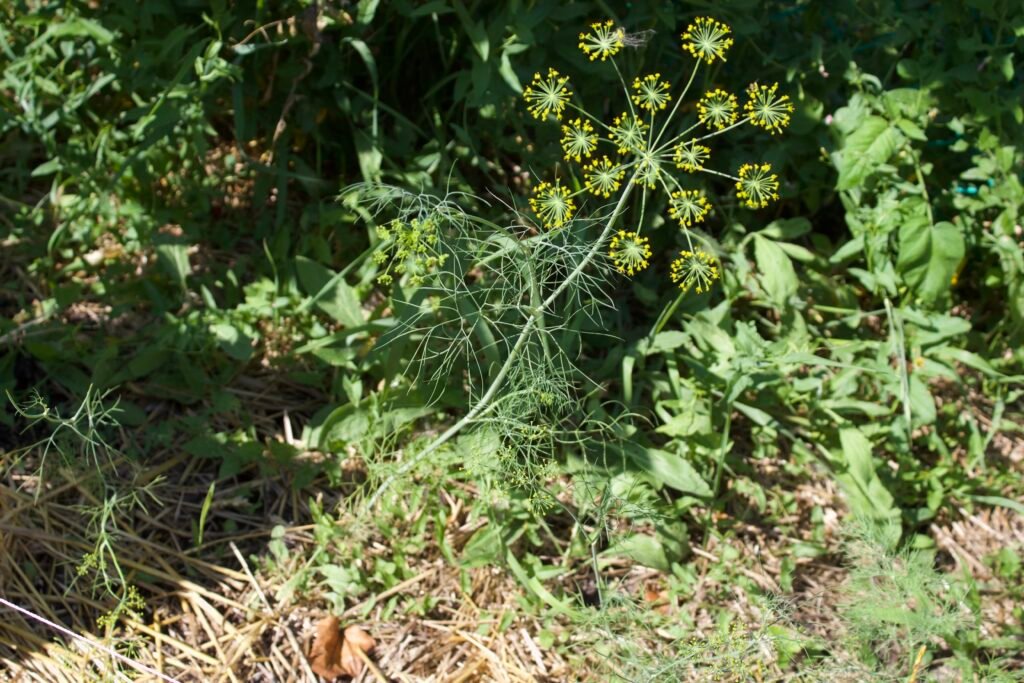
🌼 Dill and Fennel
Dill and fennel are incredibly important for more than just cooking.
Their flowers attract many small beneficial insects, including parasitic wasps and hoverflies.
They also serve as host plants for black swallowtail caterpillars, which is always one of the coolest things to see in a garden.
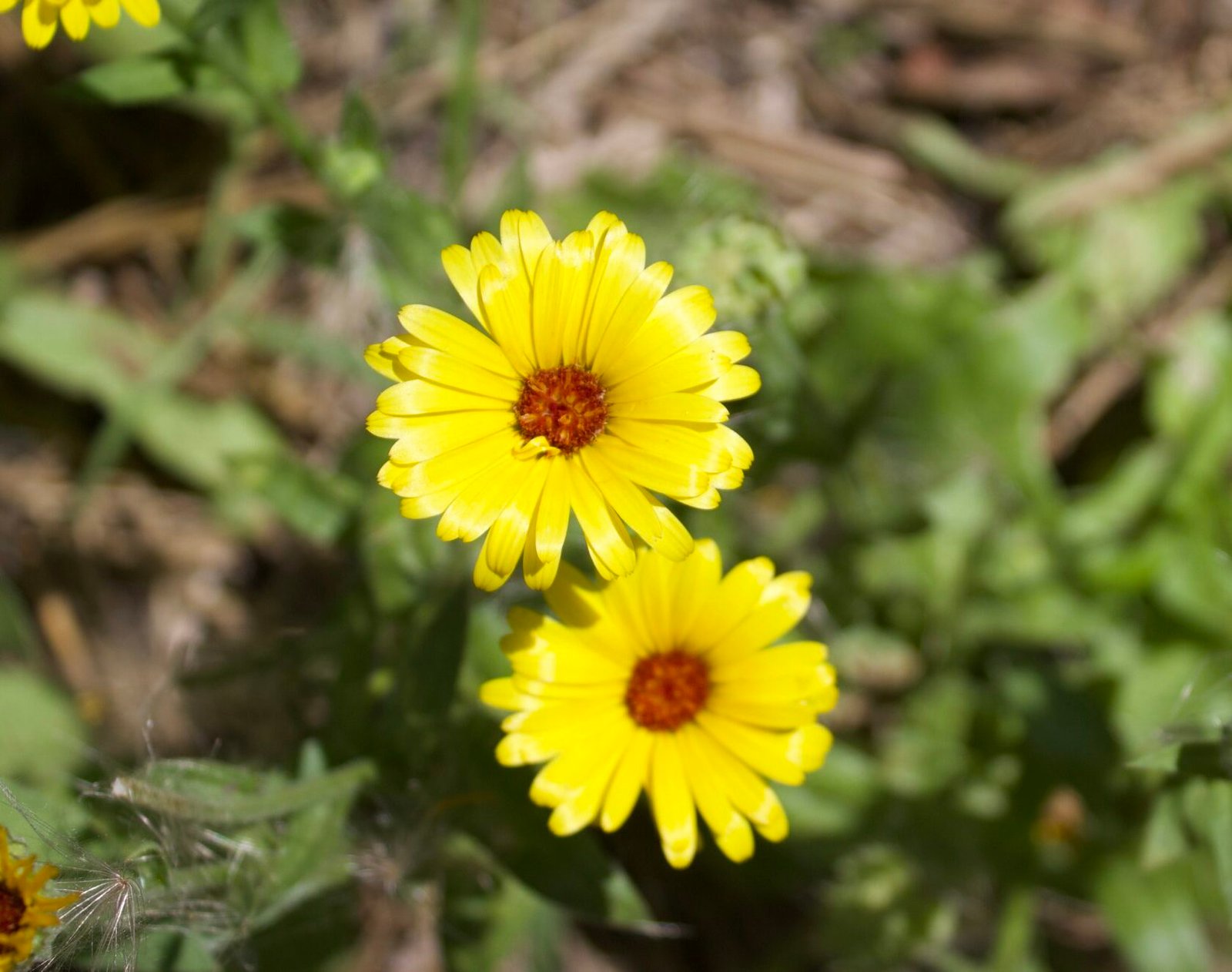
🌼 Calendula
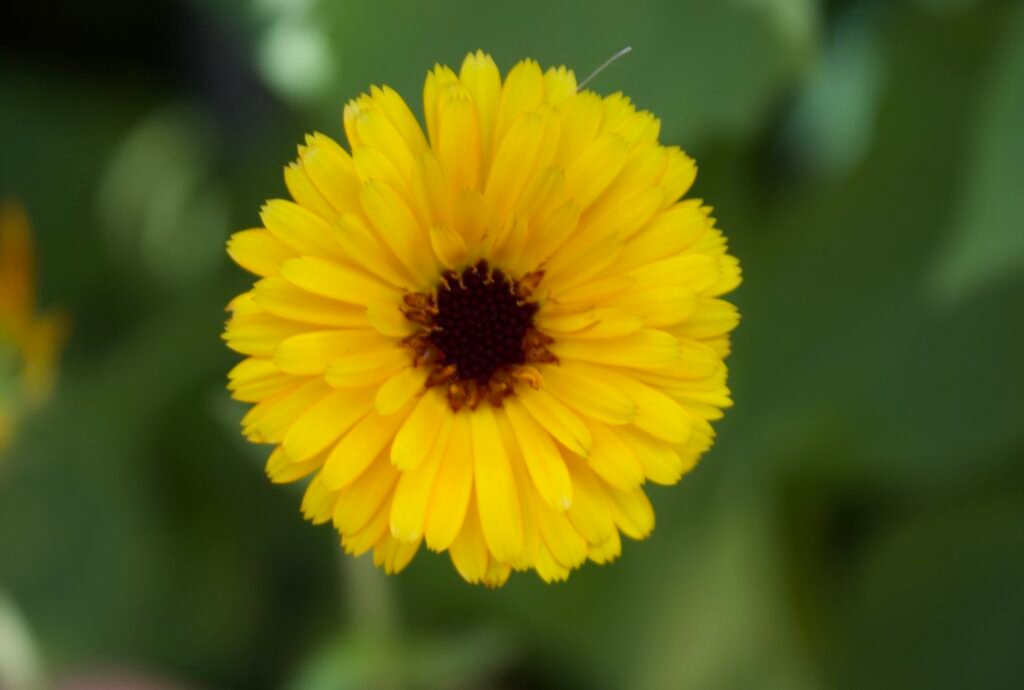
Calendula is another beginner-friendly plant that’s easy to grow and constantly active with pollinators once blooming.
Beyond its bright flowers, many gardeners grow calendula for teas, salves, and other traditional uses after harvest.
It blooms heavily through much of the growing season and adds both color and ecological value to backyard gardens.
🌸 Common Blue Violet
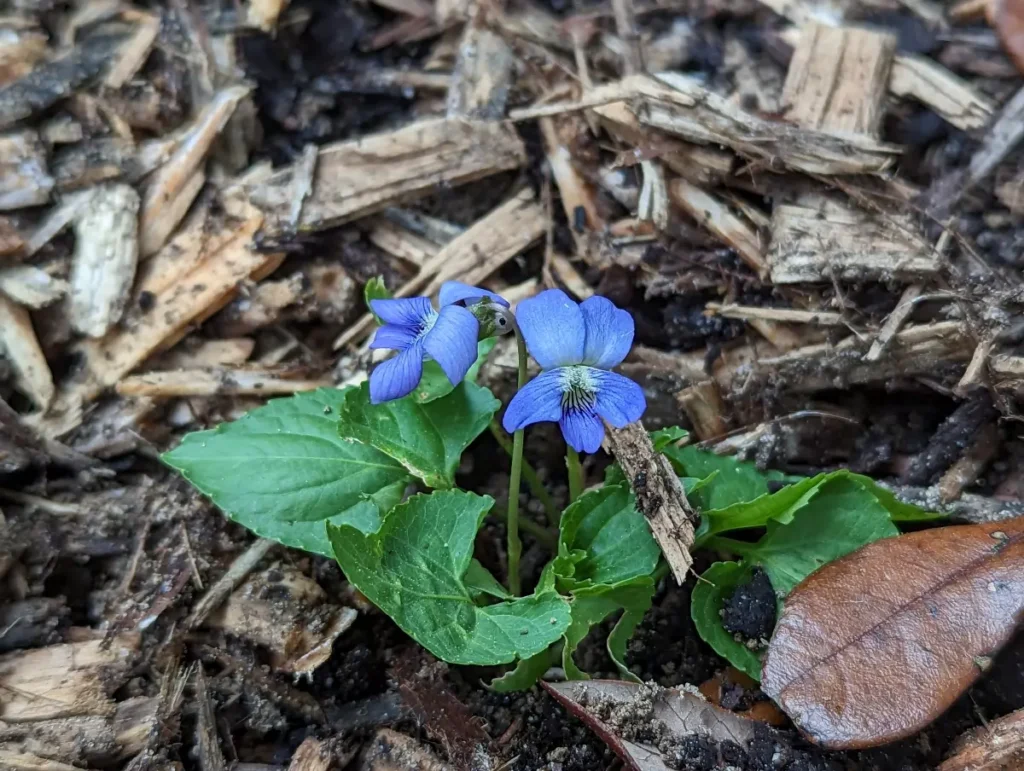
While not traditionally thought of as an herb, Common Blue Violet has edible and historical medicinal uses while also supporting pollinators and specialist bees.
It’s a good example of how many native plants can serve multiple ecological roles while still fitting naturally into backyard spaces.
Be careful with this one, it will spread aggressively. But the nice thing is it serves as a great ground cover with unique heart-shaped leaves.
🌿 Let Some Herbs Flower
One of the biggest mistakes gardeners make is harvesting herbs constantly without allowing them to bloom.
The flowers are often the most valuable part for pollinators and beneficial insects.
Even letting a few plants flower can dramatically increase insect activity in your garden.
🐝 Diversity Creates a Better Garden
The goal isn’t to grow every herb possible.
It’s to create diversity.
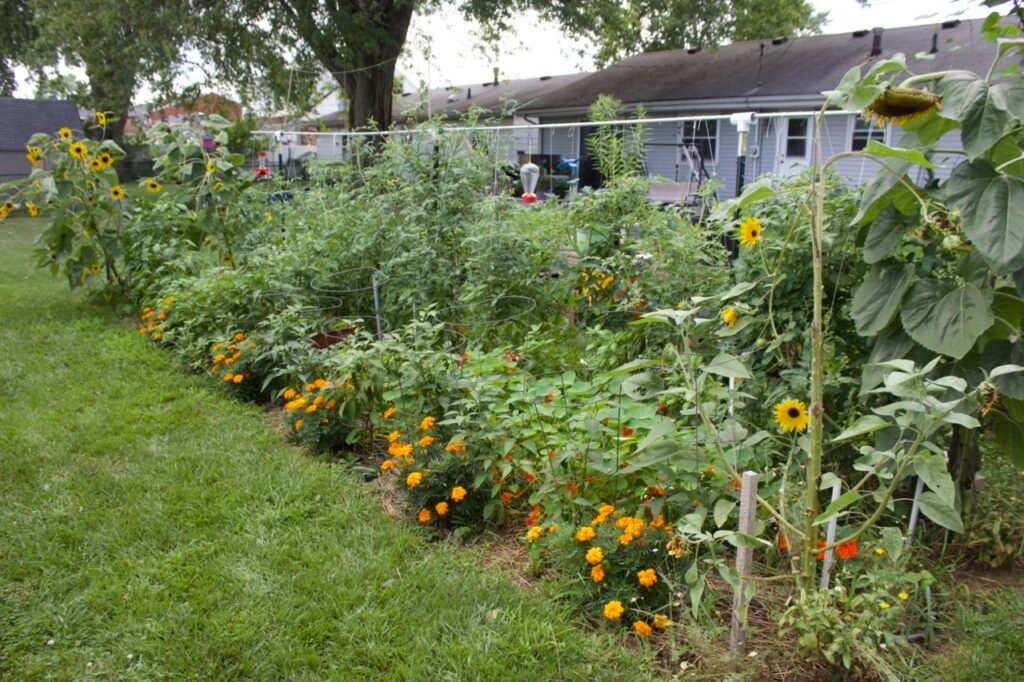
When herbs are mixed alongside vegetables, native plants, flowers, shrubs, and grasses, gardens become more active, resilient, and ecologically balanced.
And honestly, they just feel more alive.
🌿 Final Thoughts
Herbs can do much more than flavor food or make tea.
Many of them help support pollinators, beneficial insects, butterflies, and the larger ecosystem surrounding your garden.
By allowing herbs to flower and mixing them into a diverse landscape, even small backyard gardens can become valuable habitat spaces full of life and activity.
👉 Ready to Create a More Wildlife-Friendly Backyard?
Thoughtful plant diversity can support pollinators, birds, beneficial insects, and a healthier backyard ecosystem overall.


This is great and important stuff!
Thanks Gary, I very much agree! Do you have a favorite?
No, not yet; I just mean that it’s great that we can plant these plants for our own use (herbs) but then the pollinators appreciate them also!
Absolutely, great when it benefits everyone!