

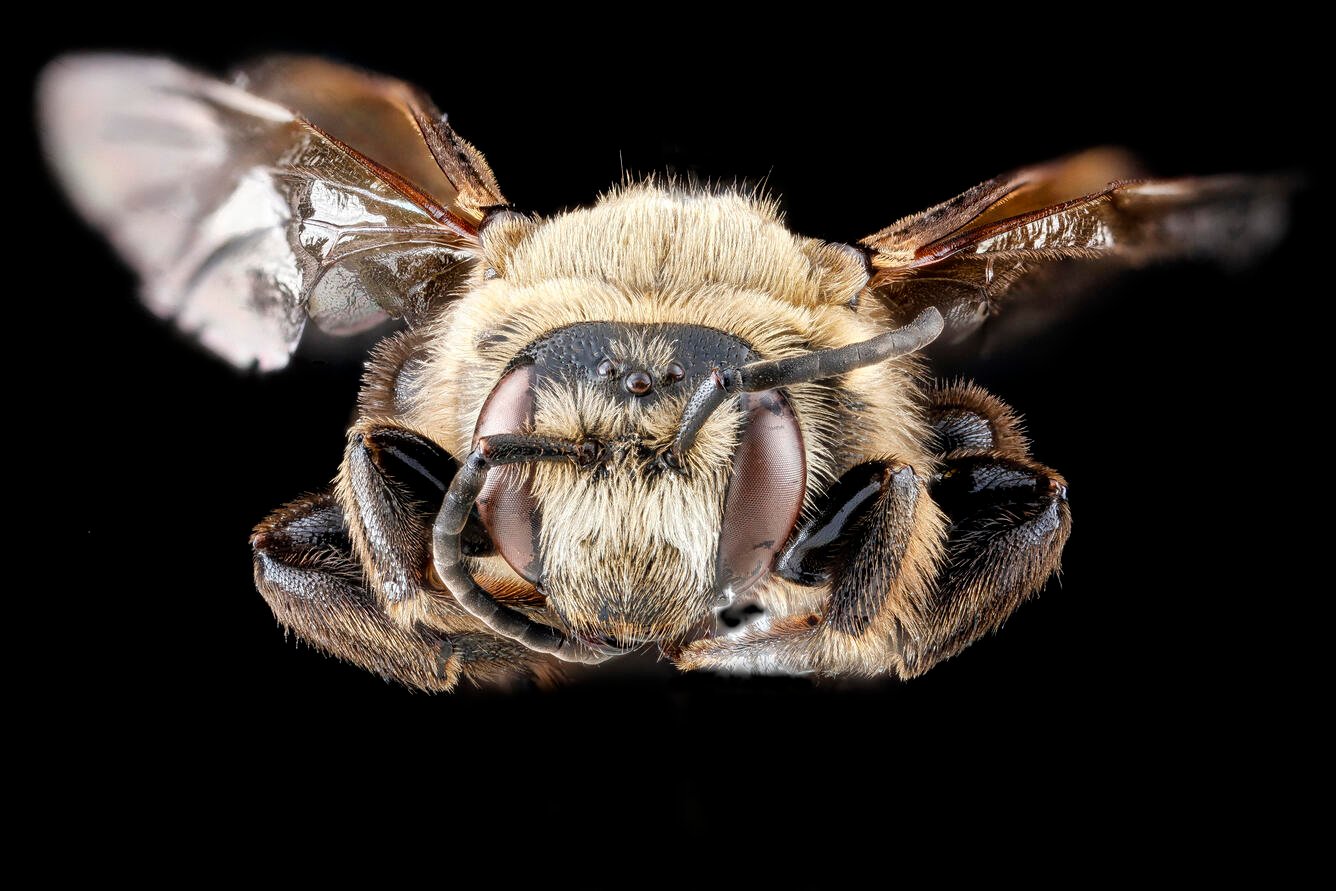
Sweat bees are among the most common native bees in North America. Ranging from dull brown to brilliant metallic green, these small but important pollinators can be found in gardens, meadows, and even backyards throughout the growing season. Despite their name, sweat bees are generally non-aggressive and play a major role in pollinating both wild plants and crops.
*I’m not an entomologist — just a backyard habitat advocate who loves learning about native bees. This guide is based on research I’ve done and simplified so others can better understand and support the bees in our landscapes.
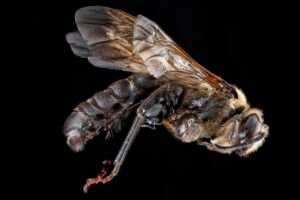
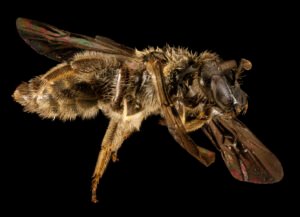
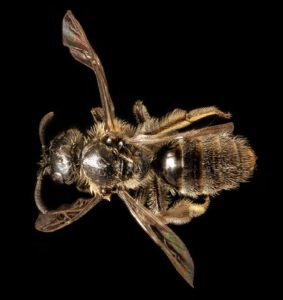
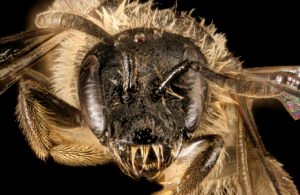
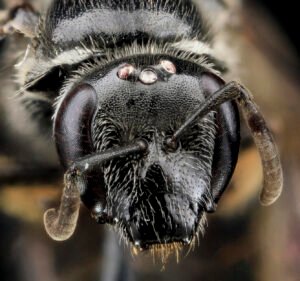
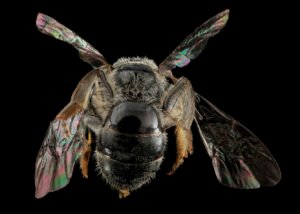
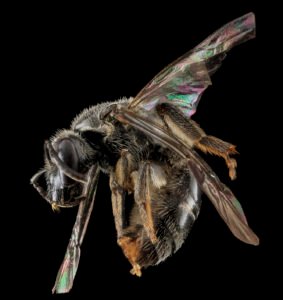
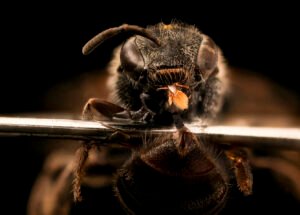
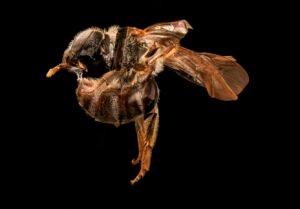
All images courtesy of the U.S. Geological Survey (USGS), public domain.
How to Attract Sweat Bees
Sweat bees are adaptable, which makes them easier to support than many specialist species.
You can attract them by:
- Planting a variety of native flowering plants
- Providing blooms from spring through fall
- Leaving small patches of bare soil
- Reducing heavy mulch coverage
- Avoiding pesticide use during bloom periods
Because different species are active at different times, a season-long bloom plan is especially helpful.
How to Identify Sweat Bees
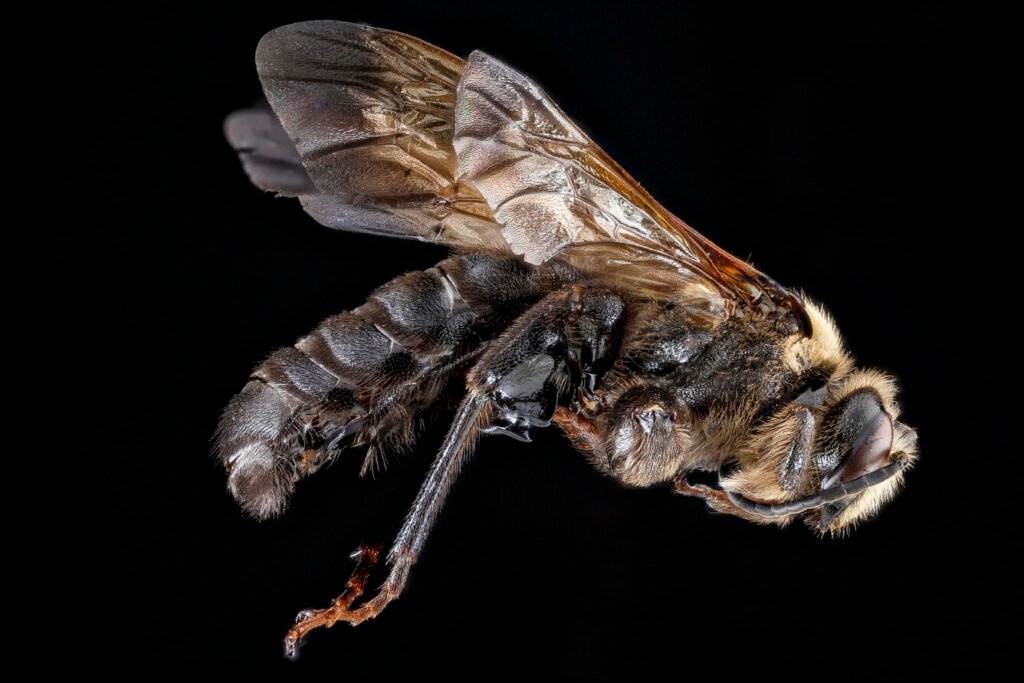
Sweat bees belong to the family Halictidae.
Common genera include:
- Agapostemon
- Augochlora
- Halictus
- Lasioglossum
Identification features:
- Small size (often ¼–½ inch)
- Many species are metallic green or blue-green
- Some are dull brown or black
- Fast, darting flight
- Frequently seen on open flowers
Why Are They Called “Sweat” Bees?
Some species are attracted to human perspiration for its salt content. They may land briefly on skin but are rarely aggressive.
Most stings occur only if the bee is pressed or trapped.
Bees They’re Commonly Confused With
- Small metallic flies
- Mining bees
- Tiny wasps
- Small carpenter bees
Metallic green coloration is a strong clue, though not all sweat bees are green.
Common Genera & When They’re Active
Sweat bees are active much longer than many other native bees.
Typical activity periods:
- Early species: April – May
- Peak activity: June – August
- Late-season species: September – October
Some species are solitary.
Others are communal.
And some show primitive social behavior, meaning they share nests but are not fully social like honey bees.
This makes them one of the most behaviorally diverse bee families.
Where Sweat Bees Nest
Most species nest in:
- Bare or lightly vegetated soil
- Garden beds
- Lawn edges
- Pathways
- Sloped, sunny areas
Some species nest in rotting wood instead of soil.
They create underground tunnels with side chambers for their young.
Like other ground nesters:
- They do not damage turf
- They are temporary
- Filling holes can destroy developing larvae
Plants Sweat Bees Rely On
Sweat bees are generally generalist pollinators, meaning they collect pollen from many plant species.
They commonly visit:
- Black-eyed Susans
- Coneflowers
- Sunflowers
- Goldenrods
- Asters
- Clover
- Native shrubs
Because they’re active all season, they are critical pollinators for summer and fall flowers.
Ecological Role
Sweat bees:
- Pollinate a wide range of native plants
- Support wildflower reproduction
- Contribute to vegetable and fruit pollination
- Provide food for birds and other wildlife
Their abundance makes them one of the most ecologically significant native bee groups.
Why Sweat Bees Need Protection
They are vulnerable to:
- Lawn insecticides
- Soil disturbance
- Habitat loss
- Systemic pesticides in ornamental plants
- Overly manicured landscapes
Because they are so common, their decline can have widespread ecological consequences.
How You Can Help
- Plant diverse native flowers
- Provide continuous bloom from spring through fall
- Leave some soil undisturbed
- Avoid pesticide use
- Reduce unnecessary lawn treatments
Small changes in yard management can support dozens of sweat bee species.
Final Thoughts
Sweat bees may be tiny, but their impact is enormous. Whether metallic green or subtly brown, these adaptable native pollinators quietly sustain the plants that sustain us. By creating diverse, pesticide-free landscapes, we help ensure that these essential bees remain part of our ecosystems for generations to come.


