

When I first began exploring native plants for my own backyard, purple lovegrass was one of the grasses that immediately caught my attention.
There was something about its appearance that I found fascinating. A low-growing mound of green foliage topped with what looked like a soft, floating cloud of purple. It didn’t have the bold flowers of a coneflower or the towering presence of big bluestem. Its beauty came from something entirely different.
What I find especially interesting about purple lovegrass is how much its appearance changes depending on your perspective.
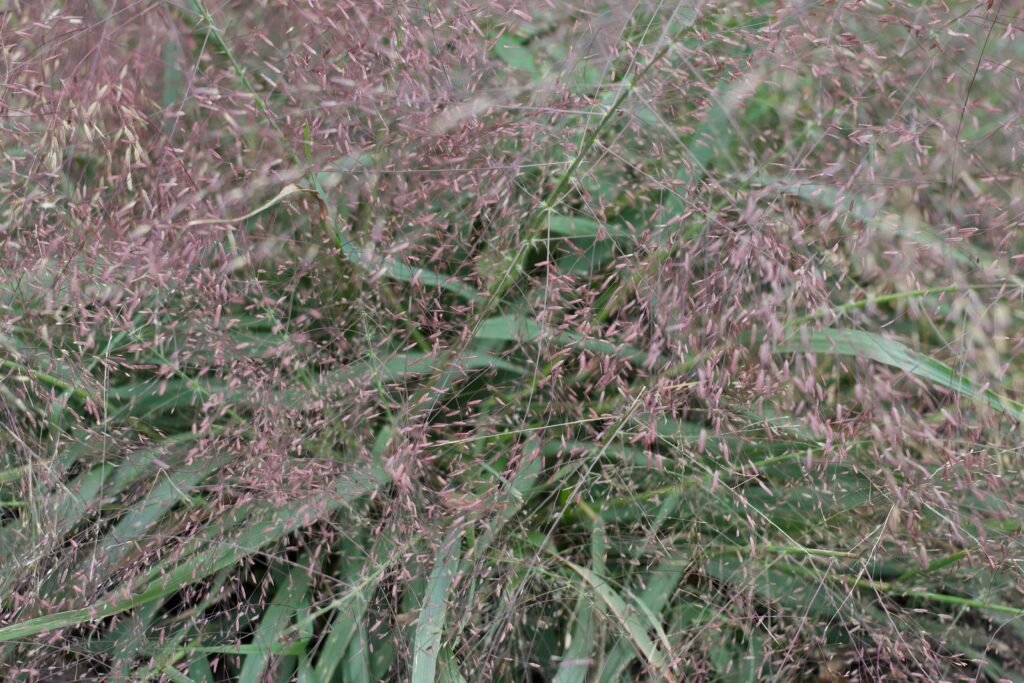
From a distance, the delicate seed heads blend together, creating a soft purple haze above the foliage. But as you move closer, that cloud begins to separate into hundreds of tiny spikelets suspended on fine, branching stems.
It’s a beautiful example of how something so delicate can have such a noticeable presence in the landscape.
Purple Lovegrass at a Glance
Scientific name: Eragrostis spectabilis
Common name: Purple Lovegrass
Plant type: Warm-season perennial grass
Height: Typically 1–2 feet
Bloom time: July to September
Flower color: Pinkish-purple to reddish-purple
Light: Full sun
Soil: Sandy, gravelly, or well-drained soils; tolerates poor soils
Moisture: Dry to medium; drought tolerant once established
Hardiness: USDA Zones 5–9
Growth habit: Low-growing, tufted to loosely spreading; spreads by short rhizomes and seed
Wildlife value: Seeds for birds and small mammals; provides cover for insects and other wildlife
Garden uses: Dry borders, prairie gardens, sandy slopes, naturalized plantings, and habitat gardens
A Closer Look at Purple Lovegrass
Purple lovegrass is a warm-season native grass that typically remains relatively low to the ground. Its narrow green leaves form loose, arching clumps, creating an attractive texture even before its flowers appear.
During late summer, the plant produces large, open panicles that extend above and outward from the foliage.
These finely branched structures carry numerous tiny spikelets, giving the grass its characteristic pinkish-purple appearance.
Rather than producing a dense flower spike, purple lovegrass creates something almost transparent. Light passes through the branches, and the surrounding vegetation remains visible behind them.
The colorful display can last for several weeks before gradually fading to pale tan or whitish tones as the seeds mature.
Eventually, the dried panicles may detach and tumble across the ground, helping disperse seeds into surrounding areas.
Adding Movement and Texture to the Garden
One of the things I appreciate most about purple lovegrass is the role it can play in garden design.
Some plants provide strong vertical structure. Others create bold patches of color or draw attention through their flowers.
Purple lovegrass contributes something different.
Its fine, airy seed heads add a soft layer of texture among neighboring plants, creating a sense of movement and depth without overwhelming the surrounding landscape.
Even when planted among larger perennials, its delicate purple canopy can remain visible, adding another layer of texture to the garden.
The foliage itself deserves attention, too. Its narrow, arching leaves contrast nicely with the broader foliage of many native wildflowers.
It’s a reminder that a beautiful garden doesn’t depend entirely on colorful flowers. Different growth habits, leaf shapes, and textures can be just as important in creating an interesting landscape.
Growing Purple Lovegrass
Purple lovegrass performs best in full sun and well-drained soil.
It is particularly well suited to sandy or gravelly conditions, making it a natural fit for dry gardens, open meadows, and landscapes where many moisture-loving plants would struggle.
Once established, it is drought tolerant and generally requires little supplemental watering.
Like many warm-season native grasses, purple lovegrass begins its most active growth after temperatures have warmed. Its flowering display typically develops during the second half of summer.
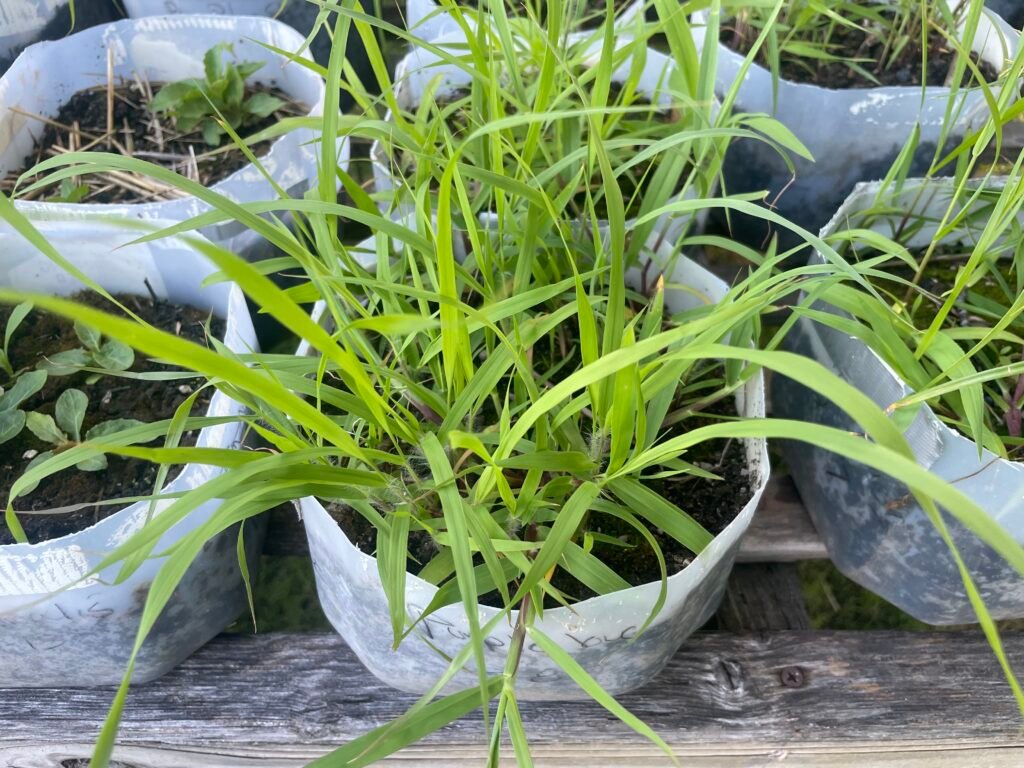
Young plants may take time to develop their characteristic fullness, particularly when grown from seed.
Purple lovegrass can spread through seed production and short rhizomes, sometimes forming colonies where conditions are favorable.
Because the plant is adapted to relatively lean soils, fertilization is generally unnecessary and not recommended.
Companion Planting with Purple Lovegrass
Purple lovegrass works particularly well alongside native plants that share its preference for sunny, well-drained conditions.
Some attractive companions include:
- Butterfly milkweed (Asclepias tuberosa) — Its bright orange flowers provide a striking contrast to the delicate purple seed heads.
- Little bluestem (Schizachyrium scoparium) — Adds stronger vertical structure and beautiful seasonal color.
- Prairie dropseed (Sporobolus heterolepis) — Creates a contrasting mound of fine foliage and graceful seed heads.
- Gray-headed coneflower (Ratibida pinnata) — Its taller stems and yellow flowers rise above the lower-growing grass.
- Plains coreopsis (Coreopsis tinctoria) — Adds cheerful yellow and red flowers to an informal planting, particularly where the soil is well drained.
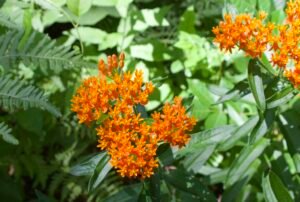
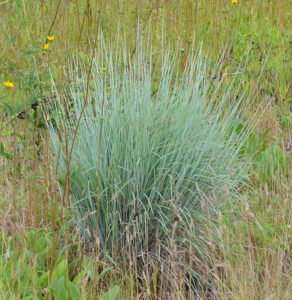
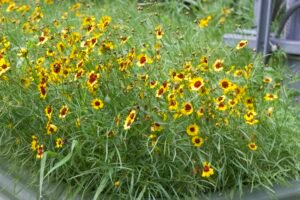
These combinations demonstrate how plants with different heights, textures, and growth habits can complement one another.
Rather than relying on flowers alone, a garden can develop visual interest through the relationships between its plants.
From Oak Openings to My Backyard
I’ve observed purple lovegrass growing in two very different settings.
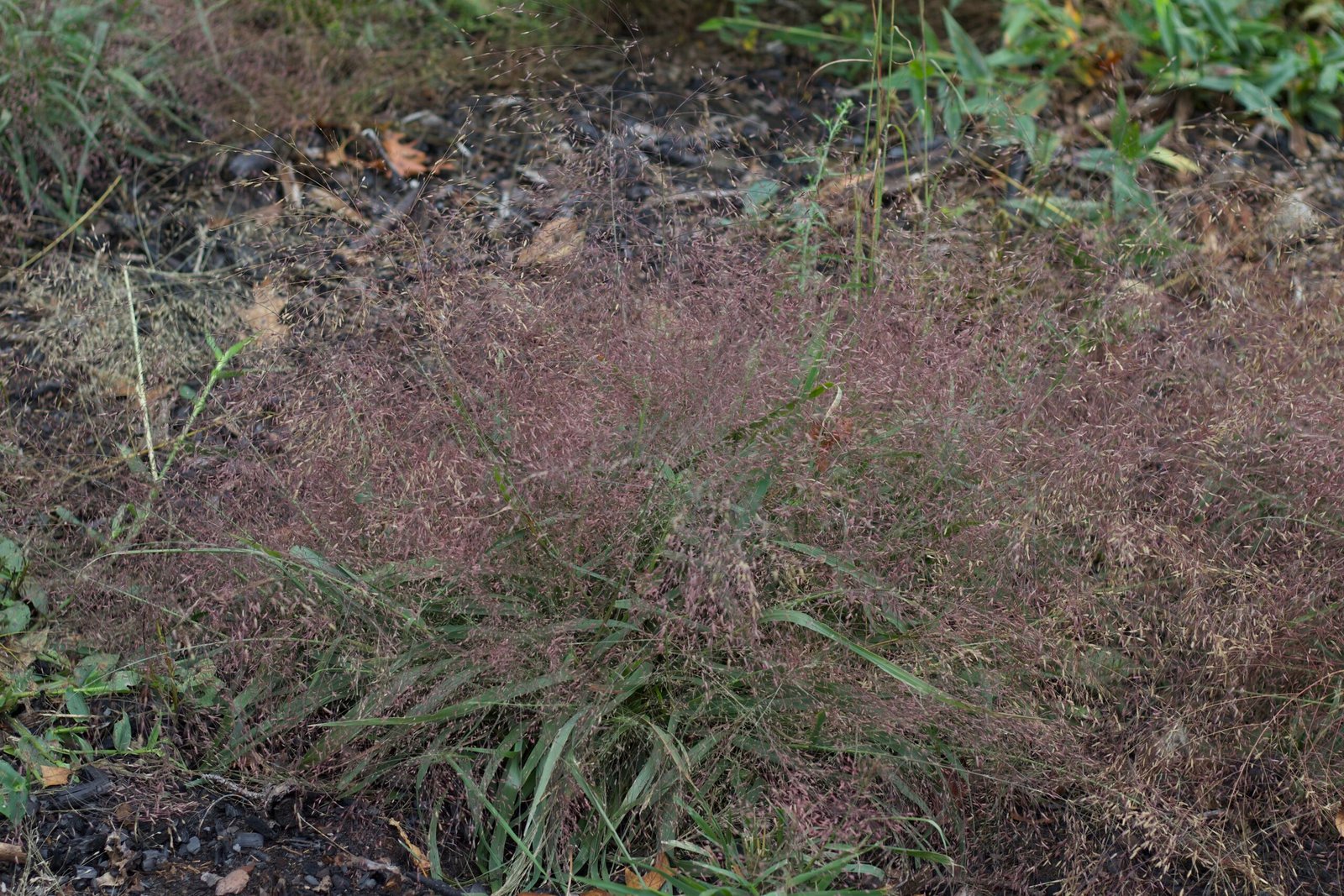
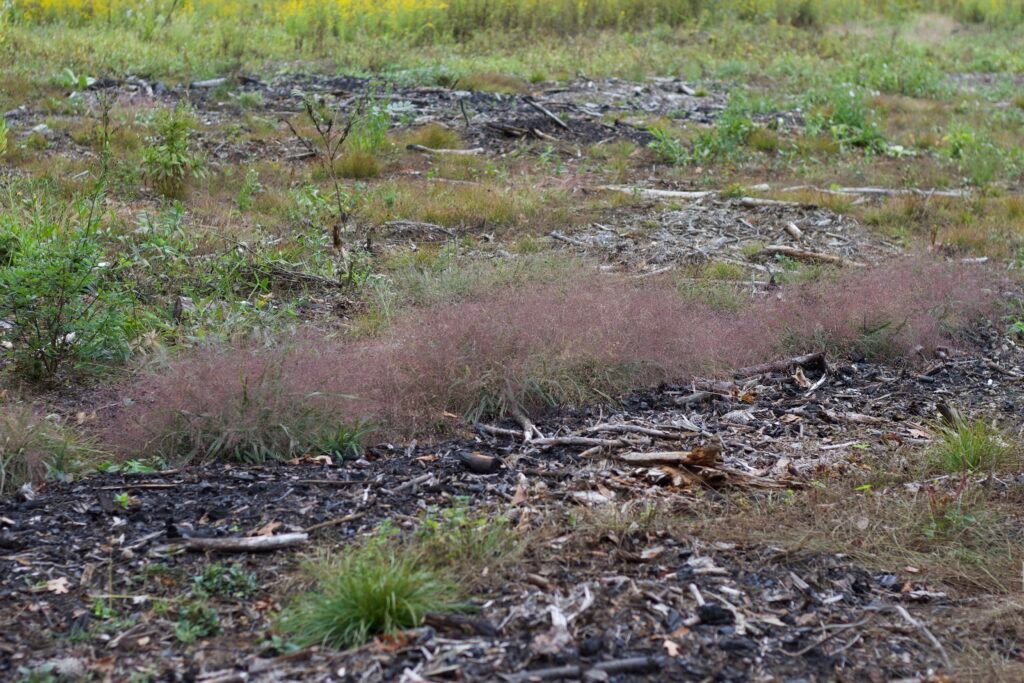
At Oak Openings, I photographed an established population growing across an open restoration area. The landscape showed fire management, with charred wood and exposed ground scattered among the vegetation.
What caught my attention was how the purple lovegrass appeared to form an almost continuous band of color across part of the landscape.
I found myself wondering whether the plants had gradually spread through natural seed dispersal or whether they were part of an earlier restoration planting.
Whatever their origin, seeing them growing together in that setting gave me a better appreciation for the visual impact this grass can have when allowed to establish over time.
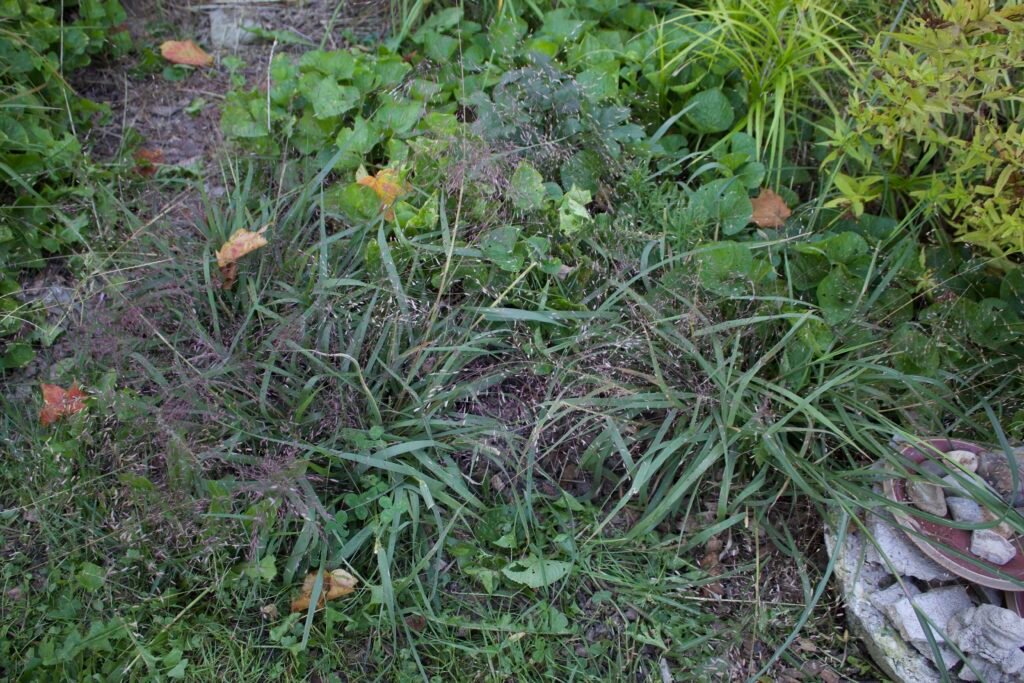
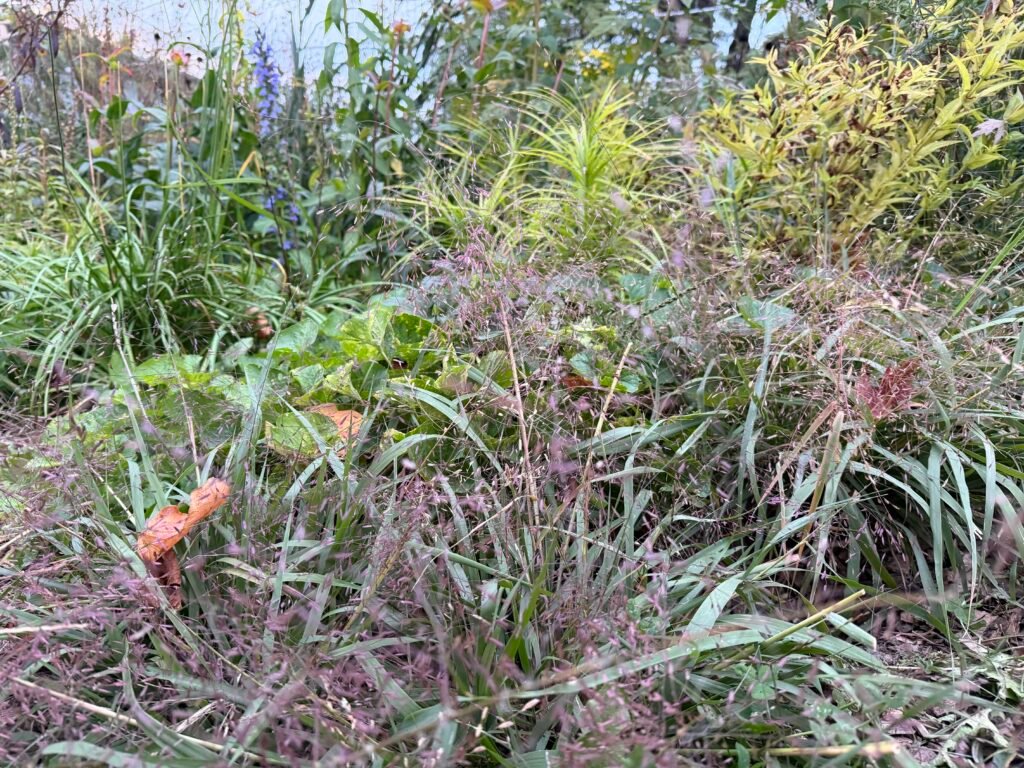
Back in my own garden, the plants are still relatively young.
This is only their second growing season, and they haven’t developed the same fullness as the established plants I observed at Oak Openings.
But even now, I can see the qualities that first attracted me to the species.
From a distance, their seed heads create that familiar purple haze, especially when viewed against the green foliage of neighboring plants.
Up close, the delicate branching structure becomes visible again.
I’m looking forward to seeing how these plants develop over the next several growing seasons and how their presence changes as the surrounding garden matures.
A Different Kind of Beauty
One of the things I appreciate most about purple lovegrass is how naturally it seems to complement the plants and landscapes around it.
Its rounded growth habit and airy purple seed heads give it a unique combination of shape and texture. It can grow alongside the bold, upright structure of switchgrass, the colorful flowers of purple coneflower, or other fine-textured native grasses without feeling out of place.
Even at Oak Openings, surrounded by charred wood, scattered debris, and exposed soil, the soft purple clouds stood out beautifully against the rougher landscape.
That’s what makes purple lovegrass such an interesting plant to work with. It doesn’t need a particular style of garden to look beautiful. Its delicate texture can provide contrast against stronger forms or blend naturally with plants that have similar characteristics.
Whether growing in an open prairie or tucked among other plants in a backyard habitat garden, purple lovegrass has a way of fitting into the landscape while still bringing something distinctly its own.


