

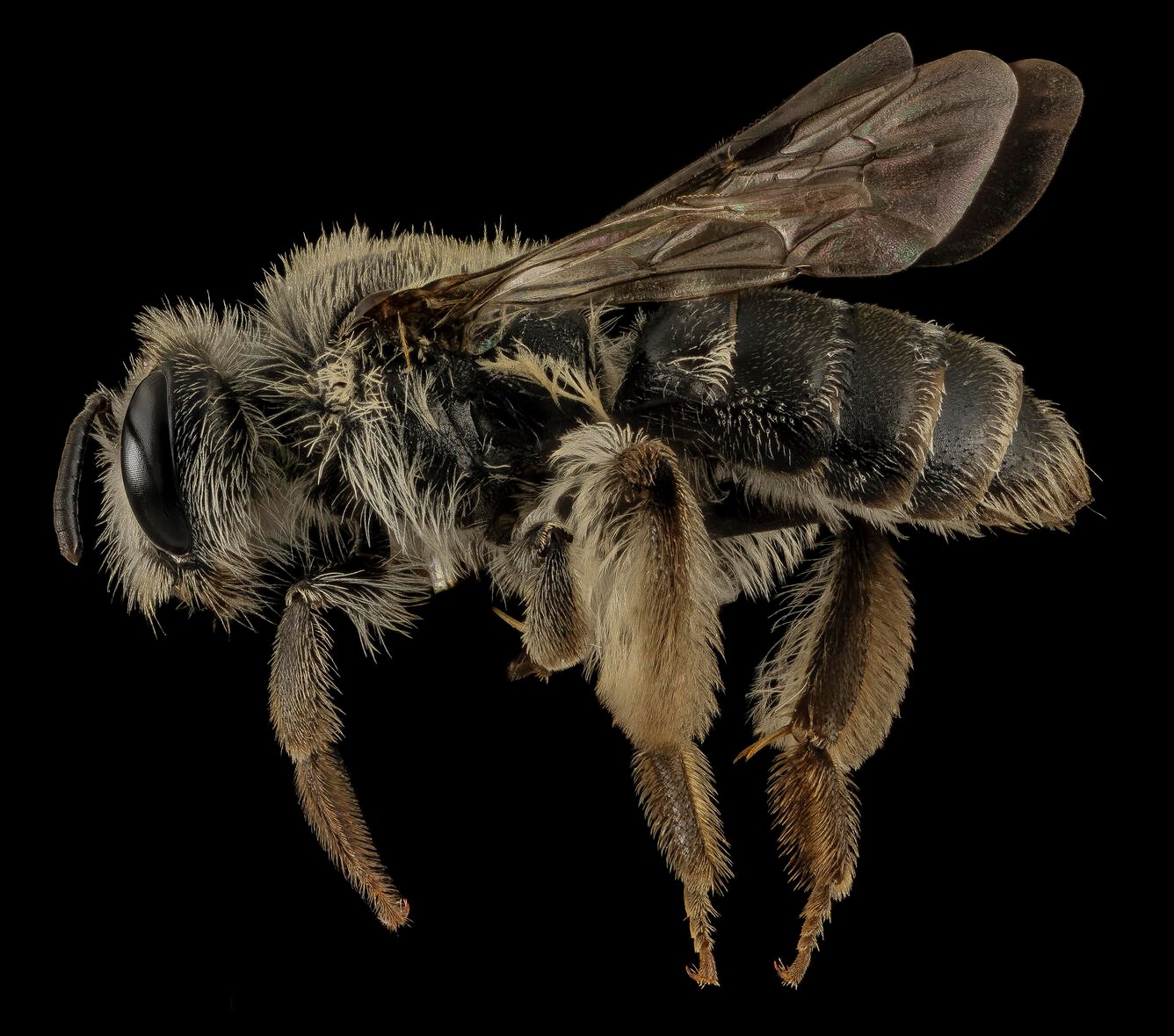
If you’ve ever noticed dozens of small holes appearing in your lawn in early spring, you may have encountered mining bees. These solitary, ground-nesting native bees are among the first pollinators to emerge in Ohio each year. Quiet, non-aggressive, and incredibly important to our ecosystems, mining bees are often misunderstood. They play a critical role in supporting spring wildflowers, fruit trees, and healthy landscapes.
*I’m not an entomologist — just a backyard habitat advocate who loves learning about native bees. This guide is based on research I’ve done and simplified so others can better understand and support the bees in our landscapes.
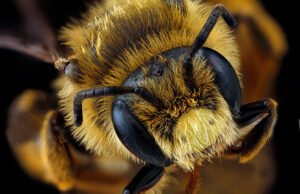
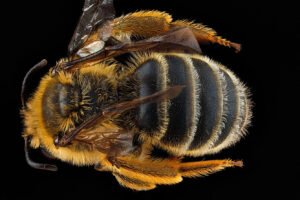
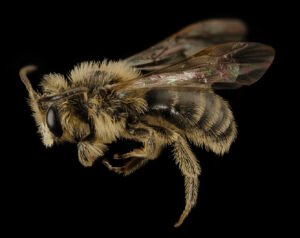
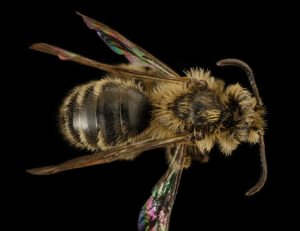
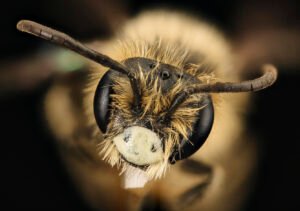
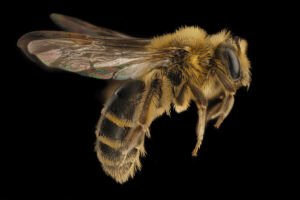
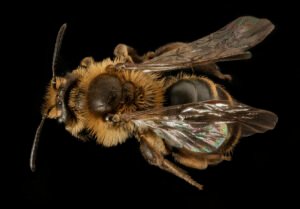
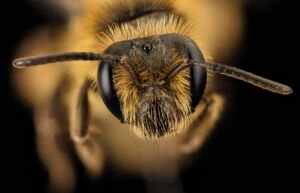
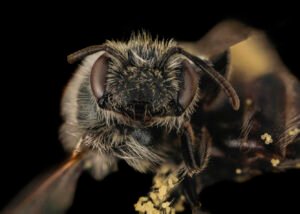
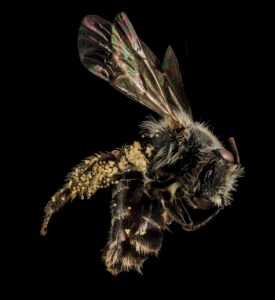
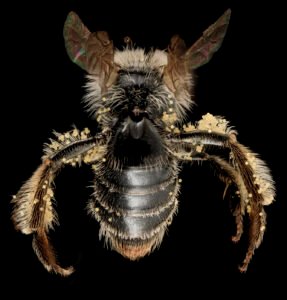
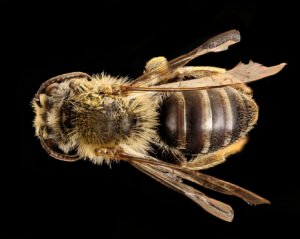
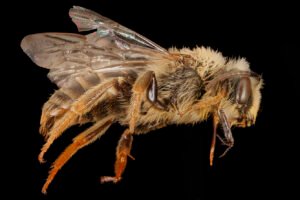
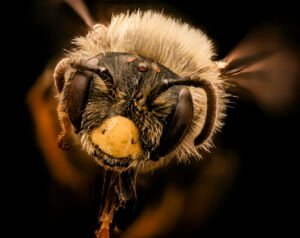
All images courtesy of the U.S. Geological Survey (USGS), public domain.
How to Attract Mining Bees to Your Yard
Mining bees don’t need bee hotels or elaborate structures. They simply need habitat.
Here’s how to support them:
- Leave a small patch of bare, well-drained soil in a sunny area
- Reduce heavy mulch in one section of your garden
- Plant native early-spring flowers
- Avoid applying pesticides in early spring
- Allow some natural, slightly sandy soil areas to remain undisturbed
Even a small backyard can support them.
How to Identify Mining Bees
Mining bees belong to the family Andrenidae, and in Ohio most species belong to the genus Andrena.
Here’s what to look for:
- Small, pencil-sized holes in the ground
- Tiny volcano-shaped mounds of loose soil
- Bees flying low and close to the ground
- Activity on warm days in early spring
They are typically:
- Smaller than bumble bees
- Similar in size to honey bees
- Hairy and often brown, gray, or black
- Fast-moving and focused on the ground
Bees They’re Commonly Confused With
- Honey bees
- Small bumble bees
- Sweat bees
- “Swarming” lawn insects
The key difference? Mining bees are solitary. Each female builds and provisions her own nest.
Common Mining Bee Genera in Ohio & When They’re Active
In Ohio, most mining bees you’ll encounter belong to the genus Andrena.
These bees are primarily active:
March through May
Some species remain active into:
Through the summer into October
They are among the very first native bees to emerge — often appearing alongside blooming willows, dogwoods and spring woodland flowers.
Because many species are early-season specialists, their life cycles are closely timed with specific spring blooms.
Where they Nest (And Why You Shouldn’t Fill the Holes)
Mining bees nest underground in:
- Dry, well-drained soil
- Sunny slopes
- Sparse lawns
- Garden edges
Each female digs a vertical tunnel with small side chambers where she lays her eggs and provisions them with pollen.
Important to know:
- They are solitary, but may nest in loose aggregations
- They are not damaging your lawn
- They are temporary
- Many species reuse suitable nesting areas year after year
Filling in the holes can destroy developing larvae underground. The visible activity usually lasts only a few weeks before they naturally disappear.
What Plants Do Mining Bees Rely On?
Many are specialists, meaning they collect pollen from specific plant groups.
In Ohio, they commonly rely on:
Early Season
- Willows (Salix species)
- Spring beauty (Claytonia virginica)
- Dogwoods (Cornus species)
- Trout lily (Erythronium species)
Summer into fall
- Goldenrods (Solidago species)
- Sunflowers (Helianthus species)
- Coneflowers (Rudbeckias species)
- Asters (Symphyotrichum species)
Some species specialize on:
- Blueberries (Vaccinium species)
- Violets (Viola species)
- Jacobs Ladder (Polemonium species)
Because they are active so early, they are essential pollinators for spring ephemerals and woodland ecosystems.
The Ecological Role of Mining Bees
Mining bees:
- Provide early-season pollination when few other bees are active
- Support native woodland wildflowers
- Pollinate fruit trees and shrubs
- Help maintain plant diversity
- Contribute to healthy soil ecosystems
Without early emerging bees like mining bees, many spring plants would struggle to reproduce.
Why they Need Protection
Mining bees are especially vulnerable to:
- Early spring lawn treatments
- Systemic pesticides that contaminate pollen
- Soil compaction
- Over-mulching
- Habitat loss
Because they nest underground and emerge early, they are often unintentionally harmed by routine yard maintenance.
How You Can Help
Supporting mining bees is simple:
- Delay or eliminate early spring pesticide applications
- Leave small areas of bare soil
- Plant native spring flowers
- Allow natural areas to remain slightly “messy”
- Educate neighbors about ground-nesting bees
These gentle pollinators are temporary visitors — but their impact lasts all season.
Final Thoughts
If you see small holes in your lawn this spring, pause before reacting. Those tiny entrances likely belong to mining bees — some of Ohio’s most important and overlooked native pollinators.
These bees are solitary and gentle.
They quietly nest in the soil each spring.
Their presence is a sign of a healthy ecosystem.
They’re simply doing what they’ve done for thousands of years — quietly supporting the ecosystems around us.
And with just a few small changes, we can support them in return.


