

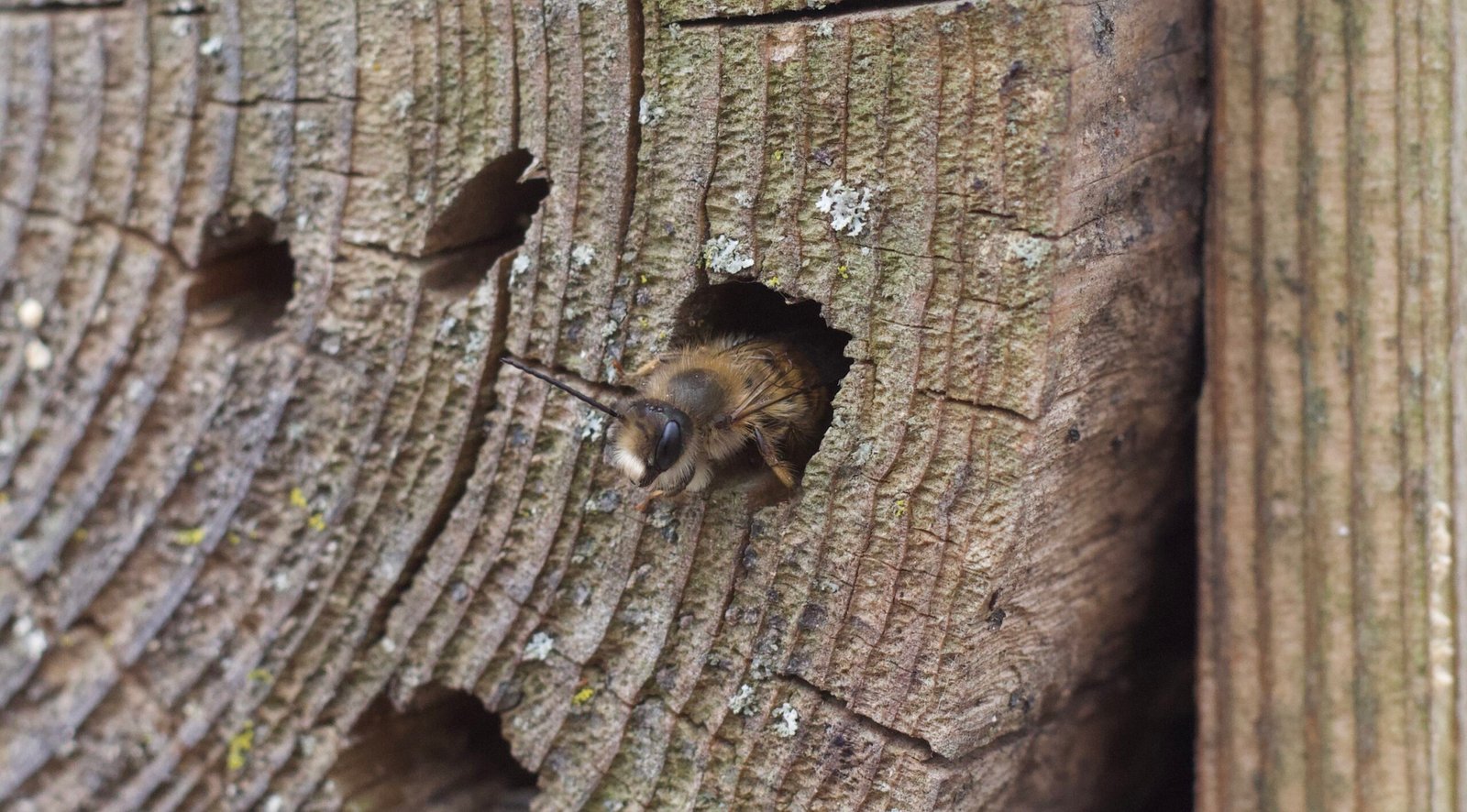
Mason bees are gentle, solitary native bees best known for their incredible pollination efficiency and their use of mud to build nest chambers. Active primarily in spring, these bees are among the most effective pollinators of fruit trees and early-blooming plants. Unlike honey bees, mason bees do not live in hives or produce honey — but they are essential contributors to healthy gardens and ecosystems.
*I’m not an entomologist — just a backyard habitat advocate who loves learning about native bees. This guide is based on research I’ve done and simplified so others can better understand and support the bees in our landscapes.
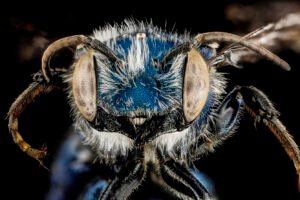
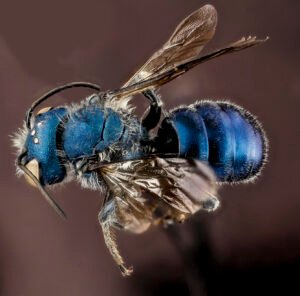
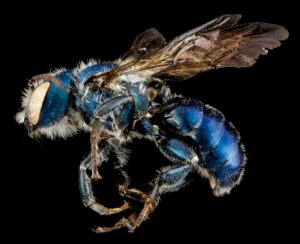
All images courtesy of the U.S. Geological Survey (USGS), public domain.
How to Attract Mason Bees
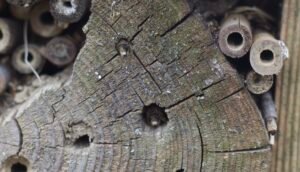
Mason bees are cavity nesters, meaning they require small tunnels or hollow stems for nesting.
You can attract them by:
- Installing a well-maintained bee hotel
- Leaving hollow plant stems standing through winter
- Providing untreated wood blocks with 5/16” diameter holes
- Planting early spring native flowers
- Avoiding pesticide use during bloom
Placement tips:
- Mount 3–6 feet high
- Face southeast
- Protect from heavy rain
- Clean nesting materials annually to reduce disease and parasites
Proper maintenance is essential if using bee hotels.
How to Identify Mason Bees
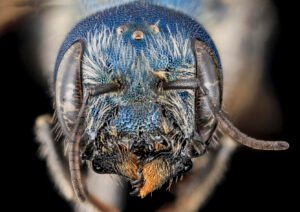
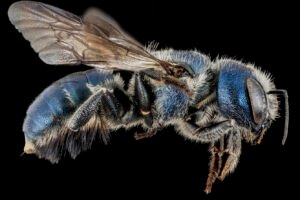
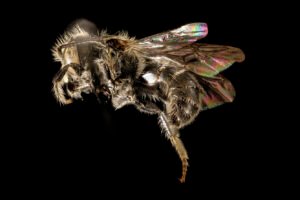
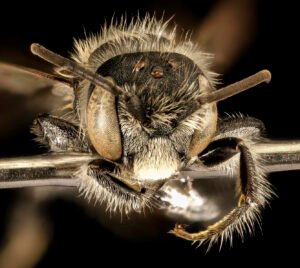
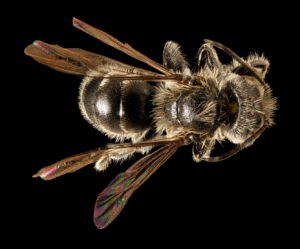
Mason bees most commonly belong to the genus Osmia.
Identification features:
- Small to medium-sized (similar to honey bees but stockier)
- Metallic blue, green, or dark body
- Hairy thorax
- Carry pollen on the underside of their abdomen (not on their legs)
- Calm, non-aggressive behavior
They are often mistaken for small carpenter bees, but mason bees nest in pre-existing holes rather than drilling their own.
Bees They’re Commonly Confused With
- Honey bees
- Small carpenter bees
- Leafcutter bees
- Wasps
The pollen placement underneath the abdomen is a strong identifying clue.
When Are Mason Bees Active?
Mason bees are primarily spring bees.
Typical activity period:
- Early spring through late spring
- Often emerge when temperatures consistently reach about 55°F
They are especially active during the bloom period of fruit trees and spring shrubs.
Where Mason Bees Nest
Mason bees nest in:
- Hollow plant stems
- Beetle burrows in wood
- Cracks in wood structures
- Bee hotels
Each female:
- Creates a pollen and nectar food mass
- Lays a single egg
- Seals the chamber with mud
- Repeats until the tunnel is full
The use of mud partitions is what gives them the name “mason.”
They do not defend their nests aggressively and rarely sting unless handled roughly.
Plants Mason Bees Rely On
Mason bees are strong generalist pollinators but are especially important for:
- Apple trees
- Cherry trees
- Plum trees
- Pear trees
- Early native shrubs
- Spring wildflowers
They are considered one of the most efficient pollinators of orchard crops because they transfer pollen more effectively than honey bees on a per-visit basis.
Ecological Role
Mason bees:
- Provide early-season pollination
- Support fruit production
- Increase garden yields
- Help maintain plant diversity
- Serve as prey for birds and other wildlife
Because they emerge so early, they fill a critical seasonal gap before many other bees are active.
Why Mason Bees Need Protection
They are vulnerable to:
- Improperly maintained bee hotels
- Parasites and fungal disease
- Pesticide exposure
- Habitat loss
- Removal of dead plant stems
Poorly maintained bee hotels can become breeding grounds for mites and pathogens, which is why annual cleaning or replacing nesting materials is critical.
How You Can Help
- Install and properly maintain bee hotels
- Leave hollow stems through winter
- Plant early-blooming native flowers
- Avoid pesticide use in spring
- Educate others about solitary bees
Supporting mason bees is one of the easiest and most rewarding ways to help native pollinators.
Final Thoughts
Mason bees may not make honey or live in large colonies, but their pollination power makes them one of the most valuable native bees in our landscapes. By providing safe nesting spaces and pesticide-free flowers, we can support these gentle spring pollinators and the plants that depend on them.


