

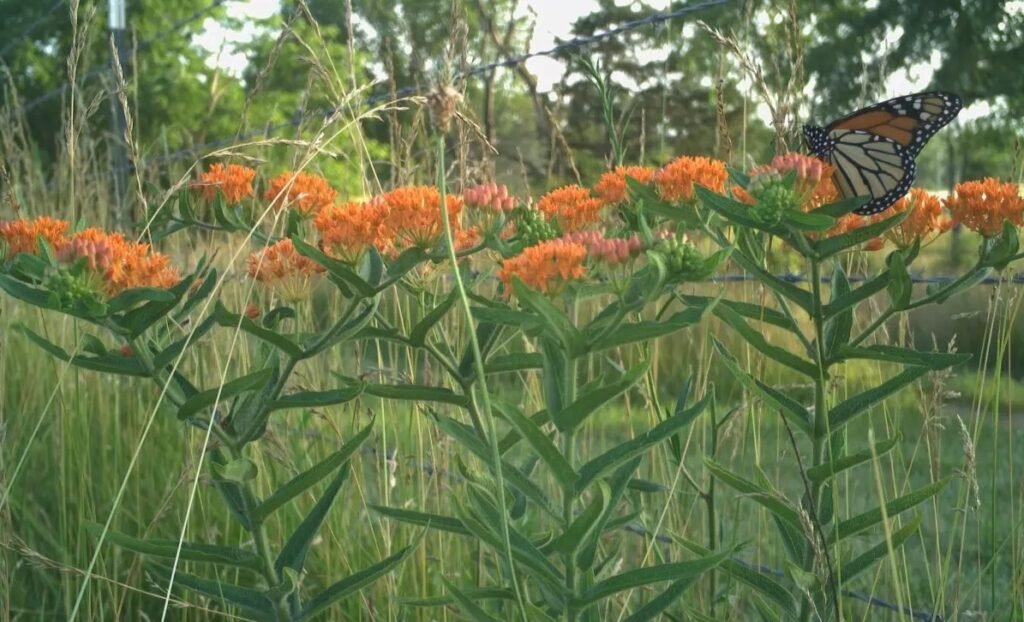
Butterfly Milkweed (Asclepias tuberosa) brightens sunny spots with brilliant orange blooms that attract Monarchs and other pollinators. With its brilliant orange blooms and compact growth habit, this native perennial is a favorite among gardeners and a magnet for butterflies, especially Monarchs.
What is Butterfly Milkweed?
Butterfly Milkweed is a herbaceous perennial native to much of North America, thriving in dry prairies, open woods, and roadsides. Unlike other milkweed species, it does not produce milky sap and is known for its tidy, clump-forming growth. Its drought tolerance and vivid flowers make it ideal for native plant gardens, rock gardens, and sunny borders.

Botanical Details:
- Scientific name: Asclepias tuberosa
- Family: Asclepiadaceae (Milkweed Family)
- Common names: Butterfly Milkweed, Butterfly Weed
- Height: 1–2 feet tall
- Bloom time: Summer (Jun-Aug)
- Flowers: Flat-topped clusters of bright orange to yellow-orange flowers
- Cold Stratification: 30 days
- Hardiness zones: USDA 3–9
Why Plant Butterfly Milkweed?
Monarch Magnet
Butterfly Milkweed is a host plant for Monarch butterfly caterpillars. The leaves provide essential food for the larvae, while the bright orange flowers produce nectar that attracts adult Monarchs, bees, and other pollinators.
Pollinator Paradise
In addition to Monarchs, Butterfly Milkweed’s vibrant flowers draw a variety of native bees, wasps, skippers, and butterflies. This makes it an important plant for boosting pollinator populations and creating a healthy, diverse garden ecosystem.

Growing Conditions
Butterfly Milkweed is relatively low-maintenance when grown in the right conditions.
Sunlight:
- Prefers full sun
- Requires at least 6 hours of direct sunlight per day for optimal growth
Soil:
- Thrives in well-drained, sandy or loamy soils.
- Can tolerate dry conditions
- Does NOT perform well in overly wet soils.
- Ideal for dry, well-drained soils, meadows, prairies, and naturalized gardens.
Water:
- Once established, Butterfly Milkweed is drought-tolerant and prefers moderate watering.
- Does not require constant moisture and is well-suited for areas that don’t stay wet.
Check out the hive
The Hive is a personalized native plant database, curated from scientific resources and tailored to your exact ecoregion. It offers detailed growing information for over 75 species.
How to Grow Butterfly Milkweed
Planting:
- Cold Stratification: 30 days
- Sow seeds outdoors in late fall or cold-stratify seeds indoors for 30 days before planting in the spring.
- Space plants 18–24 inches apart to allow for good air circulation and growth.
Maintenance:
- Deadhead spent flowers to encourage more blooms.
- Cut back stems in late fall or preferably in early spring (insects will overwinter in stems) to prevent the plant from becoming too woody and to maintain a tidy garden appearance.
- Once established, Butterfly Milkweed is drought-tolerant, but it grows best with very moderate watering and prefers dry, well-drained soil.

Transplanting:
As mentioned throughout, butterfly milkweed thrives in dry, well-drained soil and needs these conditions to establish and reseed successfully. Mature plants develop long taproots that can reach several feet deep, contributing to their excellent drought tolerance. Because of this, they often emerge late in the spring—especially in colder climates—so patience is key. While transplanting is possible during dormancy, care must be taken not to damage the taproot. Even if it breaks, however, the plant typically regenerates.
Companion Planting
Butterfly Milkweed pairs beautifully with other drought-tolerant natives, such as:
- Purple Coneflower (Echinacea purpurea)
- Black-eyed Susan (Rudbeckia hirta)
- Blazing Star (Liatris spp.)
- Wild Bergamot (Monarda fistulosa)
These companions provide a variety of colors, textures, and bloom times that complement Butterfly Milkweed’s vibrant orange flowers and enhance overall garden biodiversity.

the Butterfly Milkweed plant Contributes To:
- Restoring native habitats
- Supporting declining pollinator populations, particularly Monarchs
- Providing food and shelter for a wide range of beneficial insects and birds
Its deep taproot also helps with soil stabilization and erosion control, particularly in dry, sandy areas and prairies.
Final Thoughts
Butterfly Milkweed is not just a striking addition to your garden; it’s a vital plant for supporting Monarch butterflies and other pollinators. By incorporating it into your landscape, you’re helping restore natural habitats, fostering pollinator populations, and creating a sustainable, beautiful garden.