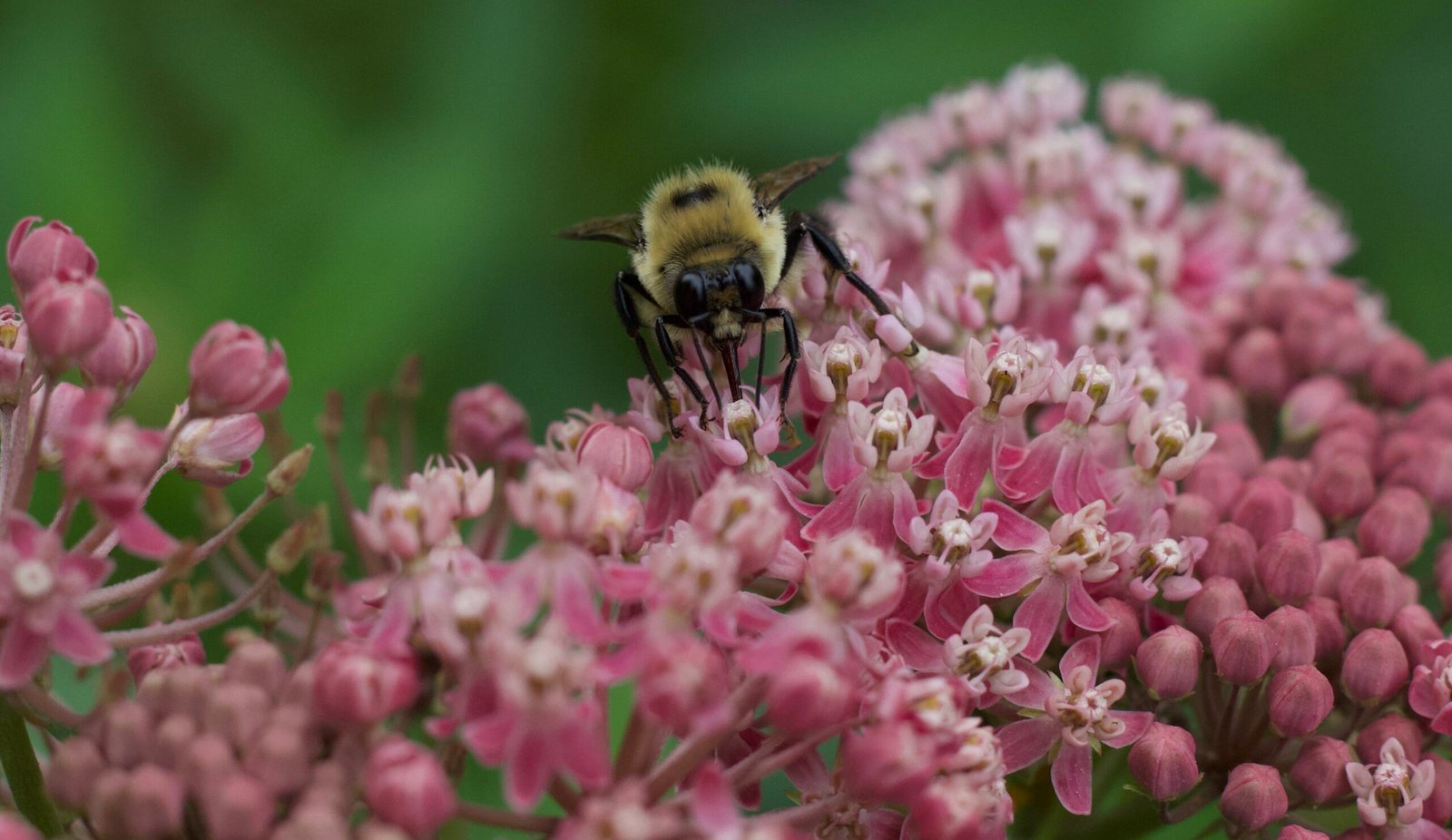

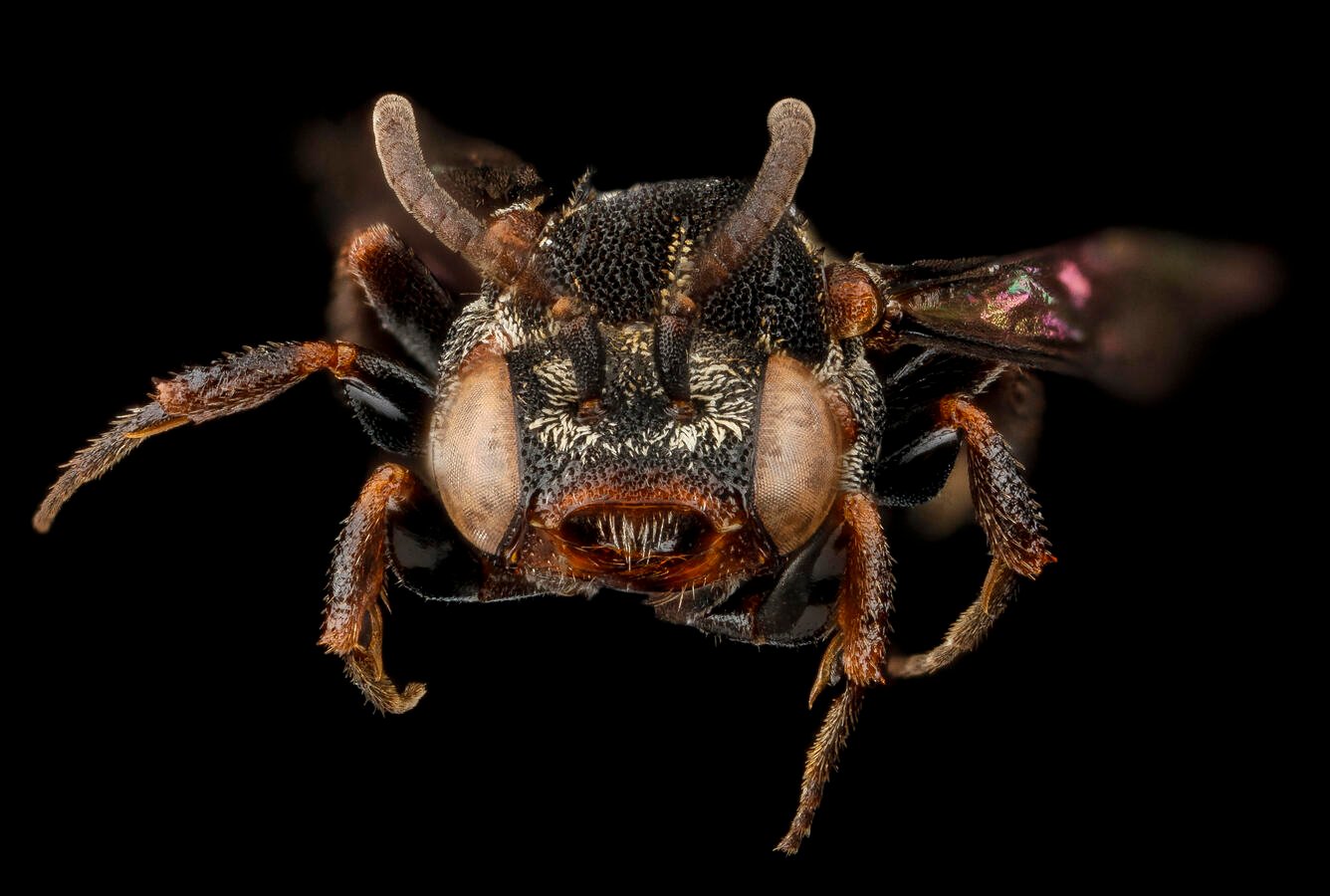
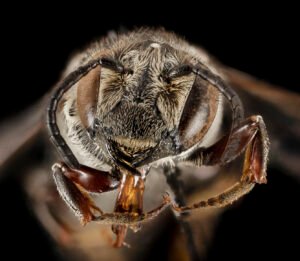
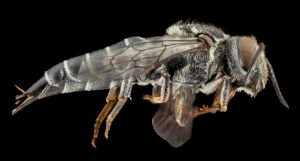
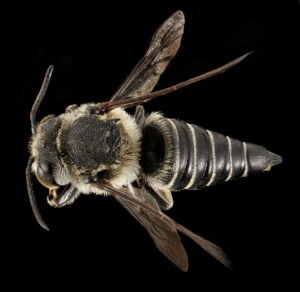
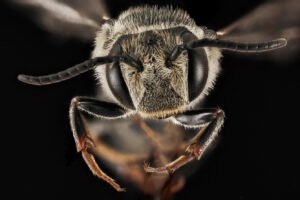
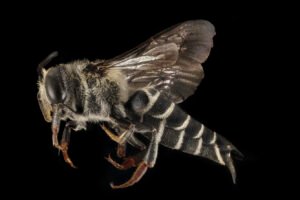
Cuckoo bees are fascinating kleptoparasitic bees that rely on the nests of other specialist bees to reproduce. Unlike most bees, they do not collect pollen to provision their own nests. Instead, females lay eggs in the nests of host bees such as mason bees, leafcutter bees, and mining bees, where their larvae consume the pollen and nectar stored by the host.
*I’m not an entomologist — this guide is based on research I’ve done and simplified so gardeners and backyard habitat enthusiasts can better understand these remarkable bees.
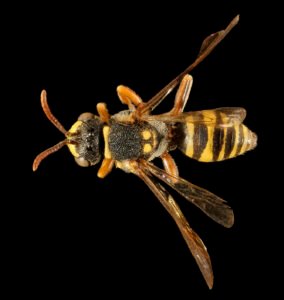
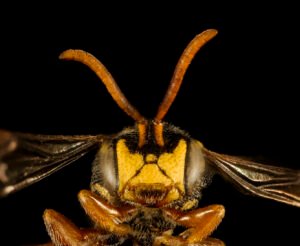
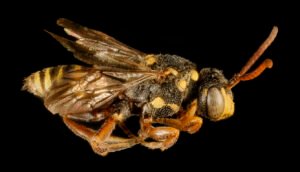
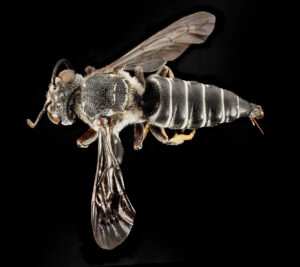
All images courtesy of the U.S. Geological Survey (USGS), public domain.
How to Attract Cuckoo Bees
Cuckoo bees don’t build their own nests, so attracting them is less about providing nesting sites and more about supporting their hosts:
- Provide safe nesting areas for solitary specialist bees like mason and leafcutter bees
- Include a diversity of native flowers to support healthy host populations
- Avoid pesticide use to protect both cuckoo and host bees
How to Identify Cuckoo Bees
- Family: Apidae, Megachilidae, others depending on host
- Subfamily: Nomadinae
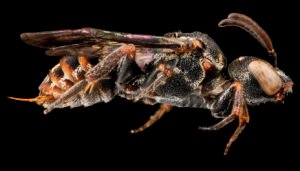
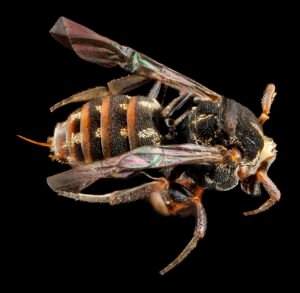
- Genera / Species commonly observed: Coelioxys alternata, Coelioxys rufitarsis, among others
Identification features:
- Often resemble the host bee in size and color
- Lack pollen-carrying structures (scopae or corbiculae)
- Solitary, non-aggressive
- Females actively search for host nests to deposit eggs
Confused With
- Mason bees or leafcutters, especially in appearance
- Other small solitary bees that do not actively provision nests
When You’ll See Cuckoo Bees
- Activity depends on host bee species
- Typically emerge when host bees are actively provisioning nests
- Timing is specific to the host’s seasonal activity
Nesting and Behavior
- Cuckoo bees do not construct their own nests
- Females locate the nests of host bees and lay eggs inside
- Larvae consume the pollen and nectar collected by the host, eventually pupating and emerging the next season
Host Plants and Host Bees
Cuckoo bees rely indirectly on flowers through their hosts:
- Mason bees (Osmia spp.)
- Leafcutter bees (Megachilinae)
- Mining bees (Andreninae)
Providing healthy habitats and host plantings for these bees ensures cuckoo bees can complete their life cycle.
Ecological Role
Cuckoo bees are important indicators of a healthy bee community:
- Help maintain ecological balance by parasitizing specialist bees
- Their presence reflects robust populations of host bees
- Play a subtle role in the diversity of pollinator interactions
Conservation Tips
- Avoid disturbing ground or cavity nests of host bees
- Maintain diverse native plantings to support host species
- Keep all nesting areas pesticide-free
- Understand that cuckoo bees are generally uncommon and require healthy host populations
Final Thoughts
While cuckoo bees may seem unusual, they are a fascinating part of the pollinator community. Supporting the bees they parasitize ultimately supports these specialists, contributing to garden biodiversity and a balanced ecosystem. Observing cuckoo bees in your backyard can deepen understanding of the interconnectedness of native bees and their host plants.