
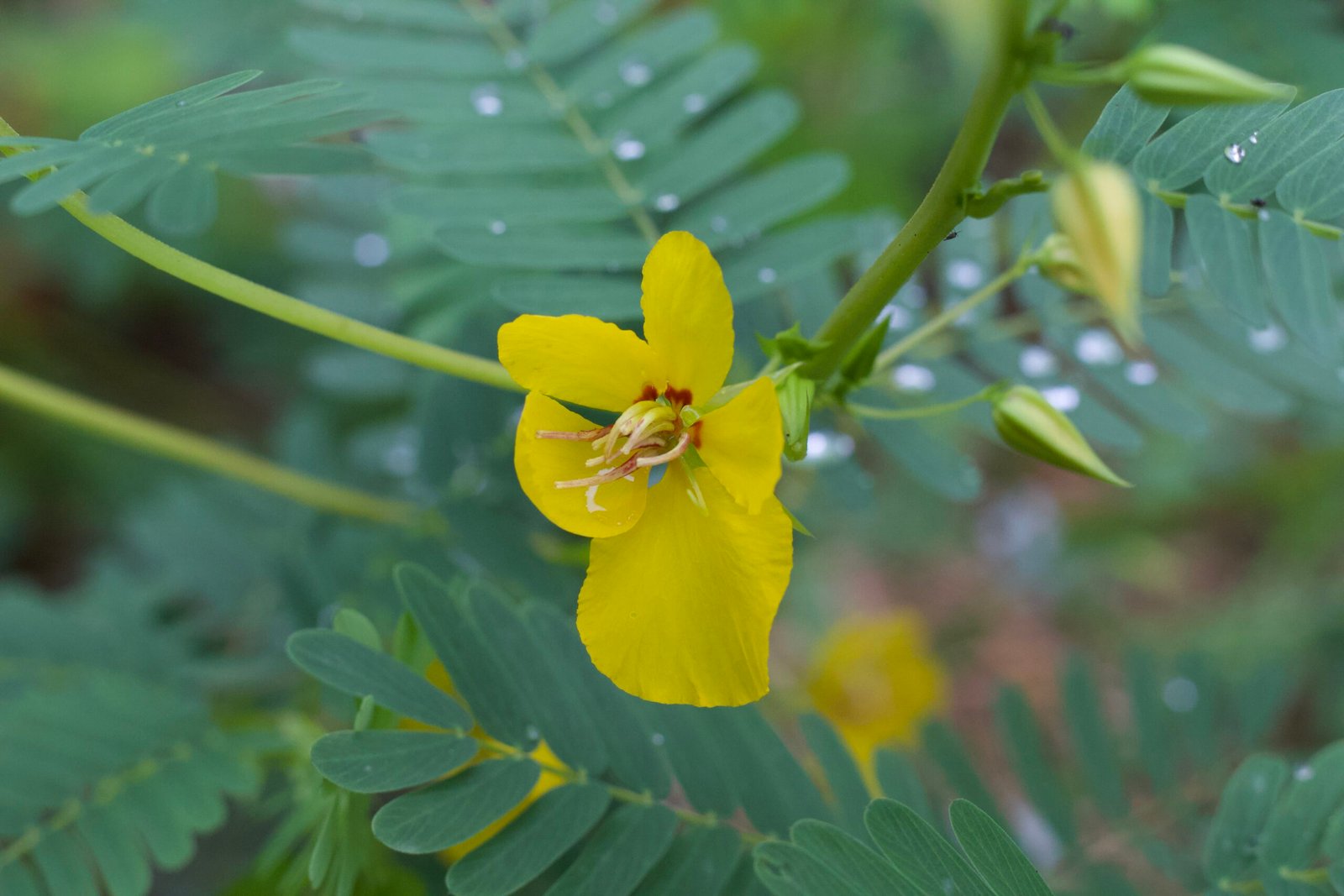
(Chamaecrista fasciculata)
If you’re looking to support bees, improve soil, and bring a burst of sunny yellow into your prairie or pollinator garden, the Partridge Pea native plant (Chamaecrista fasciculata) is one of the most valuable annuals you can grow. With its long bloom season, wildlife benefits, and ability to enrich poor soils, this species shines in prairie restorations, meadow-style gardens, and sunny backyard habitats across Northwest Ohio.
Let’s take a closer look at why this powerhouse plant deserves a place in your landscape.
What Is Chamaecrista fasciculata?
Partridge Pea is a native warm-season annual found throughout the Midwest, Great Lakes, and Eastern U.S. It grows in sunny, open habitats such as prairies, sandy fields, savannas, and disturbed soils—anywhere with full sun and good drainage. Although technically an annual, it readily self-seeds and often returns year after year, especially when paired with native grasses.
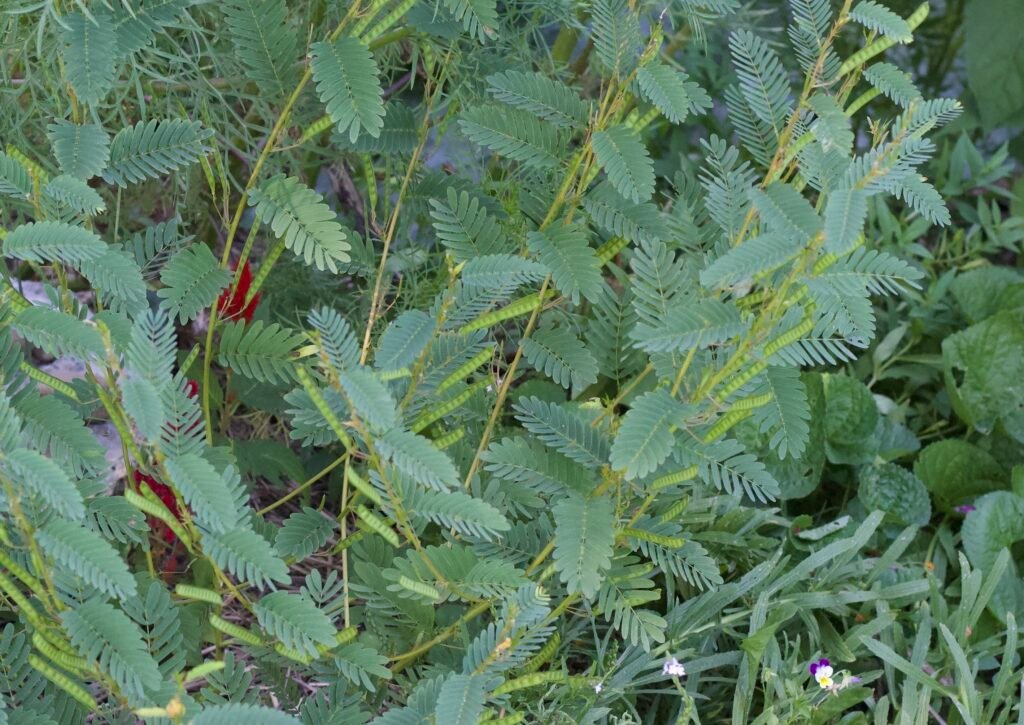
Botanical Details
- Scientific name: Chamaecrista fasciculata
- Family: Fabaceae (Legume Family)
- Common names: Partridge Pea, Sensitive Plant
- Height: 1–3 feet
- Bloom time: Mid- to late summer (July–September)
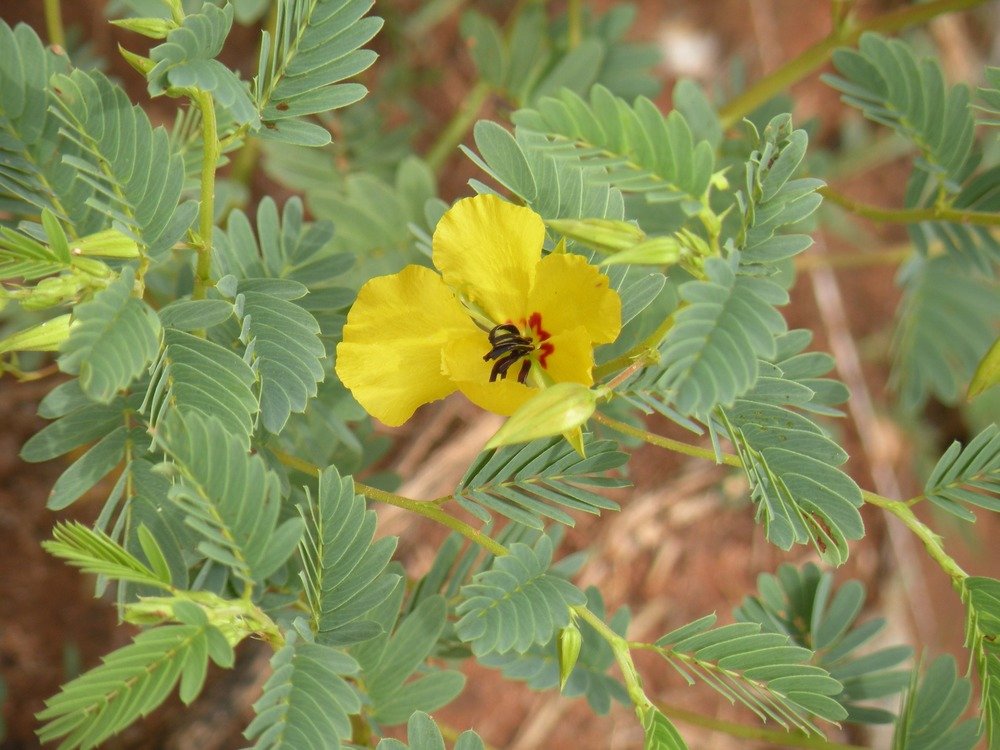
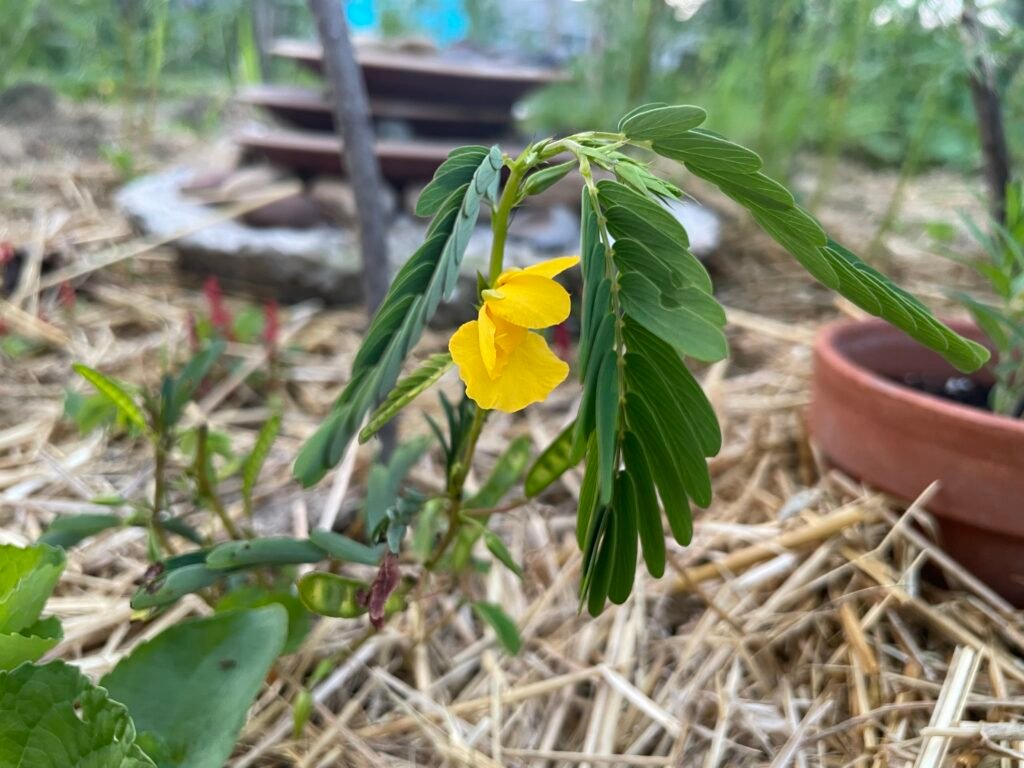
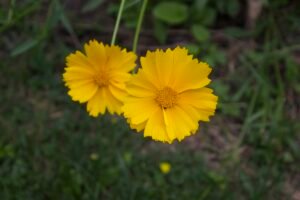
- Flowers: Bright yellow with red-tinged centers; one to two inches wide
- Seed pods: Slender pods that rattle when dry
- Cold Stratification: 10 Days
- Hardiness: Annual; reseeds reliably in USDA zones 3–9
Why Plant Partridge Pea?
Pollinator Magnet
Partridge Pea blooms during the heart of summer, drawing in bumble bees, sweat bees, leafcutter bees, honey bees, and butterflies. It also supports specialist pollinators, including the Partridge Pea Bee (Calliopsis andreniformis), making it ecologically important for native bee diversity.
Extrafloral Nectaries = Beneficial Insects
Unlike most flowers, Partridge Pea produces nectar not only in its blooms but also at the base of its leaves. These extrafloral nectaries feed ants and parasitic wasps that help control pests, creating a thriving mini-ecosystem on a single plant.
Natural Nitrogen-Fixer
As a legume, Partridge Pea forms symbiotic relationships with soil bacteria, allowing it to fix nitrogen—a huge advantage in poor or sandy soils. This makes it an ideal pioneer species for prairie establishment, new garden beds, and degraded landscapes.
Wildlife Food Source
Its seeds are loved by quail, wild turkey, and many songbirds, offering a valuable food source in late summer and fall. When left standing, its dry pods also provide winter structure and habitat for overwintering insects.
Growing Conditions
Sunlight:
- Full sun (6+ hours daily)
Soil:
- Prefers sandy, rocky, or well-drained soils
- Tolerates poor or disturbed ground
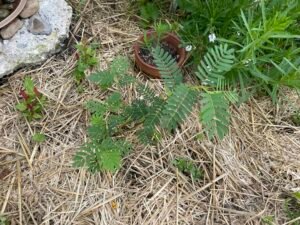
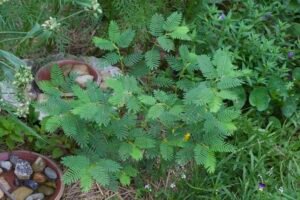
- Avoid heavy clay unless amended or paired with native grasses (I’ve grown mine in clay and grew about 2 ft. tall & wide)
Water:
- Dry to medium moisture
- Excellent drought tolerance once established
How to Grow Chamaecrista fasciculata
Planting:
- Best sown in late fall through early spring for natural cold stratification
- 10 day stratification, scarification (lightly rub seed pod with sandpaper), may need an inoculum (click here for legume inoculum)
- Lightly press seeds into soil—do not bury deeply
- Ideal for large prairie seed mixes or small habitat patches
- Water only during long dry spells in the early establishment period
- Great for edges or borders in a layered garden
Maintenance:
- Low-maintenance once established
- Allow seed pods to mature and drop for natural reseeding
- Leave standing through winter to support wildlife
- Expect shifting patches year to year as it naturalizes
Companion Planting
Partridge Pea pairs beautifully with prairie natives such as:
- Indian Grass (Sorghastrum nutans)
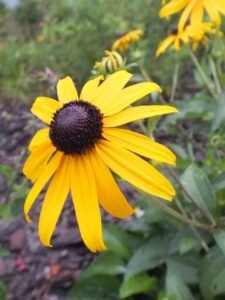
- Black-eyed Susan (Rudbeckia hirta)
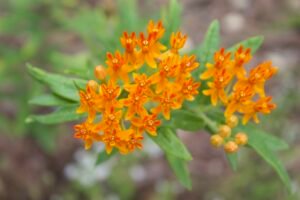
- Butterfly Milkweed (Asclepias tuberosa)
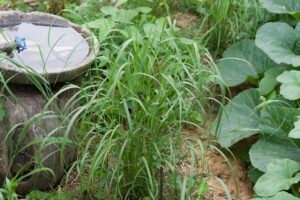
- Switchgrass (Panicum virgatum)
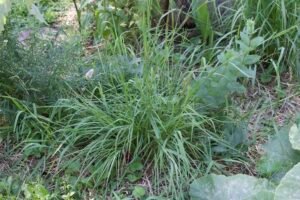
- Little Bluestem (Schizachyrium scoparium)
- Lanceleaf Coreopsis (Coreopsis lanceolata)
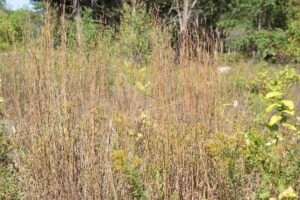
Together, these create a biodiverse, sun-loving habitat that supports pollinators, birds, and soil health.
Final Thoughts
Partridge Pea is one of the most ecologically impactful plants you can add to a prairie-style garden or backyard habitat. It supports bees and beneficial insects, improves soil, feeds wildlife, and thrives in hot, sunny conditions where many other plants struggle. Plant it once and let it reseed itself—you’ll be rewarded each summer with cheerful yellow blooms and a landscape buzzing with life.