


Rose Milkweed (Asclepias incarnata) stands out in moist gardens, offering elegant pink blooms and crucial support for pollinators like Monarch butterflies. With its elegant pink blooms and ecological value, this native perennial is more than just eye-catching—it’s a vital plant for wildlife, especially Monarch butterflies. This is your essential how to grow Rose milkweed guide.
What is Rose Milkweed?
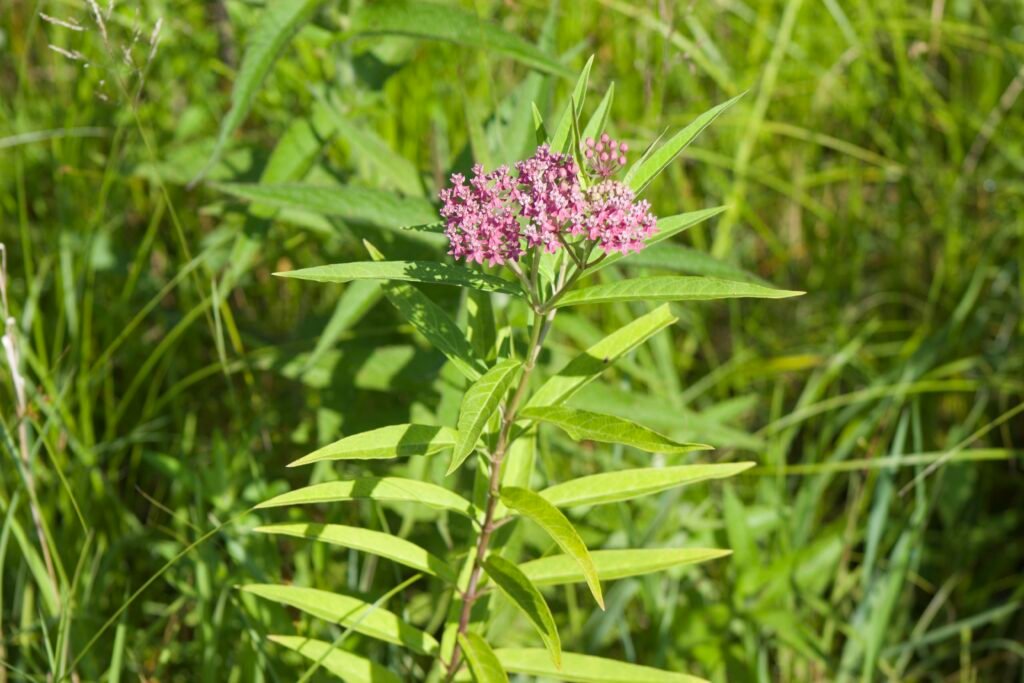
Rose Milkweed is a herbaceous perennial native to North America, typically found in wet meadows, marshes, and the edges of streams and ponds. Unlike its more rugged cousin, Common Milkweed, this species prefers moist to wet soils and is better behaved in garden settings, growing in tall, upright clumps.
Botanical Details:
- Scientific name: Asclepias incarnata
- Family: Asclepiadaceae (Milkweed Family)
- Common names: Swamp Milkweed, Rose Milkweed, Pink Milkweed
- Height: 3–4 feet tall
- Bloom time: Midsummer (June-August)
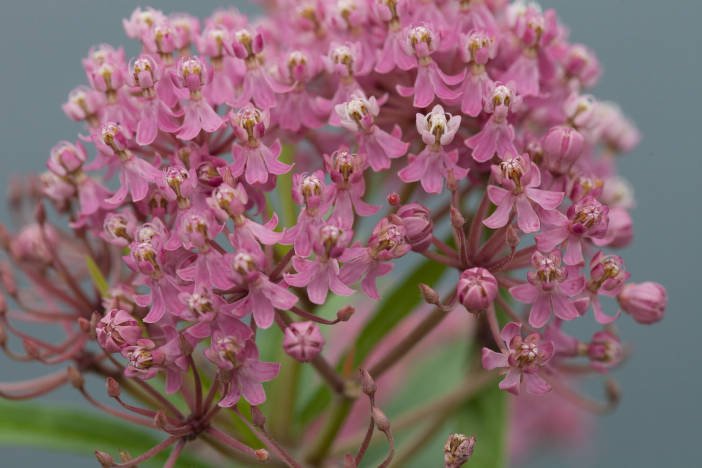
- Flowers: Clusters of fragrant pink blossoms
- Cold Stratification: 30 days
- Hardiness zones: USDA 3–9
Why Plant Rose Milkweed?
Monarch Magnet
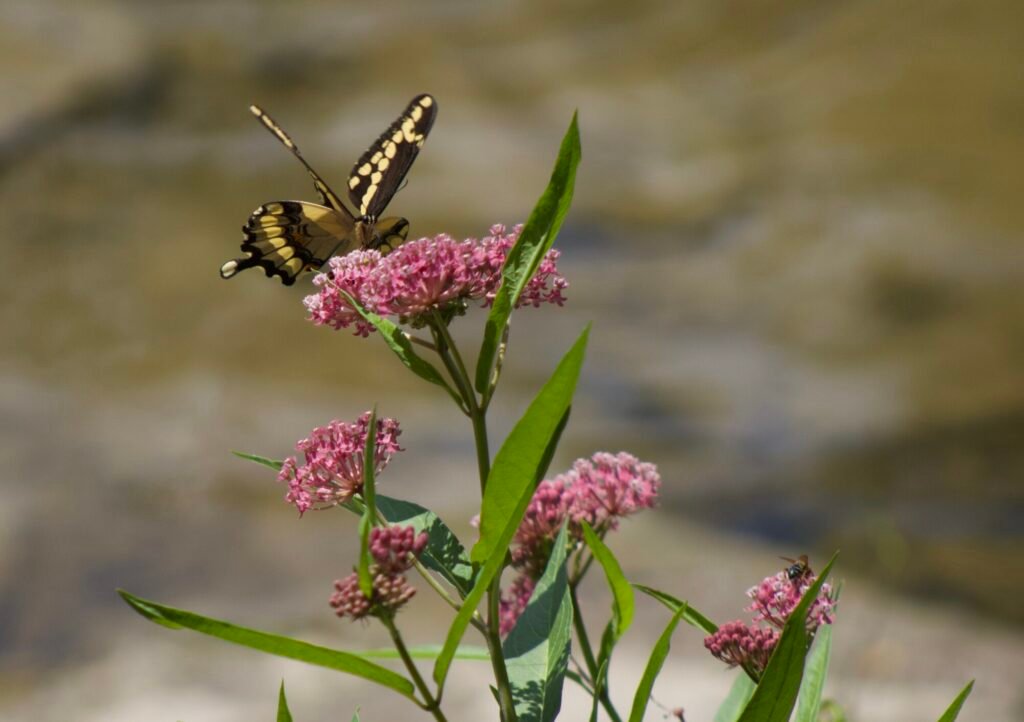
Rose Milkweed is a host plant for Monarch butterfly caterpillars. The leaves provide essential food for the larvae, while the flowers produce abundant nectar for adult butterflies, bees, and other pollinators.
Pollinator Paradise
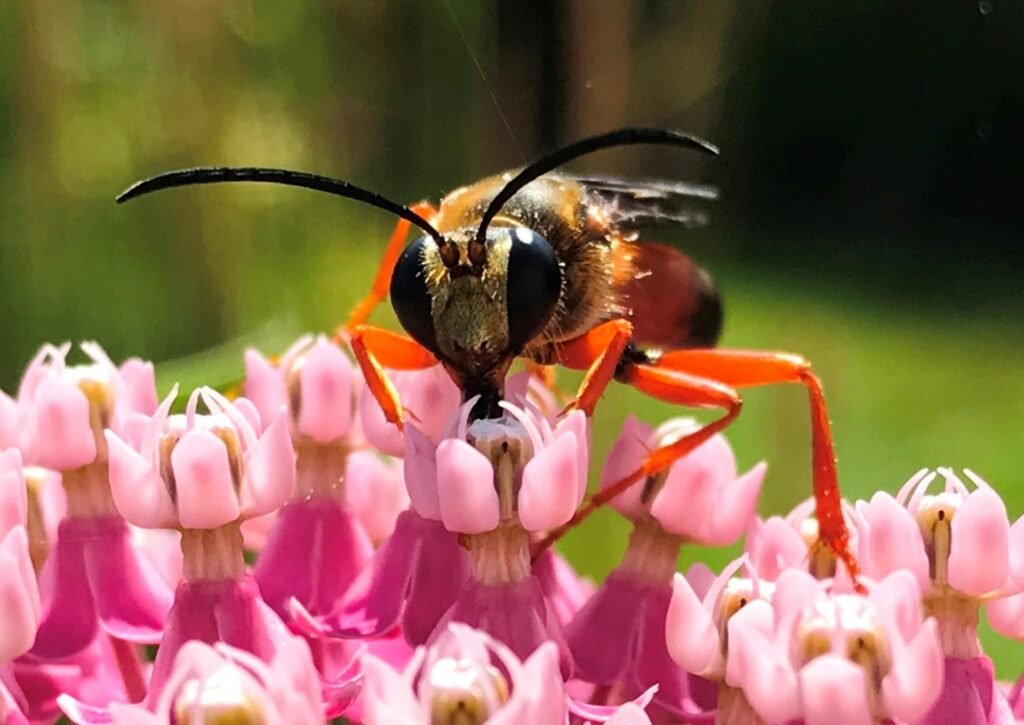
Beyond Monarchs, its sweet-scented flowers attract a variety of native bees, wasps, skippers, and hummingbirds. This makes it a key species in restoring pollinator populations and supporting healthy garden ecosystems.
Growing Conditions
Rose Milkweed is relatively low-maintenance if grown in the right conditions.
Sunlight:
- Prefers full sun but tolerates light shade.
Soil:
- Thrives in moist to wet soils, including clay and loam.
- Ideal for rain gardens, wetland edges, and areas with poor drainage.
Water:
- Unlike other milkweeds, Rose Milkweed needs consistent moisture.
- It’s an excellent choice for areas that remain damp or seasonally flooded.
Check out the hive
The Hive is a personalized native plant database, curated from scientific resources and tailored to your exact ecoregion. It offers detailed growing information for over 75 species.
How to Grow Rose Milkweed
Planting:
- Cold Stratification: 30 days
- Sow seeds outdoors in late fall or cold stratify indoors for 30 days before spring planting.
- Space plants 18–24 inches apart.
Maintenance:
- Deadhead to encourage more blooms.
- Cut back stems in late fall or early spring. Try to wait till early spring so insects can over winter in the stems.
- Once established, it can tolerate some drought, but performs best with regular moisture.
Companion Planting
Rose Milkweed pairs beautifully with other moisture-loving natives such as:
- Joe-Pye Weed (Eutrochium spp.) pink blooms July-Sept
- Blue Flag Iris (Iris versicolor) blue, purple blooms May-July
- Cardinal Flower (Lobelia cardinalis) red blooms July-Sept
- Turtlehead (Chelone glabra) cream, white blooms July-Sept
These companions provide a range of heights, colors, and bloom times that enhance biodiversity and visual appeal.
Ecological Impact
Planting Asclepias incarnata contributes to:
- Restoring native habitats
- Supporting declining pollinator populations
- Providing food and shelter for a wide range of beneficial insects and birds
- Adding biodiversity
Its deep root system also helps stabilize soil and reduce erosion in riparian zones and rain gardens.
Final Thoughts
Rose Milkweed isn’t just a beautiful garden plant—it’s a keystone species for pollinators, particularly Monarch butterflies. By adding it to your landscape, especially in wetter areas, you’re creating critical habitat while enjoying a vibrant and rewarding plant.