

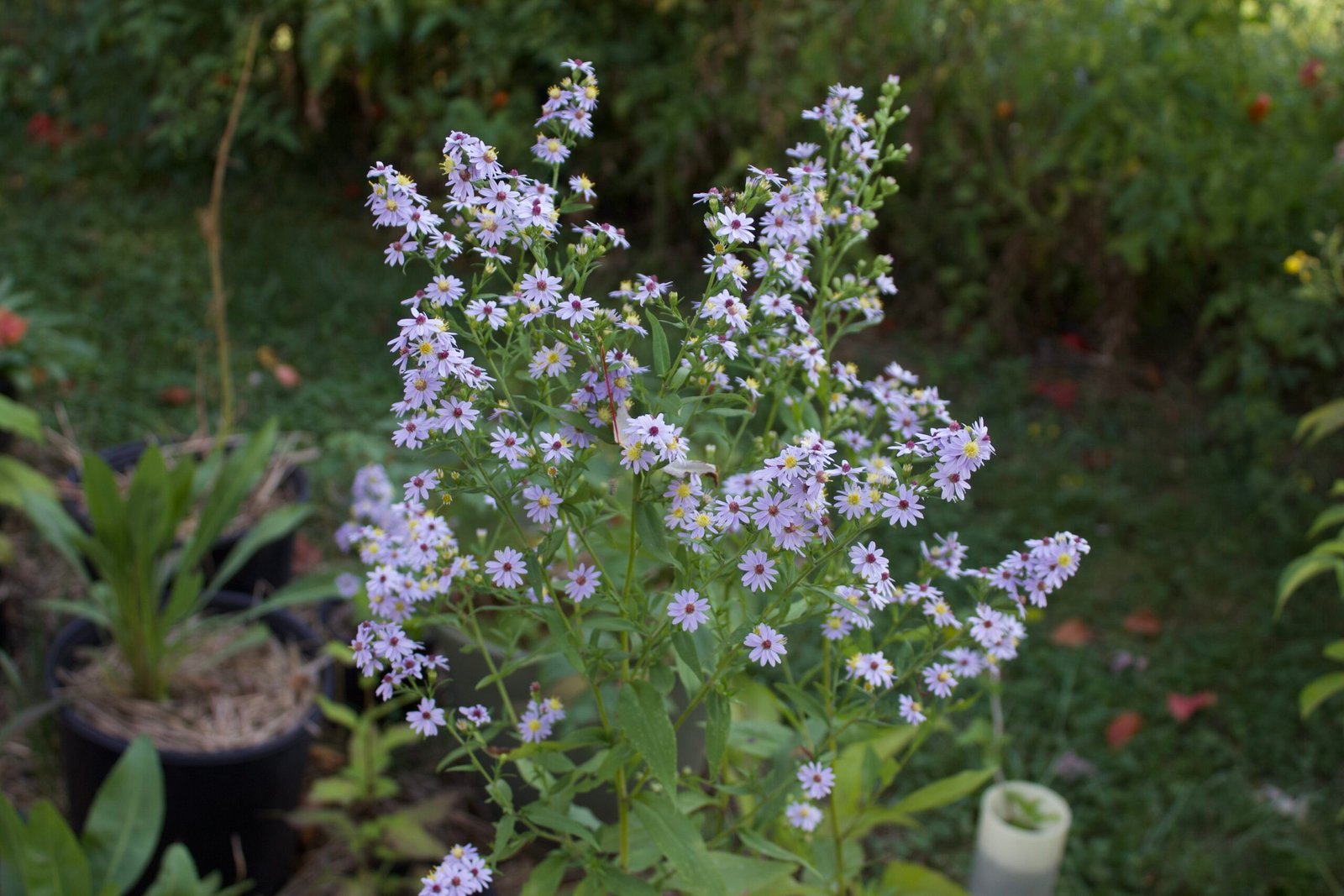
If you want to strengthen your fall garden, support butterflies, and extend blooms well into the colder months, the Symphyotrichum genus (our native asters) is one of the most important groups you can grow. With dozens of species adapted to woodlands, prairies, savannas, and wetlands, native asters provide critical late-season nectar while acting as host plants for numerous Lepidoptera species. In Northwest Ohio, these versatile perennials play a major ecological role across nearly every habitat type.
Let’s take a closer look at why this entire genus matters far more than any single species.
What Is the Genus Symphyotrichum?
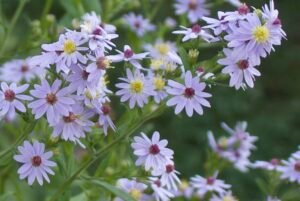
Symphyotrichum is a large genus of native asters found throughout North America, representing many of the late-season flowers that define autumn prairies, woodland edges, and meadows. With their star-shaped blooms in shades of purple, lavender, blue, and white, these perennials provide some of the last high-quality nectar and pollen available before winter.
While individual species can be hard for even botanists to distinguish, the entire genus offers the same powerful ecological value: late blooms, widespread adaptability, and essential support for wildlife.
Botanical Details
- Scientific classification: Genus Symphyotrichum
- Family: Asteraceae (Aster Family)
- Common name: Asters (New World asters)
- Growth form: Herbaceous perennials
- Bloom time: Late summer to late fall (August–October)
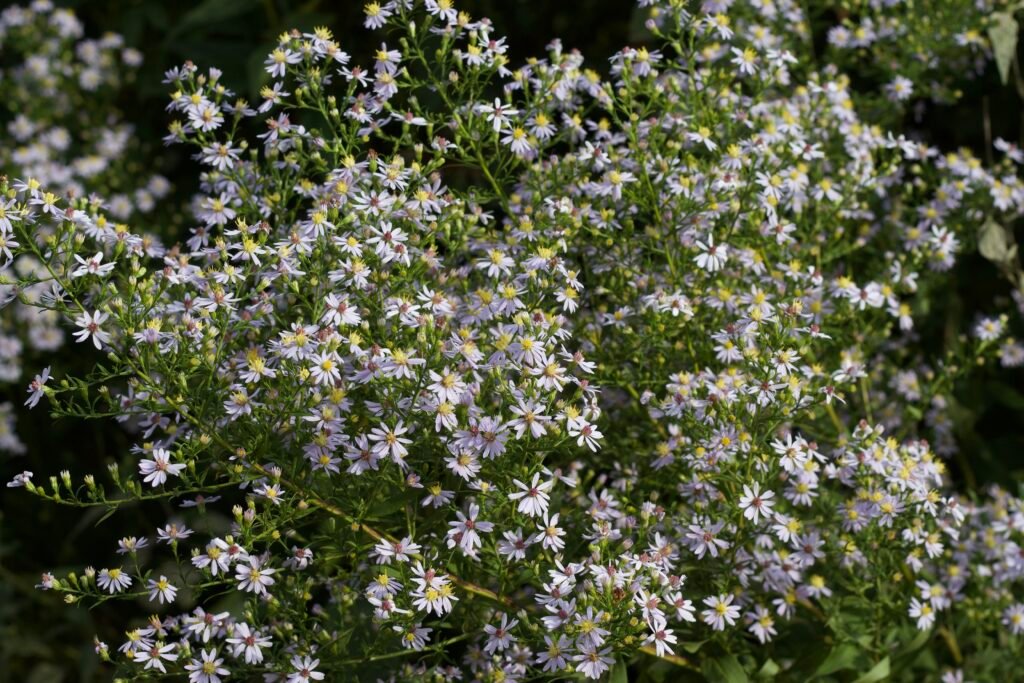
- Flower characteristics: Daisy-like blooms with yellow centers and purple, blue, or white rays
- Hardiness: USDA zones 3–9, depending on species
- Habitat range: Prairies, open woods, savannas, meadows, wetlands, and disturbed sites
Why Plant Native Asters (Symphyotrichum)?
Critical Late-Season Pollinator Support
Asters are one of the final mass-flowering food sources before winter. Their abundant late blooms feed bumble bees, sweat bees, migrating butterflies, hoverflies, beetles, and wasps when nearly everything else has faded.
Essential Host Plants for Lepidoptera
The Symphyotrichum genus serves as a host plant for:
- Several butterfly species
- Numerous moths
- Specialist bees tied specifically to asters
This makes asters foundational to healthy insect populations and the birds that rely on them.
Adaptable Across Nearly Every Habitat
No matter your garden’s sunlight or soil type, there is an aster species built for those conditions. From dry woodland edges to full-sun prairies to moist lowlands, asters fit anywhere.
High Wildlife Value Through Winter
When allowed to stand, asters provide:
- Overwintering habitat for insects
- Seed for birds
- Structural winter interest in native plantings
Growing Conditions
General for the genus (check prairiemoon.com for specific species)
Sunlight:
- Species available for full sun, part sun, or full shade
- Most bloom best with at least 4–6 hours of sun
Soil:
- Species adapted to clay, loam, sand, or rocky soils
- Many tolerate dry to medium moisture
- Some species thrive in moist or lowland soils
Water:
- Generally drought tolerant once established
- Moisture-loving species available for wetter sites
How to Grow Native Asters
Planting:
- Plant potted asters in spring or fall
- For seeds, sow in fall or cold-stratify before spring planting (some species don’t need any stratification, check links of specific species below)
- Space 1–2 feet apart depending on species
Maintenance:
- Cut back in early summer to encourage bushier growth (optional)
- Leave standing through winter for wildlife
- Divide clumps every few years if spreading too aggressively
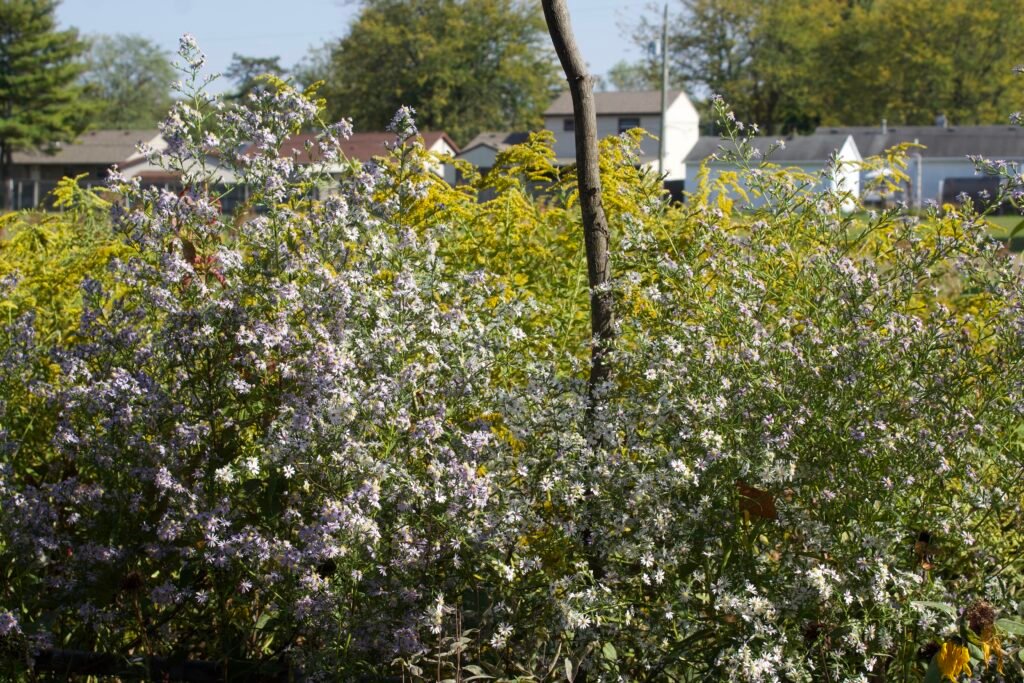
Native Aster Species of Northwest Ohio
Here are examples of Symphyotrichum species covering all major habitat types:
Woodland / Shade-Loving Asters
- Heart-Leaved Aster (Symphyotrichum cordifolium) – Part shade; dry to medium soil
- Arrowleaf Aster (Symphyotrichum urophyllum) – Shade; dry, rocky, or woodland soils
- Drummond’s Aster (Symphyotrichum drummondii) – Shade to part shade; adaptable to urban conditions
Prairie & Full-Sun Asters
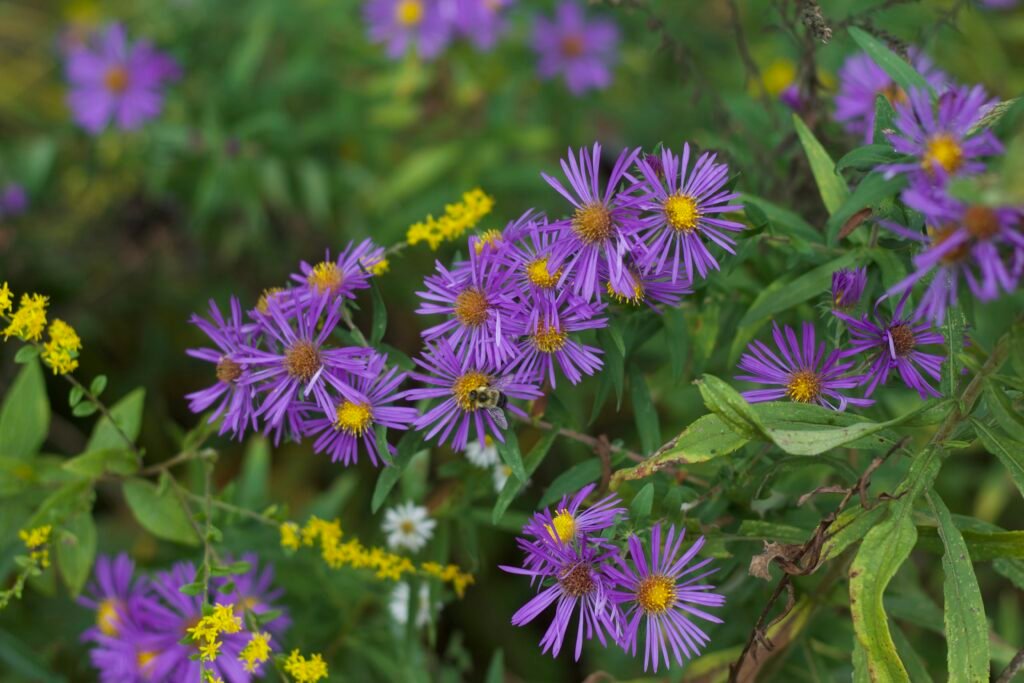
- New England Aster (Symphyotrichum novae-angliae) – Full sun; moist to medium soils; excellent for pollinators
- Smooth Blue Aster (Symphyotrichum laeve) – Sun; dry to medium soils; brilliant blue blooms
- Sky Blue Aster (Symphyotrichum oolentangiense) – Sun; dry sandy or clay soils; thrives in prairie restorations
Moist Meadow or Lowland Asters
- Panicled Aster (Symphyotrichum lanceolatum) – Moist soils, ditches, and meadows
- Calico Aster (Symphyotrichum lateriflorum) – Shade to sun; tolerates moist or medium soils
Together, these species ensure that every garden can support asters, regardless of growing conditions.
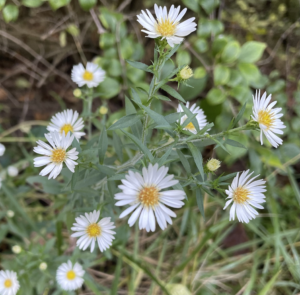
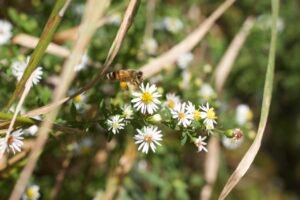
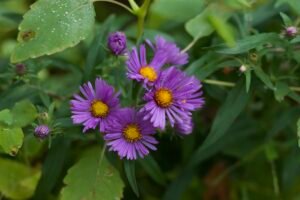
Companion Plants for Asters
Asters pair beautifully with other late-season native bloomers, helping build a resilient fall pollinator network. Because asters thrive in a wide range of soil types and light conditions, their companions can be chosen based on your specific site.
Great companions include:
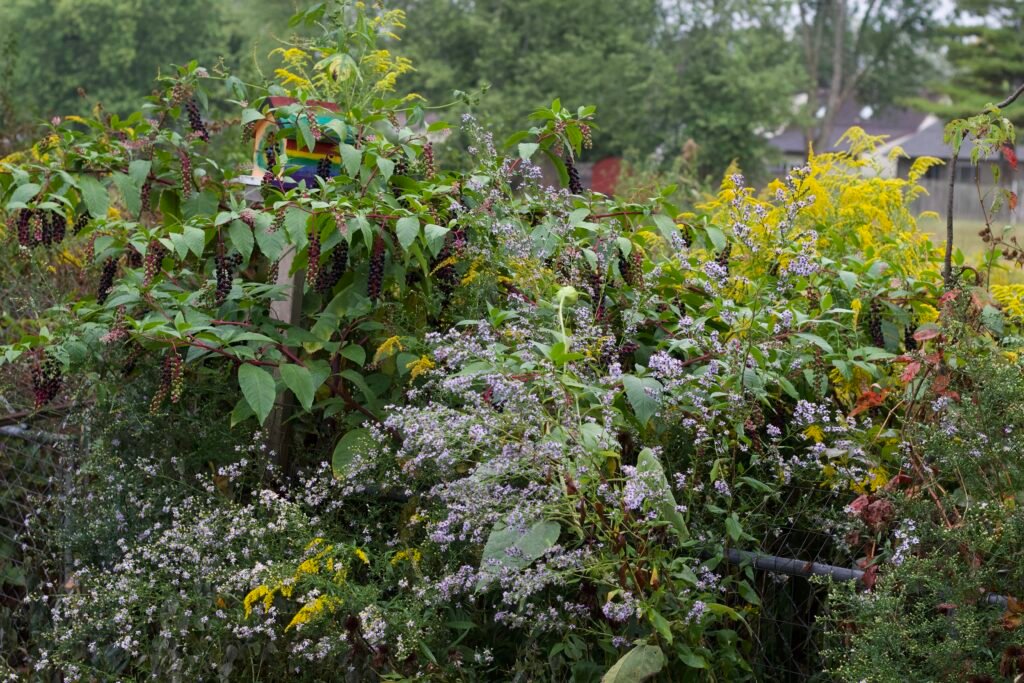
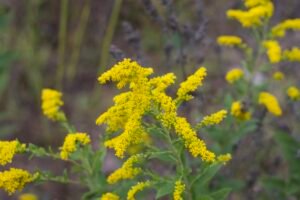
- Goldenrods (Solidago spp.) – The classic fall duo. Goldenrods provide abundant nectar right alongside asters, creating one of the most important late-season pollinator combinations in eastern North America.
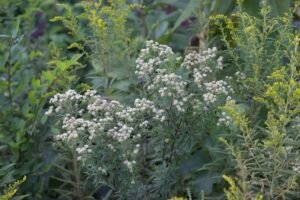
- Mountain Mint (Pycnanthemum spp.) – Offers continuous nectar from mid-summer into fall; its strong structure and aromatic foliage contrast well with airy aster blooms.
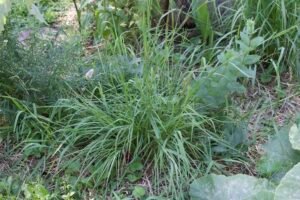
- Little Bluestem & Big Bluestem (Schizachyrium scoparium, Andropogon gerardii) – Warm-season grasses add vertical texture and provide nesting and overwintering habitat for insects while supporting asters in prairie or sunny garden settings.
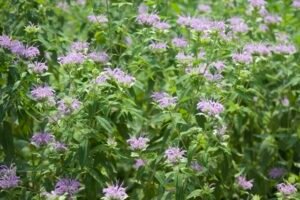
- Wild Bergamot (Monarda fistulosa) – Adds soft lavender-pink blooms mid-late summer, while asters are still growing.
These combinations create layered habitat—nectar, pollen, stems, cover, and structure—which strengthens your fall ecosystem and supports the hundreds of insect species that rely on asters as both a food source and a host plant.
Final Thoughts
The Symphyotrichum genus is one of the most important groups of native plants for fall ecosystems. Their late-season blooms sustain pollinators at a critical time, their foliage hosts caterpillars and moth larvae, and their seeds feed birds into winter. Whether you’re planting a prairie, woodland edge, savanna, or backyard habitat, native asters bring biodiversity, resilience, and beauty to your landscape.


