

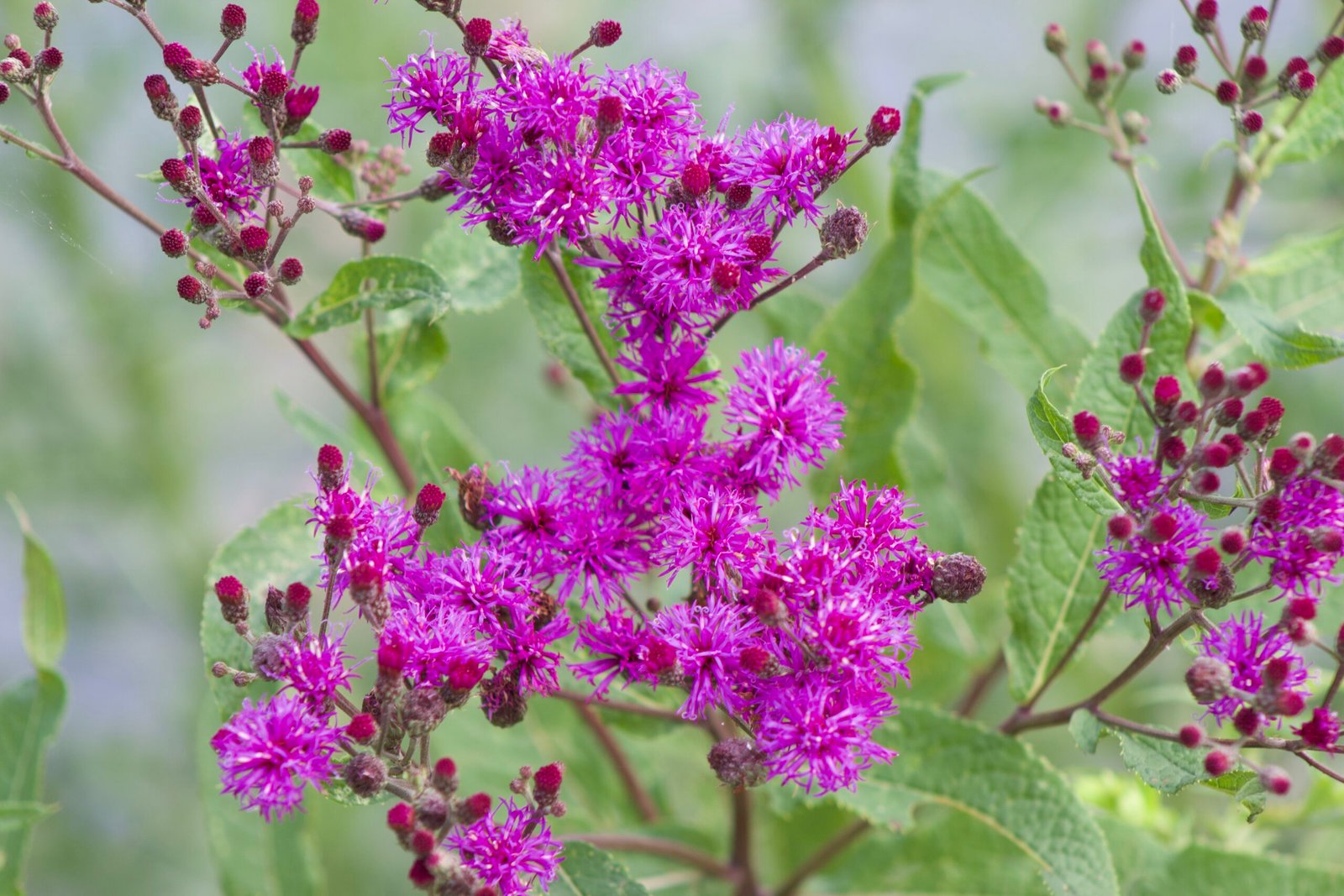
If you’re looking to add height, bold color, and pollinator activity to your garden in Northwest Ohio, look no further than giant or tall ironweed (Vernonia gigantea). This tall native perennial thrives in moist meadows, prairies, and open wood edges, making it a striking addition to naturalized landscapes. With vibrant purple flower clusters and impressive stature, tall ironweed commands attention while supporting wildlife.
What Is Tall Ironweed?
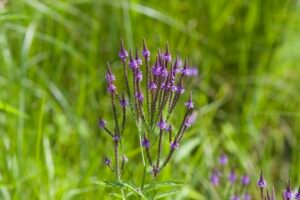
Tall ironweed, a member of the aster family (Asteraceae), is native to much of the eastern and central United States. It grows from 4 to 10 feet tall, with strong, upright stems that rarely need staking. In late summer, it produces brilliant purple flower heads that attract pollinators in abundance.
Botanical Details:
- Scientific name: Vernonia gigantea
- Family: Asteraceae
- Common names: Giant ironweed, tall ironweed
- Height: 4–10 feet
- Bloom time: August to October
- Flower color: Bright purple to magenta
- Cold Stratification: 60 days
- Native range: Eastern and central U.S.
- Hardiness zones: USDA 5–9
How to Grow Tall Ironweed
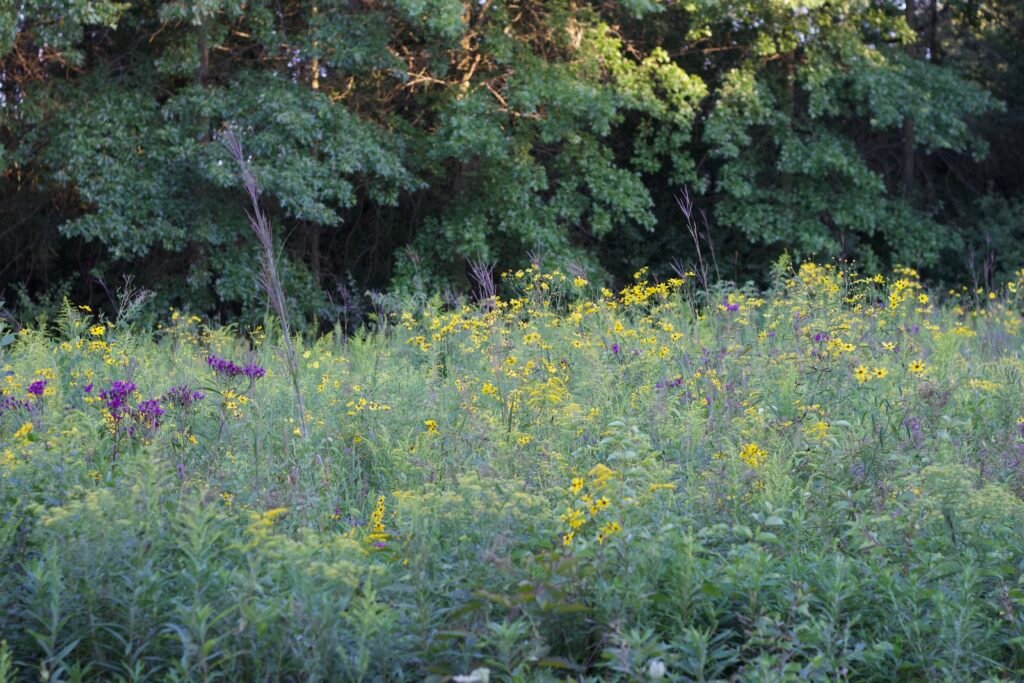
Despite its towering presence, giant ironweed is surprisingly easy to grow.
- Cold Stratification: 60 days
- Sunlight: Prefers full sun but can tolerate partial shade.
- Soil: Moist, well-drained soils are best, though it adapts to average garden soils.
- Water: Naturally suited to damp areas—along streams, ditches, or rain gardens—but drought-tolerant once established.
- Spacing: Give plants room, at least 2–3 feet apart, to accommodate their size. Spreads via rhizomes aggressively so make sure to have the space
- Maintenance: Minimal care needed. Deadhead if you want to prevent self-seeding, or leave seed heads standing for birds.
Because of its height, tall ironweed works well at the back of borders, in prairie-style gardens, or as a natural screen.
Wildlife Value
Tall ironweed is more than just a visual statement—it’s a powerhouse for wildlife.
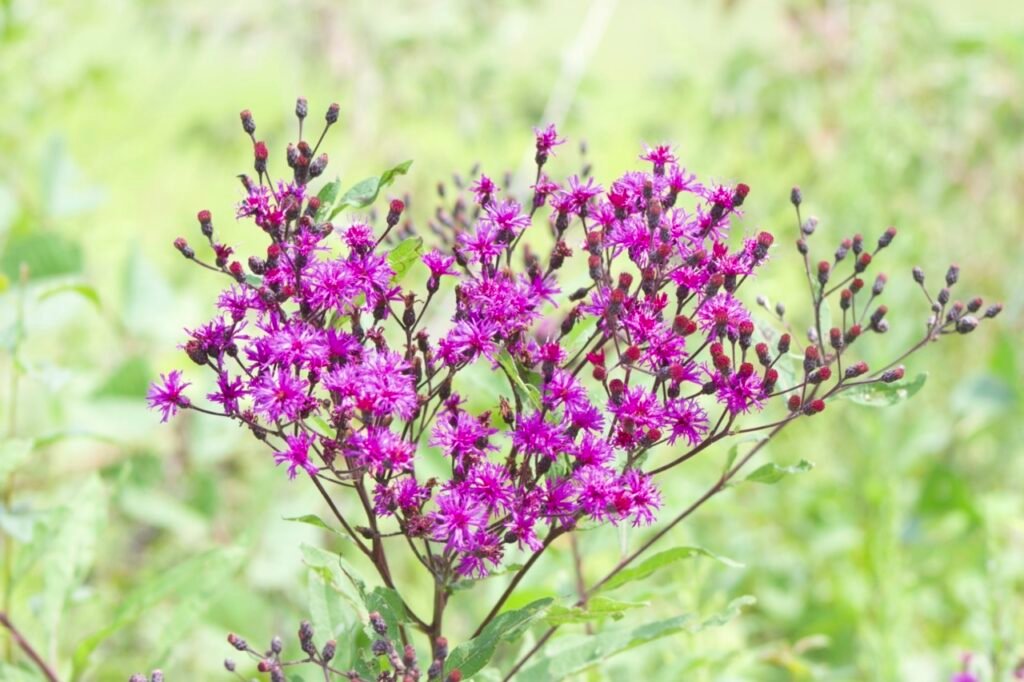
- Pollinators: Bees, butterflies, and skippers flock to its nectar-rich blooms. Monarchs, swallowtails, and painted ladies are frequent visitors.
- Birds: Goldfinches and other seed-eating birds feast on its late-season seed heads.
- Habitat: Its tall stems provide structure and shelter in meadows and wild gardens.
Ironweed also supports insect life beyond pollinators. Some moth caterpillars, like the Parthenice Tiger Moth and the Ironweed Borer Moth, feed on its leaves and stems. You may also spot tiny galls forming on the buds and flowerheads — evidence of insect larvae using the plant as a nursery.
How to Identify tall Ironweed
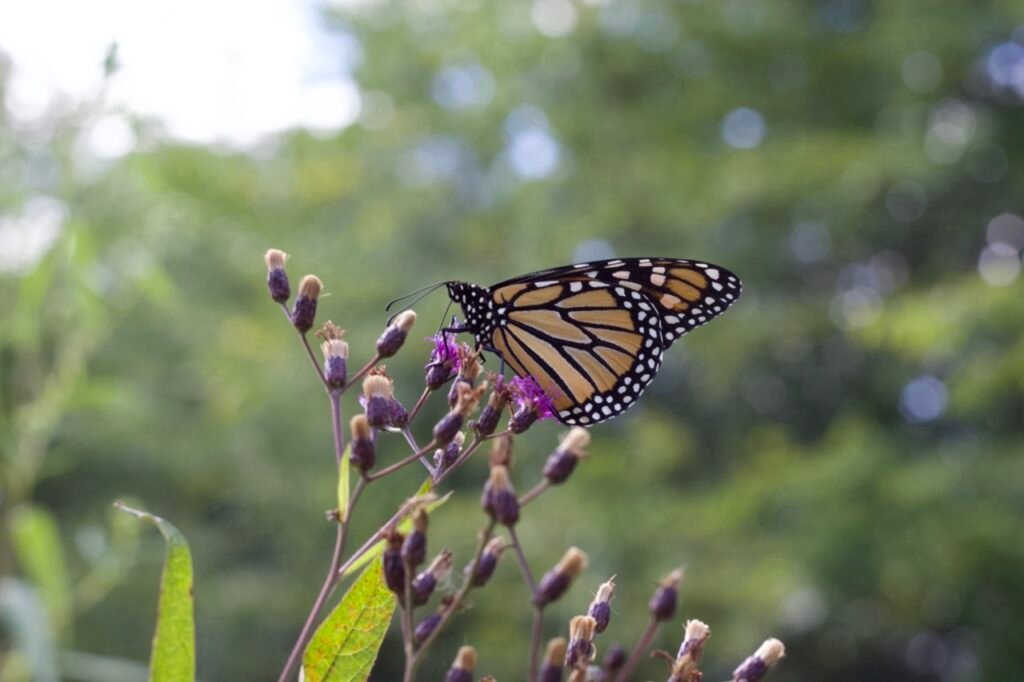
Tall ironweed stands out once you know what to look for:
- Height: Typically 4–10 feet tall, towering over many other wildflowers.
- Stems: Sturdy, unbranched, and often reddish or purple-tinged.
- Leaves: Lance-shaped, 4–12 inches long, serrated edges, and arranged alternately along the stem.
- Flowers: Dense clusters of bright purple, fuzzy-looking florets at the top of the plant (late July–October).
- Habitat: Found in moist meadows, prairies, ditches, and woodland edges.
- Bloom Season Cue: Often one of the last big purple wildflowers before asters dominate in fall.
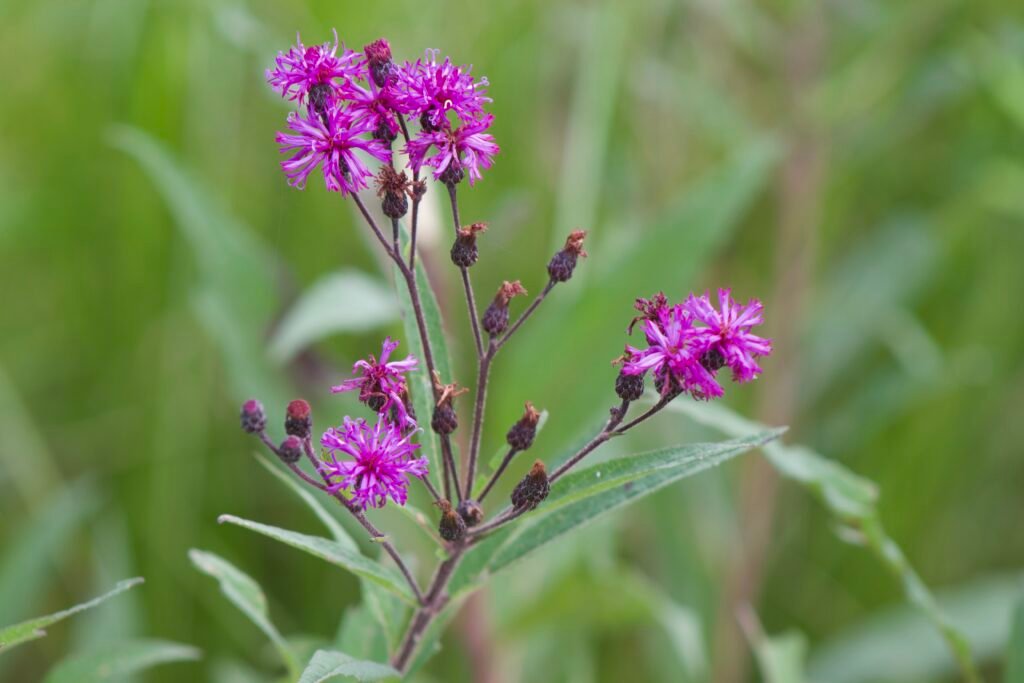
Don’t Confuse Tall Ironweed With…
While tall ironweed is distinctive, it can be mistaken for a few other tall, purple-blooming natives:
- New York Ironweed (Vernonia noveboracensis) – Very similar but usually shorter (3–7 feet). Leaves are narrower and less serrated than giant ironweed.
- Tall Asters (Symphyotrichum spp.) – Bloom later in the season and have star-shaped flowers with distinct ray petals, unlike ironweed’s fuzzy clusters of disk florets.
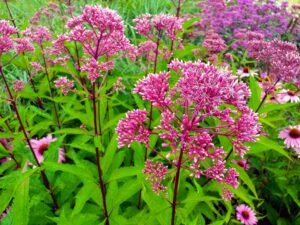
- Joe-Pye Weed (Eutrochium purpureum) – Also tall with pink-purple blooms, but flowers form dome-shaped heads with a softer, less vibrant color than ironweed.
👉 Look for the height, serrated leaves, and dense clusters of pure purple florets to confidently identify tall ironweed.
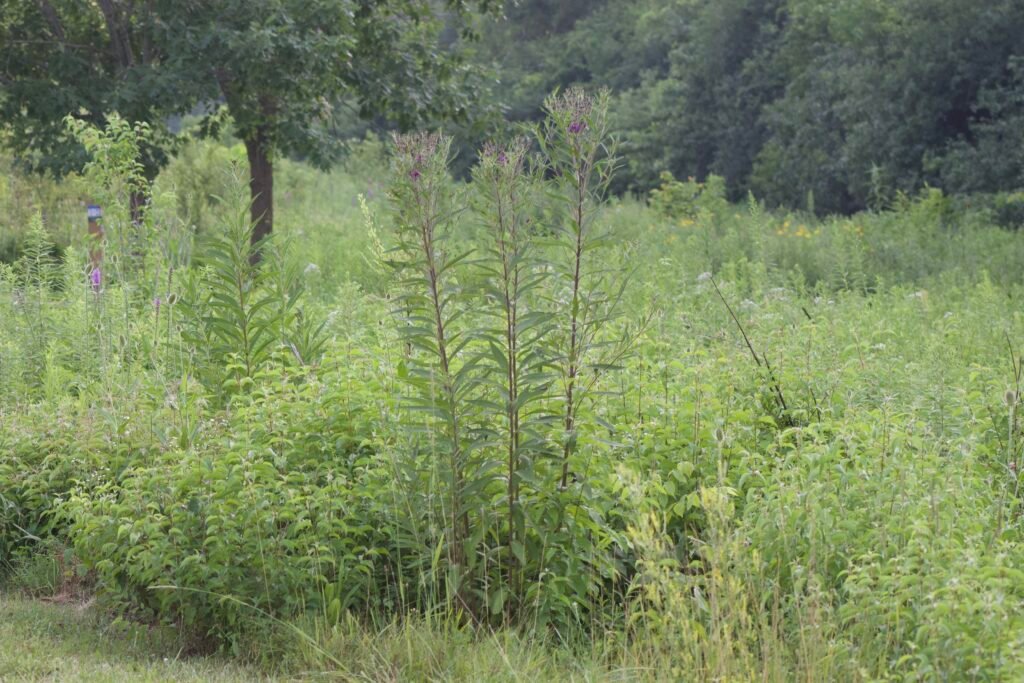
Companion Plants for tall Ironweed
Because of its height and late-season blooms, tall ironweed pairs beautifully with other moisture-loving natives. Together, they create layered habitat and nonstop color.
- Joe-Pye Weed (Eutrochium purpureum) – Another tall pollinator magnet with pink blooms that complements ironweed’s purple.
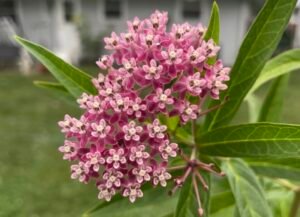
- Swamp Milkweed (Asclepias incarnata) – Provides nectar for butterflies and host plant support for Monarch caterpillars.
- Blue Vervain (Verbena hastata) – Spiky blue flower clusters bloom around the same time, offering textural contrast.
- Goldenrods (Solidago spp) – Extends the pollinator season into fall with masses of yellow blooms.
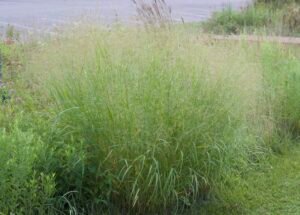
- Switchgrass (Panicum virgatum) – Adds structure and movement while providing seeds and shelter for birds.
Planting tall ironweed with these companions ensures a thriving pollinator haven and a dynamic, natural-looking garden.
Why Grow tall Ironweed?
If you want a native plant that combines height, drama, and ecological value, giant ironweed is a perfect choice. It fills a niche in the garden for late-summer color while supporting pollinators during a crucial time of year. Plus, its toughness and adaptability mean it thrives with little fuss. Unlike some other tall perennials, giant ironweed rarely flops, but if you prefer a sturdier, bushier look, you can chop and drop the stems in spring to encourage branching and reduce any chance of leaning later in the season.
✅ Incorporating tall ironweed into your garden helps restore biodiversity while adding a splash of wild beauty that few other plants can match.
Check out the hive
The Hive is a personalized native plant database, curated from scientific resources and tailored to your exact ecoregion. It offers detailed growing information for over 75 species.


